
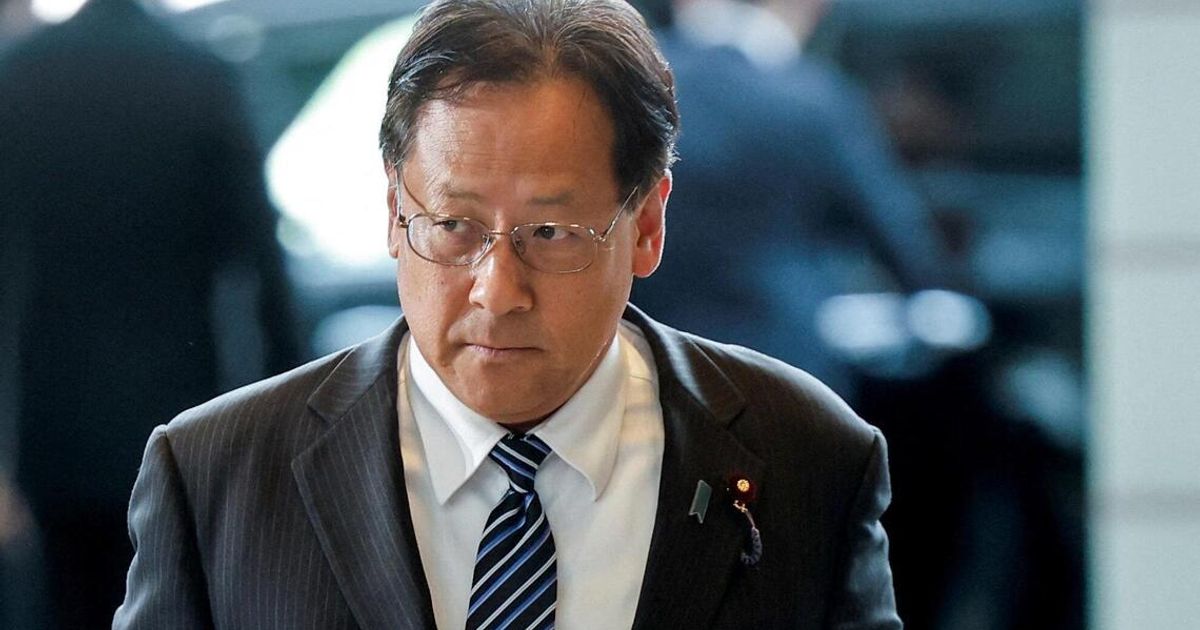
Japan’s Senate on Nov 27 narrowly rejected a censure motion against Education Minister Yoshihiro Seki over his controversial fund-raising events attended by bureaucrats. This eases pressure on him to resign and potentially gives a temporary reprieve to Prime Minister Sanae Takaichi’s government.The motion, which is non-binding, was defeated by 124 votes to 120 in a plenary session of the 248-seat Upper House after being jointly submitted by opposition parties a day earlier, amid uncertainty over deliberations on a key consumption tax-cut Bill due to the scandal.As opposition forces that backed the motion hold nearly as many Upper House seats as the ruling bloc, which lacks a majority in the chamber, several independents and a small right-wing party are believed to have been decisive in determining the outcome.The result was a setback for major opposition parties that had intensified their calls for the resignation of Seki, a lawmaker of Takaichi’s ruling Liberal Democratic Party (LDP), but they are expected to continue pursuing accountability given the narrow vote.The Constitutional Democratic Party of Japan (CDPJ) and others had said they would boycott parliamentary deliberations if the motion was passed and Seki did not step down.Following the defeat of the motion, Masaji Matsuyama, chairman of the LDP caucus in the Senate, told reporters: “We will strive to manage Diet affairs in a humble and careful manner and do our utmost toward the enactment of legislation related to the consumption tax cut.”The vote came as Takaichi’s government is rushing to push through a Bill to cut the consumption tax on food and beverages for two years starting April, which has already passed the House of Representatives, to help households cope with inflation.Ahead of voting on the motion, Seki reiterated his intention to stay on. “I will straighten up and give my all to fulfilling my duties,” he told a press conference, while declining to comment on what he would do if the Upper House passed the motion.Named as Education Minister in a Cabinet reshuffle in September, the 61-year-old has faced criticism for inviting senior government officials to give presentations to business people at five fund-raising parties in 2024 and collecting high admission fees.In the censure motion submitted on Nov 26, seven parties and a political group said that involving officials in fund-raising “undermines public trust in the neutrality of public administration” and “risks compromising the fairness of public administration”.They also accused Seki of making statements “contrary to the facts” in Parliament, as he had initially acknowledged in the Diet that he held only two such fund-raising events but later revealed three other similar cases.Takaichi has said Seki has “fulfilled his responsibility to explain” the matter, while senior government officials see no need for him to resign, saying there was nothing illegal in his conduct.During the plenary session, CDPJ lawmaker Michihiro Ishibashi said Seki had made statements in Parliament that were “contrary” to the facts, adding that Takaichi must also be held accountable for appointing him.While opposing the motion, LDP lawmaker Yuichiro Koga, a former bureaucrat, argued that Seki “must fulfil his responsibility to adequately explain the matter and restore public trust through his work” as minister.In addition to the eight opposition forces, the tech-advocacy party Team Mirai had shown support for the motion, bringing the expected vote tally to at least 118. The LDP and its junior coalition ally, the Japan Innovation Party, hold a combined 119 seats.The Senate currently has two vacant seats. Excluding the Senate president, who did not vote, the censure motion needed 123 votes to pass. How two members of the Conservative Party of Japan and six independents voted was not immediately known.The ruling camp, which holds a two-thirds majority in the more powerful, 465-member lower chamber, also aims to secure the enactment of legislation to reduce the number of seats there by 31 during the ongoing 69-day extraordinary Diet session until Dec 12.The seat-cut Bill was jointly submitted by the two ruling parties and the major opposition Democratic Party for the People, one of the co-sponsors of the censure motion.The last censure motion approved by the Upper House was in June 2013 against then Prime Minister Shinzo Abe under a divided Parliament in which the ruling bloc lacked a majority in the Senate, though it did not lead to his resignation. KYODO NEWS
Japan’s Senate narrowly rejects censure motion against scandal-hit Education Minister Yoshihiro Seki
Full Article
Original Source
Read the full article at Straitstimes →KhanList aggregates and links to publicly available news content. We do not host full articles from third-party sources. Always verify important information with original sources.