
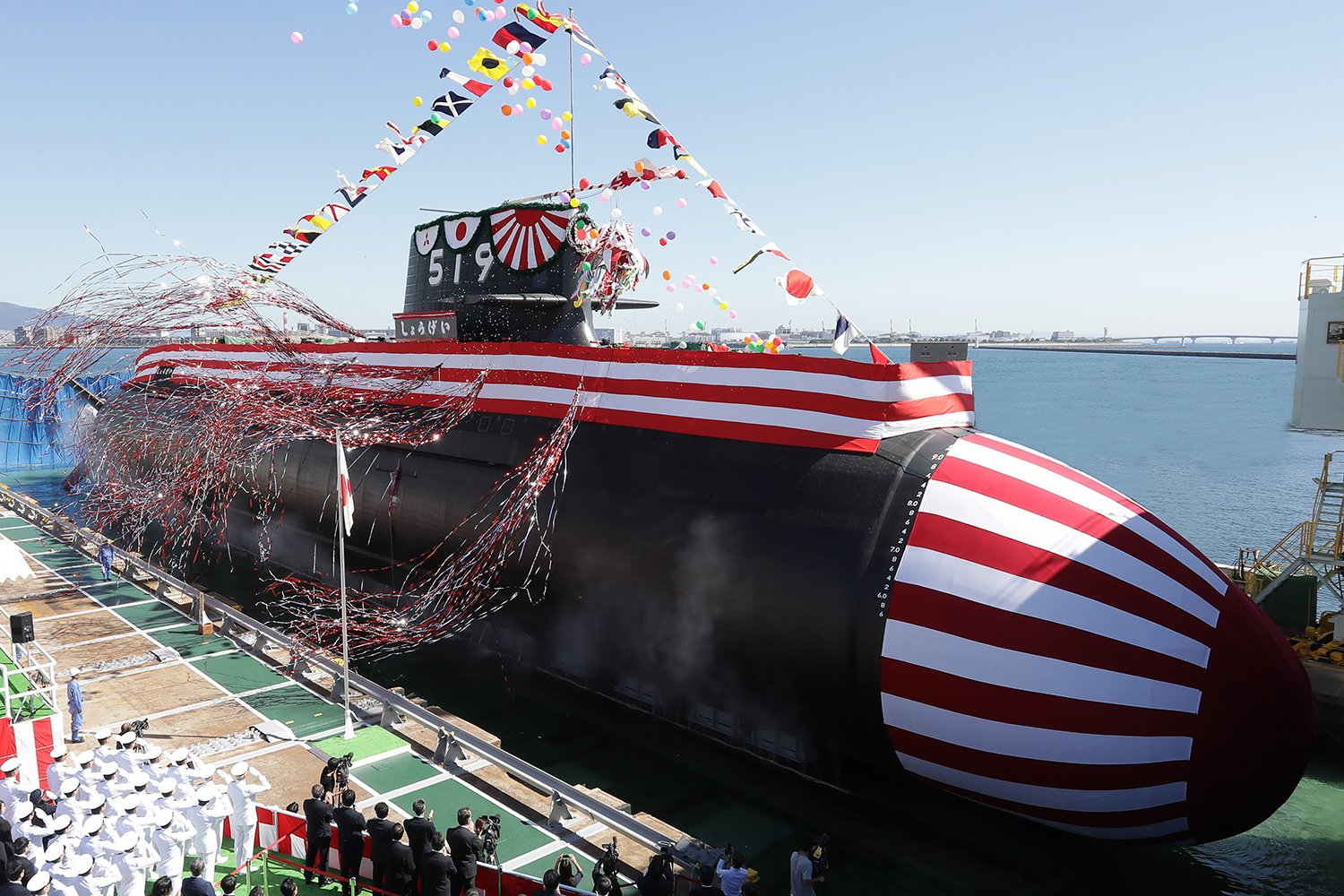
Japan’s latest Taigei-class submarine entered the water in Kobe on October 8, bringing the country’s lithium-ion-powered submarine program to its seventh boat. Named Sōgei, the vessel combines improved target detection with reduced noise compared with the preceding Sōryū class. Mitsubishi Heavy Industries held the christening and launching ceremony at its Kobe shipyard for the Japan Maritime Self-Defense Force. Assigned hull number SS-519, the submarine is scheduled for delivery to the Japanese Ministry of Defense in fiscal year 2027, ending in March 2028. The launch marks another construction milestone for a class that uses lithium-ion batteries instead of the separate Stirling air-independent propulsion system fitted to some earlier Japanese submarines. The battery arrangement supports longer underwater endurance and rapid maneuvering while simplifying the propulsion system. Construction continues after launch Construction of SS-519 began on April 17, 2024. With the submarine now afloat, work continues installing hull equipment, the power plant, electronic systems, and weapons. These installations form the next stage of construction before the planned handover. Although the vessel has been launched and named, its delivery remains scheduled for the fiscal year ending in March 2028. The submarine measures 84 meters long and 9.1 meters wide, with a displacement of approximately 3,307 tons (3,000 metric tons). It accommodates a crew of about 70. Mitsubishi Heavy Industries representatives said the Taigei class features an improved hull design and more advanced hydroacoustic equipment. The class’s enhanced target detection and lower noise levels distinguish it from its Sōryū predecessors. Those changes accompany a shift in energy storage, combining hull and detection improvements with a different approach to underwater power. Lithium-ion batteries replace separate AIP The Taigei class uses a diesel-electric, single-shaft propulsion system. While submerged, the submarine draws electricity from its batteries. Diesel engines recharge those batteries during surface operation. Some earlier Sōryū-class submarines used Stirling air-independent propulsion, known as AIP. Japan moved away from that arrangement for the Taigei class, choosing lithium-ion batteries without a separate AIP system. Lithium-ion batteries have a higher energy density than traditional lead-acid batteries. This gives the Taigei class longer underwater endurance and better capabilities for rapid maneuvering. Removing the separate AIP installation also simplified the propulsion arrangement. The weight and internal volume freed by that decision could be allocated to other submarine systems. The change therefore affects both underwater operation and the use of space inside the hull. Battery storage powers submerged propulsion, while the lack of separate AIP machinery frees up space for other equipment. Torpedoes and anti-ship missiles The submarine’s listed armament includes six 533-millimeter torpedo tubes. These accommodate Type 18 torpedoes, Harpoon anti-ship missiles, and other weapons launched through the tubes. Its listed maximum submerged speed is 20 knots. Together with its battery-powered underwater operation, the specification outlines the propulsion and weapons configuration of Japan’s newest Taigei-class boat. Sōgei’s launch brings the seventh vessel in the class into the water, with equipment installation continuing ahead of its scheduled delivery to the Ministry of Defense. Get the latest in engineering, tech, space & science - delivered daily to your inbox.Atharva is a full-time content writer with a post-graduate degree in media & amp; entertainment and a graduate degree in electronics & telecommunications. He has written in the sports and technology domains respectively. In his leisure time, Atharva loves learning about digital marketing and watching soccer matches. His main goal behind joining Interesting Engineering is to learn more about how the recent technological advancements are helping human beings on both societal and individual levels in their daily lives.
Japan’s new 3,300-ton submarine enters water with advanced stealth technology
Full Article
Original Source
Read the full article at Interestingengineering →KhanList aggregates and links to publicly available news content. We do not host full articles from third-party sources. Always verify important information with original sources.