
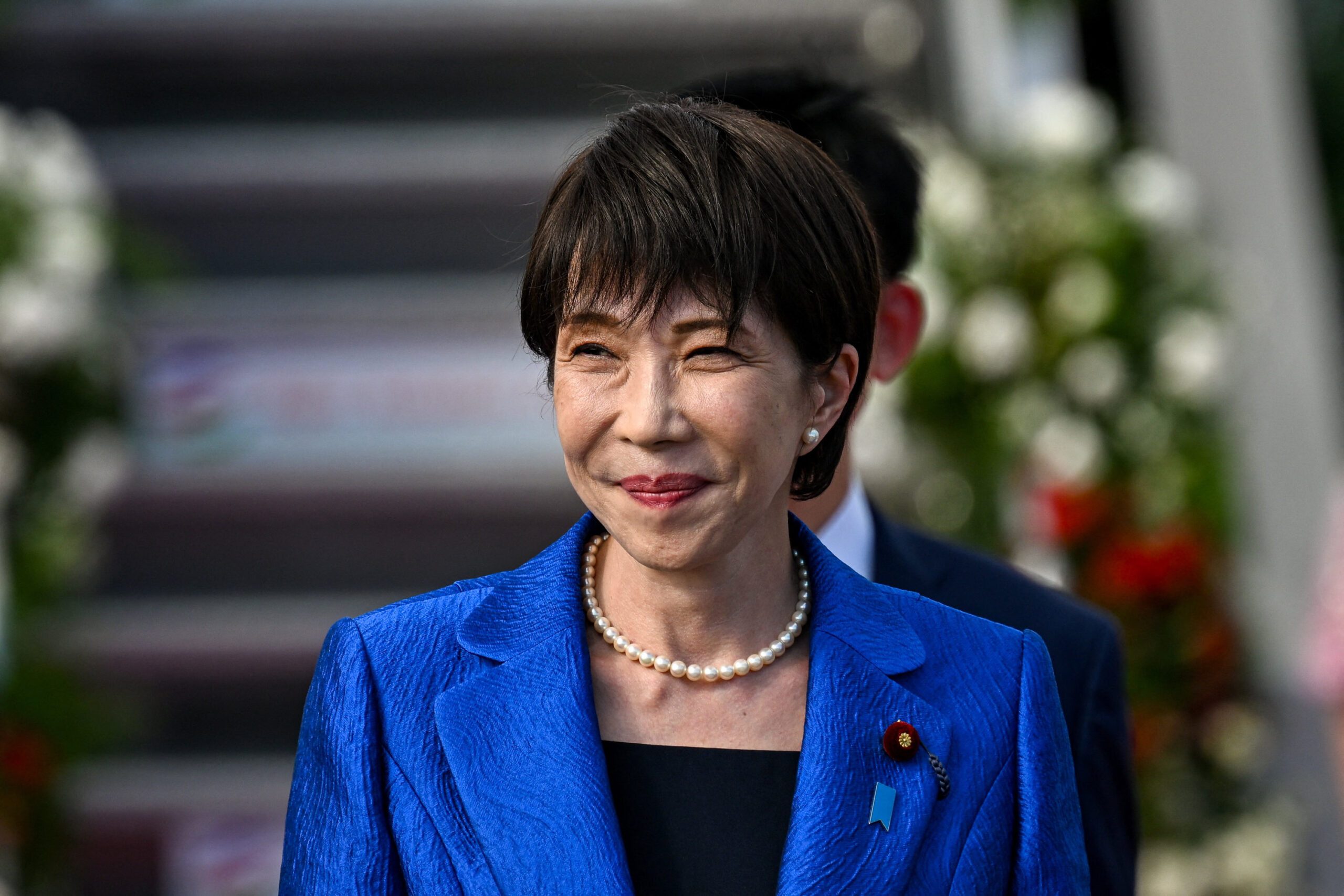
WOMAN PM. Japan's Prime Minister Takaichi Sanae arrives at the Ninoy Aquino International Airport to attend the 49th Association of Southeast Asian Nations Summit and Related Summits in Manila on November 16, 2026. Jam Sta Rosa/Pool via Reuters Under the initiative, Japan would also offer its unused oil storage facilities to other countries and help them develop own stockpiling systems Japan proposed the creation of an Asia Oil Security Task Force to enhance cooperation on oil stockpiling and emergency supply coordination during the AZEC Leaders' Meeting in Manila. The initiative aims to utilize Japan's unused oil storage facilities to help other countries develop their own stockpiling systems, addressing vulnerabilities exposed by the Middle East oil crisis. The Philippines and Japan signed a memorandum of cooperation to advance the Philippines' strategic petroleum reserve, focusing on developing storage facilities and enhancing preparedness against global oil supply disruptions. This is AI-generated. Read the article for full context. Report any errors. MANILA, Philippines – Japan on Tuesday, November 17, proposed the creation of a regional task force to strengthen cooperation on oil stockpiling and coordinate the release of supplies during emergencies. Japan Prime Minister Takaichi Sanae announced the proposed Asia Oil Security Task Force during the fourth Asia Zero-Emission Community (AZEC) Leaders’ Meeting in Manila. “We intend to promote as an equivalent of Asian version of the IEA (International Energy Agency),” Takaichi said. The Middle East oil crisis exposed vulnerabilities in the global and Philippine energy security, driven by heavy reliance on fossil fuels and imports and critical shipping routes such as the Strait of Hormuz. In a separate interview, Japan Ministry of Foreign Affairs (MOFA) Press Secretary Toshihiro Kitamura elaborated on the proposal, saying that Japan — under the initiative — would offer its unused oil storage facilities to other countries and help them develop their own oil stockpiling systems. “We have suggested to utilize our crude oil stockpiling facilities in Japan, which is not utilized. By utilizing those unused stockpiling facilities, we can stockpile in advance the crude oil purchased in Middle East or other countries,” Kitamura told reporters. (Watch this video below on how Japan’s national petroleum stockpiling helps ensure its energy security: Kitamura said discussions on the proposed task force’s operational rules were still ongoing, including the possible fees other countries would pay to use Japan’s unused storage facilities. “Under AZEC 2.0 POWERR Asia initiative, we are going to support Asian countries, especially ASEAN countries, to be more resilient by providing such a stockpiling system either individually, or jointly in the region,” he added. Speaking at the AZEC summit, President Ferdinand Marcos Jr. said stockpiling alone would not be enough to ensure energy security. He said the Philippines is actively advancing its strategic petroleum reserve and welcoming “high-impact investments across our energy landscape, from renewables, grid modernization, and energy storage to natural gas, energy efficiency, and emerging technologies that contribute to overall regional energy security”. “Sustainable and enduring energy security demands that oil-consuming and oil-producing nations act in unison. We must deepen information sharing and practical storage arrangements, as well as commit to upholding international law to keep sea lanes open and maintain fair, transparent markets,” Marcos said. Apart from Japan and the Philippines, other AZEC partner countries include Australia, Brunei, Cambodia, Indonesia, Laos, Malaysia, Singapore, Thailand, and Vietnam. Japan, PH ink agreement on strategic petroleum reserve In a related development, the Philippines and Japan signed a memorandum of cooperation (MOC) to advance the country’s strategic petroleum reserve and strengthen its preparedness against global oil supply disruptions. Energy Secretary Sharon Garin and Japan’s Minister of Economy, Trade and Industry Ryosei Akazawa signed the agreement on Monday, November 16, which provides a framework for developing, managing, and releasing strategic reserves, while opening the door for Japanese participation in stockpiling projects led by the Philippine National Oil Company (PNOC). “Japan will help us establish more storage facilities for fuel products, whether that is diesel, gas or crude oil,” Garin said. The agreement also covers the development of oil storage facilities and the identification of financing arrangements. Japanese agencies will assist the Philippines through capacity-building, oil security assessments, and policy development, providing technical expertise and support in managing strategic reserves, Garin added. “We can establish our own oil tanks, or ports and jetties. We do have our own storage facilities for oil. But we need to know how to manage all these strategic reserves,” she said. “We will start on capacity-building, especially with PNOC,” Garin added. – Rappler.com How does this make you feel? Loading
Japan proposes creation of ‘Asian’ IEA
Full Article
Original Source
Read the full article at Rappler →KhanList aggregates and links to publicly available news content. We do not host full articles from third-party sources. Always verify important information with original sources.