
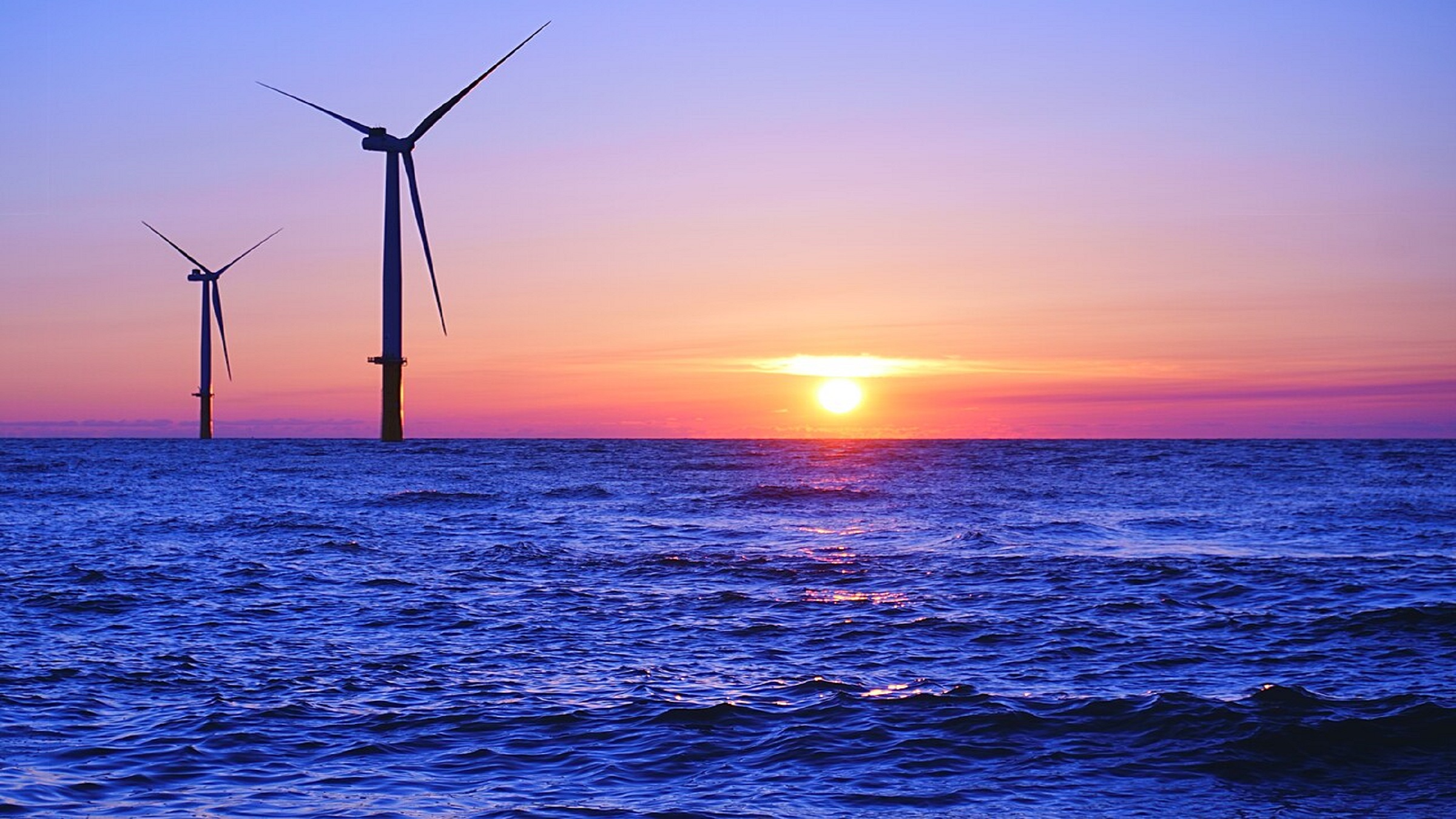
Japan has significant offshore wind potential and the industry benefits from growing government support. But the sector also faces major hurdles, including economic challenges and a still immature domestic supply chain.The country’s first commercial wind farm came online in 2022, and the nation aims to generate 30-45 GW from offshore wind by 2040, but rising costs have prompted major companies to exit planned projects. The government is revising its support frameworks to spur the industry and ensure projects are completed.Floating turbines could help unlock the full potential of offshore wind in Japan, a nation encircled by a vast expanse of deep waters. The 2026 launch of the Goto Offshore Wind Farm, which uses floating turbines, marked a key milestone.Some fishers and conservationists worry offshore wind projects may inadvertently harm fisheries and wildlife, while civil society groups emphasize that projects must also benefit local host communities. Collaboration with local stakeholders and impact assessments are key to building trust and ensuring success. Japan has “tremendous potential” for offshore wind power, according to the national government and experts. But achieving that potential means overcoming major hurdles. While commercial-scale projects began coming online in recent years, the country still needs to address challenges that include refining its public-private partnerships, a buildout of related industries (such as turbine production), and involving local communities. However, tapping into offshore wind as a primary sustainable domestic energy source is critical to Japan, with the country’s energy self-sufficiency rate standing at just 16.4% in fiscal year 2024. The country’s first commercial offshore wind farms came online in Akita prefecture, at the ports of Noshiro and Akita, in 2022 and 2023 respectively. These wind farms, along with others that have come online since, currently generate 0.5 gigawatts of electricity, with capacity for a total of 5.7 GW by March 2031 if projects currently in the pipeline proceed as planned. But the nascent industry remains in its infancy. “Japan’s offshore wind power policy is currently at a very important turning point,” notes a team of experts from the Renewable Energy Institute (REI), a Japanese think tank. A fixed-bottom offshore wind turbine at Japan’s Akita Port in 2022. Image by 掬茶 via Wikimedia Commons (CC BY-SA 4.0). Offshore wind milestones and millstones The government stands fully committed to offshore wind: Recent milestones include the passage of legislation in 2025 opening up Japan’s exclusive economic zone (EEZ) to wind farm development. The nation’s EEZ, the maritime zone extending up to 200 nautical miles (370 kilometers) from its coast, covers a vast expanse. But fully utilizing those waters comes with its own challenges. Being an island nation, Japan has a narrow continental shelf, which limits the possibility for anchored wind platforms. Instead, Japan sees floating turbines, an emerging technology, as key to deploying its wind power in deeper waters. Japan’s first commercial offshore wind farm to use floating turbines began operation in early 2026. The government of Japan’s official map showing the nation’s exclusive economic zone as of Dec. 21, 2016. Image by Ministerial Meeting Coast Guard via Wikimedia Commons (CC BY 4.0). However, even as things move forward, implementation has seen setbacks: Rising costs have led to corporate operators exiting major projects that were already under development, and to the government reworking its industry support mechanisms to help strengthen the market. While many of Japan’s energy transition advocates are calling for increased adoption of floating wind, conservationists have raised concerns about impacts on marine life. For example, conservationists worry that offshore wind projects in Hokkaido may impact eagles and other wildlife. Fishers across Japan, too, have expressed concern over how offshore wind farms could impact fish stocks and fishing operations, and have called for ongoing monitoring. Government-led push faces economic challenges Japan’s current energy plan acknowledges the high potential of offshore wind — capacity that, to date, remains mostly untapped. As of 2024, onshore and offshore wind power together provided just 1% of electricity generation in Japan, with the country still overwhelmingly reliant on imported fossil fuels. The government says it hopes to raise wind’s contribution to 4-8% by 2040. Of that, roughly 30-45 GW could come from offshore wind, a target placing Japan among the world’s high-ambition nations. Even that aspiration is just a fraction of the country’s potential: In a 2024 report, Japanese think tank Climate Integrate estimated Japan’s offshore capacity at about “552 GW of offshore wind potential, the equivalent of about 550 nuclear reactors.” The report called for the country to significantly ramp up offshore wind projects. The offshore wind farm at the port of Noshiro, Japan, in 2023. Image by 掬茶 via Wikimedia Commons (CC BY-SA 4.0). But as in other parts of the world, Japan’s aims are far short of matching reality, and major offshore wind projects have seen setbacks. BP and Mitsubishi Corporation, for example, exited Japanese wind farm consortiums in 2026 and 2025, respectively, citing rising costs not sufficiently accounted for under existing government frameworks. The three Mitsubishi projects would have generated a combined 1.7 GW; the BP project, which other consortium members say will continue, is rated at 450 megawatts. The government plans to put the sites previously awarded to the Mitsubishi consortium up for auction again. Partly in response to these setbacks, the government has revised the public bidding system and announced its intention to introduce policies to prioritize the reliable completion of offshore wind projects, which the REI team calls “a significant step forward.” REI says it would like to see further actions, including improvements to risk-sharing arrangements between operators and the government, and the creation of a detailed government road map for offshore wind development. REI says these framework enhancements would demonstrate market confidence and make company investment decisions easier. Another challenge centers around domestic supply chain immaturity. Japan currently lacks capacity to manufactureº wind turbines domestically at scale, leaving developers vulnerable to international price fluctuations. Although “Japan doesn’t need to aim to produce everything domestically,” according to the REI team, “it is extremely important to strategically foster areas where Japanese companies can be competitive.” Akita Port offshore wind turbines under construction in 2022. Image by 掬茶 via Wikimedia Commons (CC BY-SA 4.0). Building relationships with local communities In another step to jump-start the industry, the government in 2019 designated offshore wind “promotion zones” to aid operators in obtaining long-term occupancy rights. It also created a structured bidding process for developer selection. To date, existing promotion zones, and those under consideration, have been primarily clustered in northwest and southwest Japan, relatively rural regions. Some larger projects currently in development include the Murakami Tainai project in Niigata prefecture (690 MW) and the Tsugaru project (615 MW) in Aomori prefecture. Japan’s northernmost main island, Hokkaido, hosts the in-operation 112 MW Ishikari Bay New Port offshore wind farm. The government has plans for additional promotion zones for which developers haven’t yet been selected. Large corporations, rather than local companies, have so far been the leading private players in offshore wind projects. That’s due to the high investment required and long lead-up times, says Yumi Kobayashi, a director of the nonprofit Hokkaido Green Fund. However, the central role of major corporations “raises concerns that such projects might end up detached from the local community,” Kobayashi tells Mongabay in a video interview. Behind those concerns lie a history of large-scale energy projects, including Hokkaido’s now defunct coal mining industry and the ill-fated Fukushima Daiichi nuclear plant. While those ventures benefited Japan’s economic and industrial centers while they lasted, they left local communities struggling but when the projects ended or failed. Offshore wind projects look likely to do better, in Kobayashi’s assessment. “I think operators are working hard to align with the local community, including explaining why their business is necessary within that region and how they can contribute to it,” she says. “What’s really changing now is that operators are looking all the way to the end, at who will actually use the electricity they generate.” Kobayashi’s organization, the Hokkaido Green Fund, has helped establish citizen-owned, small-scale onshore wind farms for 25 years. While the scale of offshore wind projects makes the group’s model difficult to replicate at sea, she says she hopes companies can find ways for local communities to participate as minority investors. That innovation would allow “communities to take pride in themselves and become more self-reliant,” she says. The Goto Offshore Wind Farm in Nagasaki prefecture. It is Japan’s first commercial wind farm to use floating turbines. Image by Simonjon via Wikimedia Commons (CC BY-SA 4.0). High hopes for floating wind Japan launched its first floating wind demonstration project in Fukushima prefecture in 2013. It was seen as a symbol of national and regional recovery following the 2011 tsunami and nuclear disaster. Its three floating turbines, along with the world’s first 25-megavolt-amp floating substation and submarine cable, provided proof of concept before the pilot was shut down in 2021. Japan’s first commercial wind farm to use floating turbines, the Goto offshore project, came online in 2026. Located in Nagasaki prefecture, its eight turbines generate 16.8 MW in total. “We view the Goto Offshore Wind Farm as the major step toward the commercialization of floating offshore wind power in Japan,” a representative from project developer Toda Corporation told Mongabay in an email interview. While the majority of Japan’s operational and proposed offshore wind projects use fixed-bottom turbines, floating turbines like those at Goto are of particular importance for scaling up the country’s offshore wind capacity. As already noted, the aim is for floating turbines to contribute at least 15 GW of the 30-45 GW of offshore wind targeted for 2040. The Toda representative listed three key factors for floating wind success in Japan: a steady pipeline of projects to foster industry growth; prompt development of related infrastructure; and the strengthening of domestic supply chains and human resources. They also underlined the importance of building trust with local communities. That’s a sentiment also expressed by Yuki Kawaguchi, a member of Goto City’s Future City Creation Department, which oversees the municipality’s energy transition initiatives. “The key to the [Goto] project’s success was building a ‘community-led coexistence model’ grounded in pride and responsibility as a frontrunner [in floating wind] and centered on the understanding and participation of the local community, including residents, fishers, and industry,” Kawaguchi told Mongabay in an email interview. Buy-in by local fishers is particularly key in offshore projects due to concern over livelihood impacts. The Goto wind farm is expected to bolster the long-term sustainability of the local economy through employment opportunities and economic spillover effects, Kawaguchi added. Elsewhere, the Tokyo metropolitan government is planning a floating wind farm near the Izu Islands, which fall under the metropolis’s jurisdiction. With a capacity of at least 1 GW, the project would be the world’s largest floating wind farm to date, if implemented. The ambitious undertaking will require more than 100 kilometers (60 miles) of undersea transmission cables to connect the islands with the mainland grid. Globally, the floating offshore wind sector is still in its early stages, which presents an opportunity for Japanese companies to establish a competitive edge, the REI team notes. Since the opening of Japan’s EEZ for wind farm development in 2025, projects have so far been confined to 12 nautical miles (22 km) from shore. But with the EEZ extending 200 nmi, floating turbines will become key to establishing wind farms in deeper waters. Utilizing the EEZ is of “great importance for achieving Japan’s future offshore wind power deployment targets,” a representative of the Japan Wind Power Association, an industry group, told Mongabay in an emailed statement. They added that “it is important to view offshore wind not merely as a power generation business, but as an opportunity to build a new industrial foundation for Japan.” Banner image: Offshore wind turbines photographed at sunset at the port of Noshiro, Japan, in 2022. Image by 掬茶 via Wikimedia Commons (CC BY-SA 4.0). FEEDBACK: Use this form to send a message to the author of this post. If you want to post a public comment, you can do that at the bottom of the page. Cite this articleAnnelise Giseburt (2026). Japan looks to offshore wind to boost energy security, but hurdles remain. Mongabay Conservation news. DOI: https://doi.org/10.66709/news-336469 Credits Topics
Japan looks to offshore wind to boost energy security, but hurdles remain
Full Article
Original Source
Read the full article at News →KhanList aggregates and links to publicly available news content. We do not host full articles from third-party sources. Always verify important information with original sources.