
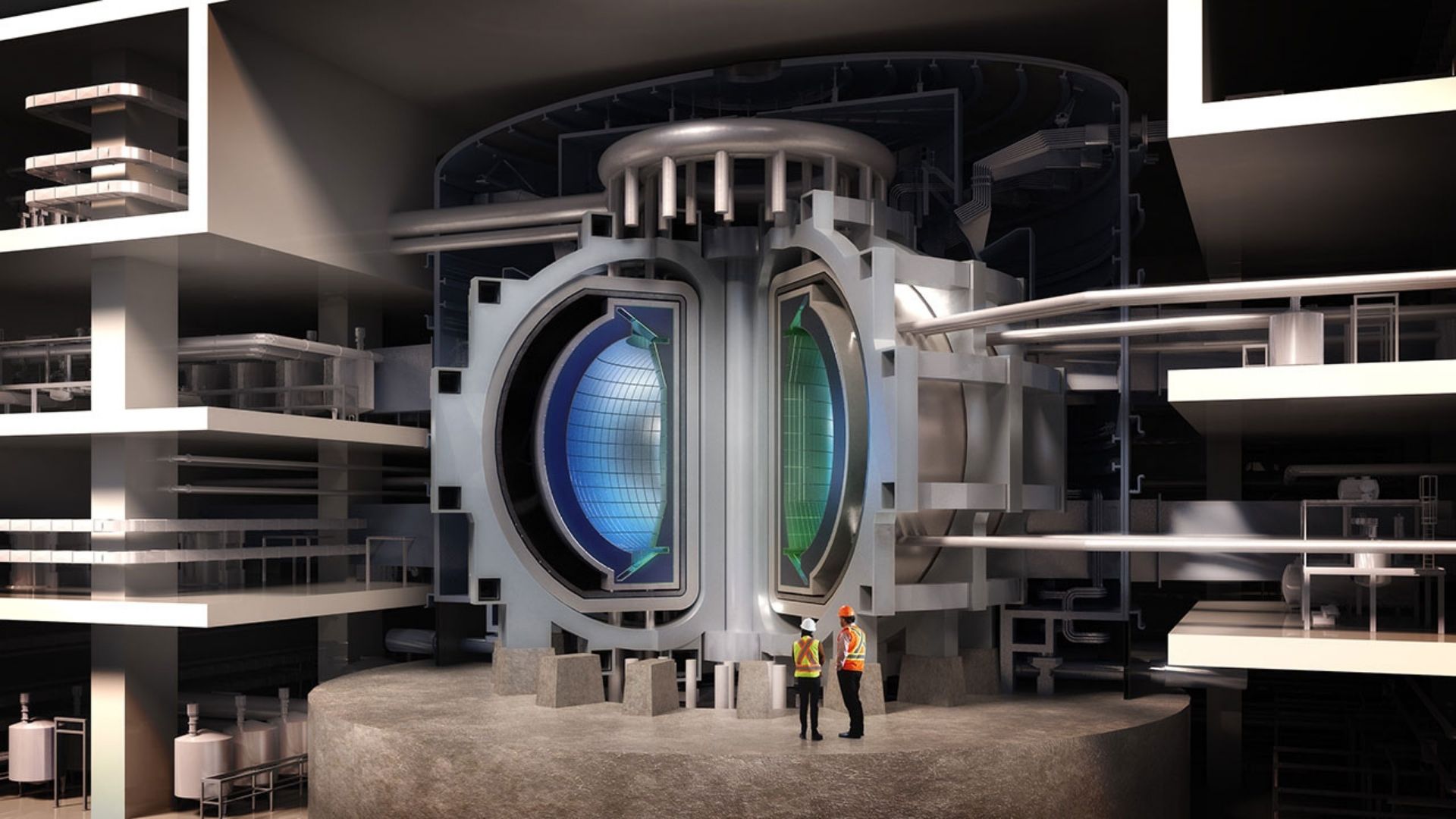
Japan has picked Helical Fusion as a final candidate for a major government program aimed at advancing fusion power toward demonstration in the 2030s. The Japanese Ministry of Economy, Trade and Industry (METI) expects the three-year initiative to provide roughly ¥60 billion ($400 million) across selected private fusion projects through 2028. The program covers several approaches, including tokamaks, stellarators and laser fusion. Helical Fusion has not yet received a confirmed funding amount. METI will announce the award after completing its formal grant decision. The selection gives Helical Fusion another step toward its planned fusion power plant in the 2030s. Its strategy centers on a Helical Stellarator, an approach designed around continuous plasma operation. Japan wants private developers to move fusion beyond laboratory experiments and toward systems that could eventually produce electricity. METI’s framework therefore ties funding to specific technical and commercialization milestones. Projects must demonstrate more than sustained fusion conditions. Developers also need to address plant safety, maintenance requirements, and relationships with communities that could host future facilities. Those requirements put the focus on the machinery surrounding the plasma. Helical Fusion is tackling continuous operation, net electrical output, and practical maintenance as key engineering challenges. Stellarator targets continuous operation Helical Fusion traces its technical roots to decades of stellarator research in Japan. The company emerged in 2021 as a spin-out linked to research at the National Institute for Fusion Science (NIFS). NIFS operates the Large Helical Device (LHD), which has generated extensive data on long-duration plasma operation. The facility has sustained plasma for 3,268 seconds and reached temperatures above 180 million°F. Helical Fusion aims to turn that research base into an engineered power system. Its Helix Program provides the roadmap for that effort. The first major targets involve high-temperature superconducting magnets and an integrated blanket and divertor system. Those components will eventually come together inside Helix HARUKA, an integrated demonstration device. The program will then move toward Helix KANATA, which Helical Fusion describes as its first power-generating fusion plant. Building the plant Work on the HTS magnet demonstration has already started at Helical Fusion’s workspace on the NIFS campus in Toki, Gifu Prefecture. More than 30 Japanese companies are involved in Helix HARUKA. Their contributions span precision manufacturing, complex systems engineering and large-scale electrical equipment. That industrial network matters because fusion power plants require far more than a working plasma. Magnets, heat-management systems, structural components and power equipment must operate together under extreme conditions. Helical Fusion CEO and co-founder Takaya Taguchi said Japan now faces a critical opportunity to apply decades of accumulated fusion expertise. The company sees the Helical Stellarator as an important route toward commercial fusion. Its immediate challenge will be proving that the architecture can move from experimental performance to power-plant engineering.METI’s program could provide the funding framework needed to make that transition. Japan’s fusion sector will face a bigger test when experimental systems must begin behaving like real power infrastructure.Get the latest in engineering, tech, space & science - delivered daily to your inbox.Aamir is a seasoned tech journalist with experience at Exhibit Magazine, Republic World, and PR Newswire. With a deep love for all things tech and science, he has spent years decoding the latest innovations and exploring how they shape industries, lifestyles, and the future of humanity.
Japan funds experimental stellarators in $400M push for continuous fusion power
Full Article
Original Source
Read the full article at Interestingengineering →KhanList aggregates and links to publicly available news content. We do not host full articles from third-party sources. Always verify important information with original sources.