
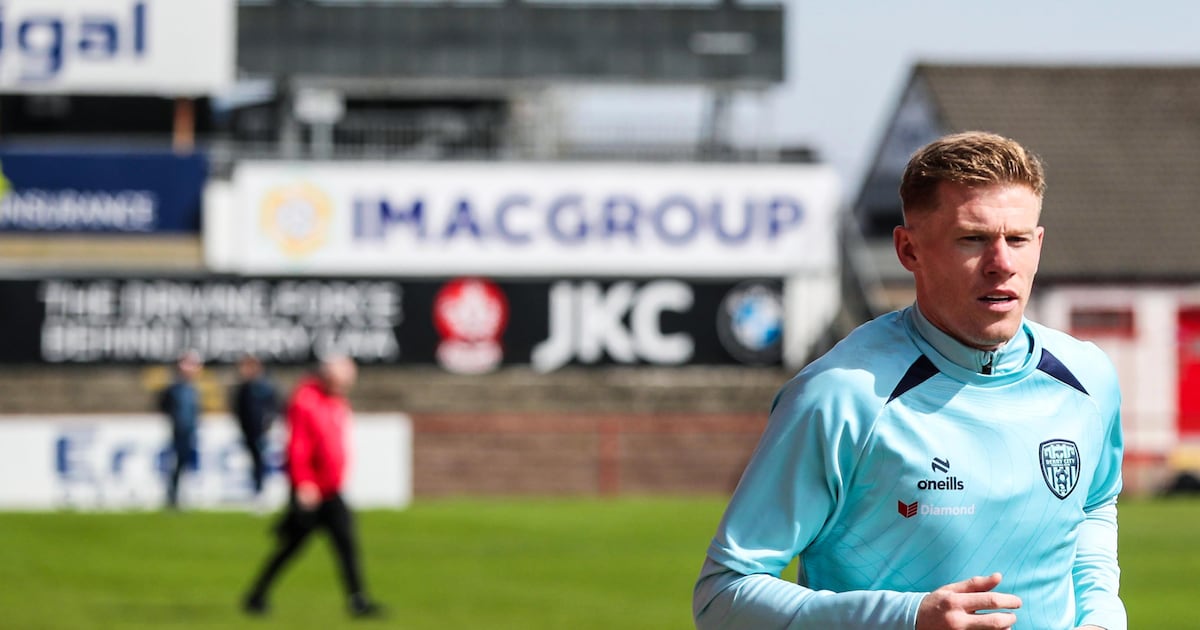
We write this week about James McClean and Caelan Doris, two men who share little superficial resemblance beyond the fact both have represented Ireland at senior international level.Beyond this, both have lately done their country some service by their honesty and willingness to appear vulnerable in the public eye: McClean in his outstanding autobiography, The Walls, and Doris in a remarkable podcast interview with Joe Molloy. They are two different men with two different stories, but both have presented to us all the legacy of our past and the reality of inherited trauma.McClean has been doing this for most of his career. His refusal to wear the poppy out of respect because he was mindful of the lingering impact of Bloody Sunday on his hometown showed the entire sweep of Britain’s military history cannot be depoliticised and embalmed in a single image.READ MOREMcClean’s memoir is the best sports book this columnist has read this year, partly because it is a brilliant document on the reality of growing up in a Catholic community in Northern Ireland in the years immediately preceding and following the Belfast Agreement.McClean’s portrayal of his Derry childhood occasionally reveals economic problems – 96 per cent of the children in his primary school required free school meals – and recalls routine violence. He writes of quotidian childhood sights of walking past men wearing balaclavas and holding a gun, understanding they were in the IRA and yet feeling more reassured by their presence than an RUC van.These men did the local policing: McClean remembers one “local nuisance” being tarred and feathered and tied to a lamp-post. “It would always be around eight or nine in the evening the punishments would happen, and we knew the IRA were doing it,” McClean writes.The Walls by James McClean Five pages later, McClean recalls comments from other kids about his true parentage, and says his parents initially brushed it off and told him to ignore it. “That might seem odd, but we weren’t a family of talkers,” he writes. “We don’t hug each other ... we don’t talk about our feelings.” McClean ultimately learns his biological father is not who he thought it was, but is instead a local man named Joe Kelly, whom he associates with heavy drinking.“The only influence that Joe had on me was confirming that I wasn’t going to be a drinker,” McClean writes, revealing he only really dug into this story when he was doing his book. He writes that his mother finds it difficult to speak about it all and his admiration for how she dealt with the challenges of her teenage years, especially as the Troubles were going on around her. “If there was any trauma from it, she hid it well.”McClean’s publicity for his book was railroaded by an outcry about his comments to the Sunday Independent of how he considers therapy to be for “weak men”. Although this assertion is not true, it helps nobody to condemn McClean for thinking this way. Better to understand why he thinks this way. We are all a product of our environments and McClean is from a place that has been coarsened into silence by cycles of violence and prejudice.McClean’s wife, Erin, has issued a statement explaining she has been encouraging him to seek help to address issues from his early life. Having read McClean’s book, it is hard to divorce his resistance to therapy from the fact he grew up in a place that associated silence with strength.The late journalist Lyra McKee was born just less than a year after McClean, and her chief legacy is to have highlighted the misbegotten optimism of the peace process. She scorned the jaunty connotations of the phrase “ceasefire babies” and explained that her generation had been exposed to economic and mental health issues endemic to the areas most affected by the Troubles. McClean appears to be another person forced to live with a legacy of this past.Caelan Doris in action against England at Twickenham last February. Photograph: INPHO Caelan Doris, meanwhile, revealed the reality of inherited trauma from another of the State’s most shameful realities, clerical abuse. His father Chris spoke, in a 2022 interview with this newspaper, about being a victim of abuse at the Willow Park school in Dublin, speaking with remarkable strength and clarity of the process of overcoming it. Art became one of his outlets of response, and one of his paintings reproduced in the interview reads, “The tragedy of the victim is the internalisation of the badness of the act.”This is an insight into the despicable trick of it all: the abuser transfers their shame to their victim and forces them to carry it for life. Doris’s interview with Joe Molloy this month showed how this shame can be passed down generations. He speaks with Molloy about learning to interrogate his feelings to better understand his state of mind at any given moment, be it self-doubt, anxiety or a general lack of focus.“I have a pretty good sense of where it comes from,” Doris says, “and it’s intergenerational trauma and shame.” Meeting it head on, he says, has given him a great admiration for and appreciation of his parents, particularly his father. All of this is an ongoing process, he says, and he says that at times it has been “pretty bloody rough going”.There is an official temptation to point to our many commissions of investigations and weighty reports and refer to abuse in the past tense, as a dark chapter in the country’s past.Doris’s brave candour, however, shows there are many people living with the legacy of what we like to call history every single day.McClean and Doris are different people with different outlooks on life, but both have been willing to stand honest and vulnerable beneath the public spotlight. In doing so they have reminded us that Ireland’s past is not dead, it’s not even past.
James McClean and Caelan Doris live every day with the legacy of what we call history
Full Article
Original Source
Read the full article at Irishtimes →KhanList aggregates and links to publicly available news content. We do not host full articles from third-party sources. Always verify important information with original sources.