
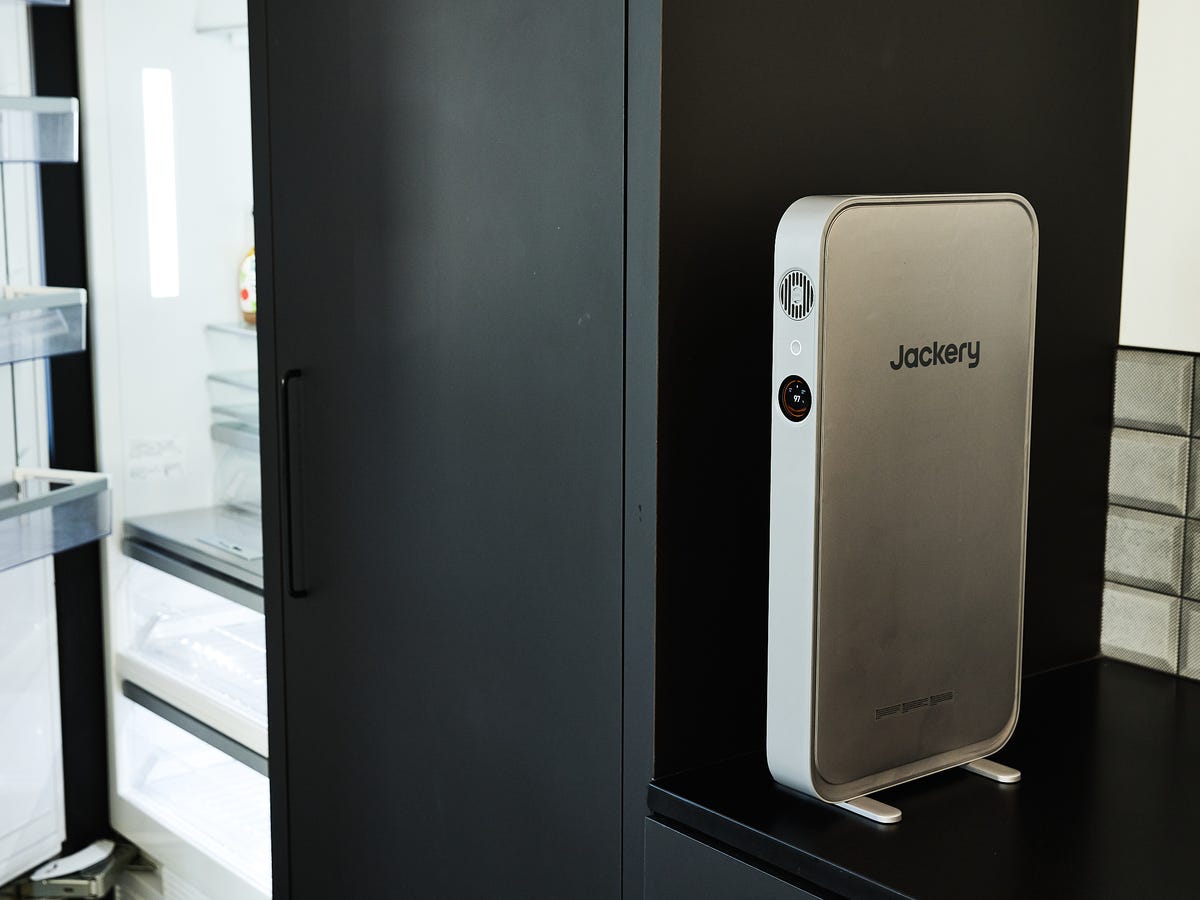
4 min readNot every home power backup solution has to be an expensive and complicated system. Certainly, a portable power station can be affordable, but it usually has to be set up when the power goes out, which isn’t convenient if you’re not at home. What if you could meet in the middle with something affordable but also automated? That’s the aim of a device like Jackery’s FridgeGuard, an automated appliance backup device that costs less than $800.It’s named FridgeGuard because Jackery, like competitors Bluetti and BioLite (whose products we also reviewed), is banking on the idea that the appliance most people care about powering when the lights go out is the refrigerator. It makes sense; you’ve got the most to lose with spoiled food during an extended blackout. But in truth, you can use this type of backup with any alternating-current-powered device, whether that is a fish tank, automatic pet feeder, garage freezer, or even essential medical equipment. And since this is designed to be always-on, you don’t have to think about it very much once you set it up.ProsLower price, comparably, if you’re looking to spend less and only need it for the basicsSmaller and lighter than competitorsExtremely simple setupConsOnly one AC outlet and lower total output compared to the competitionDC input power for using solar panels to recharge it requires an $89 proprietary hubKey SpecsPower800 WCapacity1,024 WhOutlets1 x 120V AC; 1 x expansion portWeigth23 lbBasic, But With a Thoughtful DesignOut of the box, the Jackery FridgeGuard is smaller and lighter than the competition. It’s a few inches shorter than those from Bluetti and BioLite, and only weighs 23 pounds—the others weigh more than 40 pounds. That makes the task of placing this out of the way, either mounted on a cabinet or sitting flat on top of a cabinet, a bit easier. It also has two airflow vents that you can remove to clean or replace filters, which is a nice feature to have in a kitchen, where air particles can be heavier from cooking.Cutting down on the size keeps the price point lower, but this comes at another cost. At 1,024 watt-hours of battery capacity, FridgeGuard can’t run a refrigerator for as long as the competition, and with only 800 watts of output (roughly half the amount or more of the others), you can’t run as many things from it. There’s also only one outlet, as opposed to two, so if you want to power more than one thing, you’ll need to attach a power strip.Trevor RaabFridgeGuard costs less than other brands, but it offers just one outlet, whereas the competition offers two, as well as higher power output.Of course, this may not matter to people who really are only concerned about keeping their refrigerator running. I tested this out on my own full-size French-door, bottom-freezer model, and I was able to run it for 11 hours. That’s enough time for most people experiencing a blackout after a severe storm. If you find that’s not enough, you can always add the FridgeGuard battery pack and double that capacity to 2,048 watt-hours.There are some other hidden cost-cutting measures, too. Jackery includes attachable feet if you want to stand it vertically, but wall mounts are optional ($29), and if you want to recharge it using a portable solar panel, you’ll need to purchase a proprietary adapter that costs $89. Competitors include wall mounts, and solar inputs are built into their units.Trevor RaabFridgeGuard comes with attachable feet so that you can stand it vertically if that placement is more convenient.It Doesn’t Skimp on Smart FeaturesDespite some cost cutting with its hardware, FridgeGuard doesn’t skimp on smart features within the app. If you're away from home, you get notifications when the power goes out and when the FridgeGuard is starting to get low on power. If you live in a region with variable utility rates, you can set it to only recharge from grid power when the rates are at their lowest (your electric company can tell you when that is).Trevor RaabIf you can live in an area where you have variable utility rates, you can set up FridgeGuard to take over and power your refrigerator when rates are high.Conversely, you can also use it to save a bit of money by using a time-of-use (TOU) mode that powers the fridge from the battery during high-rate hours and grid power only during the low-rate hours. It would take many months of testing to see how much money you could really save using this mode, but the potential is there.Some may worry about daily discharge and recharge, but FridgeGuard runs on a lithium iron phosphate (LiFePO4) battery that offers up to 6,000 recharge cycles, which is 16 years if you were to do it every day. In the end, TOU mode may be worth it.How Does Jackery’s FridgeGuard Stack Up?If all you want is automated backup power for your refrigerator (or another essential appliance or device) for a few hours, Jackery’s FridgeGuard is the simplest and most economical way to go. It’s easy to set up and the epitome of instant automation. If you frequently experience blackouts longer than 12 hours, spending a bit more on a system from Bluetti or BioLite may suit your needs better, but if not, Jackery has built a good product for you.Other Power Stations We’ve TestedMost Safety CertificationsDavid is a Reviews Editor for Hearst’s Enthusiast Group, contributing to Popular Mechanics, Runner’s World, Bicycling, Best Products, and Biography. He has over 25 years of experience writing about and reviewing consumer electronics, kitchen appliances, DIY products, outdoor gear, and more. He also spent years covering the ever-changing world of online retail. To relax, he loves experimenting with new recipes, tweaking his smart home setup, and spending time outdoors on his bike or camping.
Jackery’s FridgeGuard Brings Basic Automated Backup Power at an Affordable Price
Full Article
Original Source
Read the full article at Popularmechanics →KhanList aggregates and links to publicly available news content. We do not host full articles from third-party sources. Always verify important information with original sources.