
Over the past decade, higher-secondary GER fell from 48.5 per cent to 44.8 per cent, way lower than the national average of 58.4 per centJammu and Kashmir is witnessing a sharp and worrying decline in higher secondary enrolment. Over the past decade, the gross enrolment ratio (GER) at this level in schools has fallen from 48.5 per cent to 44.8 per cent—way lower than the national average of 58.4 per cent and one of the steepest relative drops among states and Union territories.This is among the key findings of the recent NITI Aayog report ‘School Education System in India: Temporal Analysis and Policy Roadmap for Quality Enhancement’. The 2026 report, based on Unified District Information System for Education (UDISE) data from 2014-15 to 2024-25, highlights a consistent erosion in student participation as children move from primary to higher secondary stages, with Classes 11 and 12 emerging as the weakest link in J&K’s schooling system.The crisis is further underscored by a huge fall in the secondary-to-higher secondary transition rate, which dropped from 93.38 per cent to 72.9 per cent over the same period—one of the sharpest declines in the country. At 44.8 per cent, J&K’s higher secondary GER ranks among the lowest, alongside Bihar (38.1 per cent), Meghalaya (39.7 per cent), Nagaland (39.8 per cent), Assam (43.5 per cent) and Arunachal Pradesh (43.7 per cent).The drop-off is dramatic when viewed across stages. In 2024-25, J&K recorded a primary-level GER of 113.7 per cent, reflecting strong initial participation. This falls to 77.3 per cent at the upper-primary level, 66.1 per cent at the secondary level, and just 44.8 per cent at the higher secondary level. GER measures the total number of students enrolled at a particular level, regardless of age, as a percentage of the official age-group population. It indicates access and participation rather than quality or exact age-appropriate enrolment.Why students are dropping outThe NITI Aayog report does not offer a detailed J&K-specific causal diagnosis or analysis. Instead, it places the decline within broader national patterns and structural challenges that intensify at the higher secondary stage. The most explicit reason sighted in the report is that education beyond Class 10 falls outside the protective mandate of the Right to Education (RTE) Act. Without legal compulsion, the report notes, financial constraints, early entry into the workforce and social pressures intensify, leading to higher attrition.A high school teacher in north Kashmir, speaking on condition of anonymity, said most students in rural government schools come from modest backgrounds. “Parents are often unable to bear the costs beyond Class 10. Children drop out and take up menial jobs to support the family,” she said. The teacher suggested making education free up to Class 12 and providing free textbooks to improve retention.A college professor added that rising education costs and inflation are forcing students from humble backgrounds to prioritise earning over studying, contributing to falling enrolment at secondary, higher secondary and even college levels.A major structural factor is institutional discontinuity, points out the NITI Aayog report. Only 5.4 per cent of schools in India offer continuous education from Classes 1 to 12. Most students must change schools after Class 10, increasing the risk of dropout. This challenge is particularly acute in J&K due to difficult terrain, sparse higher secondary infrastructure and longer travel distances.The report also flags related systemic stresses in J&K: 146 schools with zero enrolment despite 61 teachers posted; 1,371 single-teacher schools serving a total of over 32,000 students; functional smart classrooms in only 16.5 per cent of schools; and ramps for children with special needs available in just 45.4 per cent of schools. While not direct causes of the GER decline, these reflect broader resource and quality gaps that undermine retention, the report adds.Government gears upAgainst this backdrop, chief minister Omar Abdullah chaired a review meeting of the school education department in Srinagar on August 24. The meeting focused on the low higher-secondary GER and reviewed a phased plan to upgrade 714 high schools into full K-12 (Classes 1-12) composite schools.The upgrade aims to ensure continuity in schooling, expand access to Classes 11 and 12, and reduce dropouts after Class 10, the government said in a statement. Abdullah stressed on the need for a focused, need-based strategy to expand senior secondary education with special attention to accessibility across the Union Territory, it added.Key recommendationsThe NITI Aayog report, in its summary, presents J&K’s 44.8 per cent higher-secondary GER as part of a wider national challenge of weak continuity beyond elementary education. As a policy roadmap, the report, in the wider national context, has strongly advocated expanding composite schools that offer uninterrupted education from Classes 1 to 12 under one roof, thus reducing the need for students to change institutions after Class 10.Other recommendations include evidence-based rationalisation of schools to optimise resources while protecting access, especially in remote areas; operationalising school complexes to share teachers, laboratories and infrastructure; strengthening infrastructure and teacher deployment for Classes 11 and 12; expanding digital and broadcast-based learning; integrating vocational education; and strengthening equity measures for students at risk of dropping out after Class 10.The NITI Aayog report and the government’s response should underline a clear priority: bridging the sharp fall in participation after Class 10 remains critical for improving educational outcomes in J&K.Subscribe to India Today Magazine- EndsPublished By: Yashwardhan SinghPublished On: Sep 1, 2026 18:01 IST
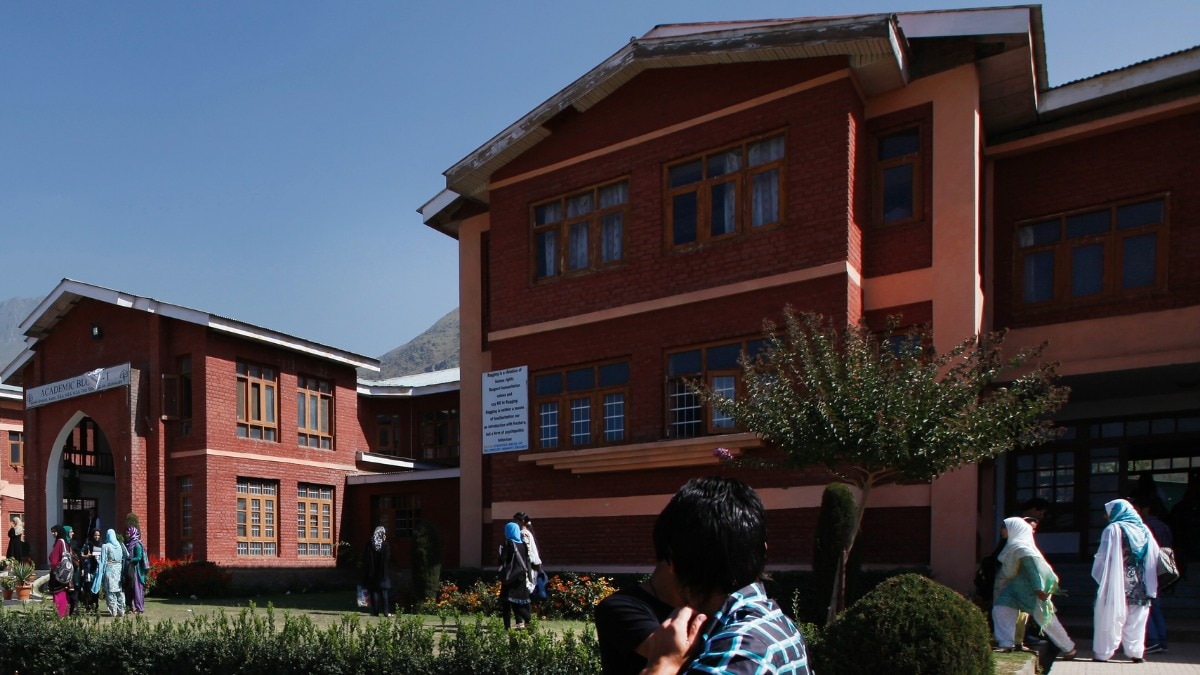
J&K higher-secondary schooling in crisis: Why gross enrolment ratio drop is among India's lowest
Full Article
Original Source
Read the full article at Indiatoday →KhanList aggregates and links to publicly available news content. We do not host full articles from third-party sources. Always verify important information with original sources.