
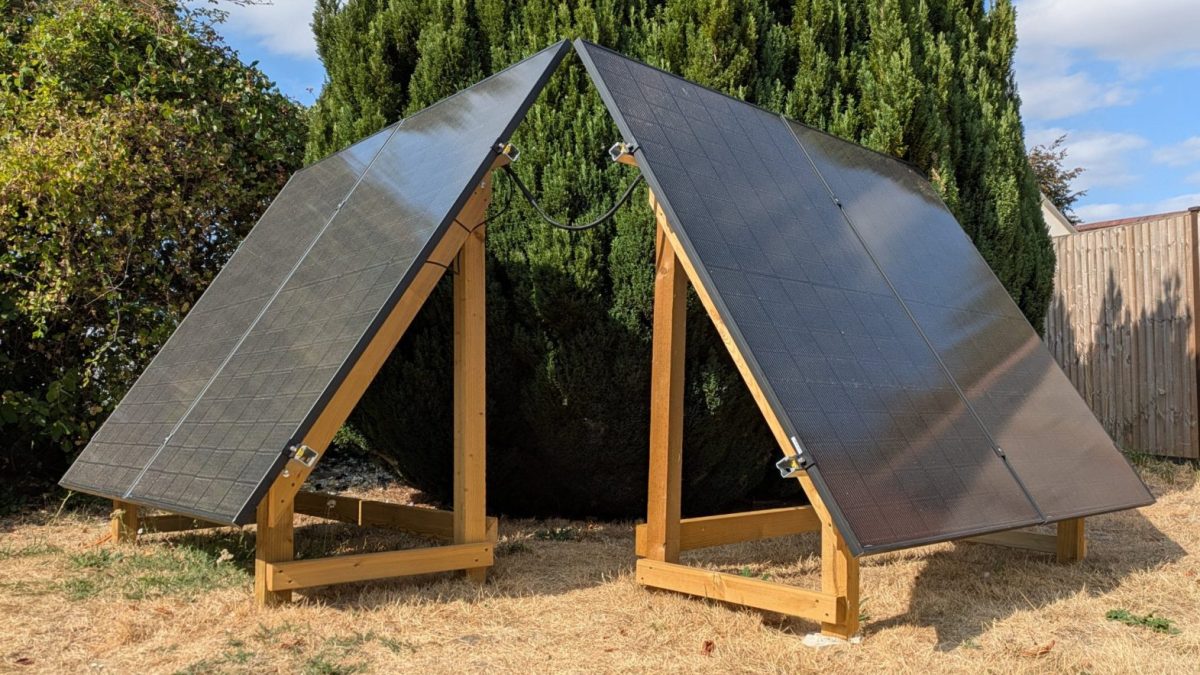
The plug-in solar panel revolution has finally arrived in the UK, as self-install kits go on sale from Thursday. Argos and other retailers are selling £699 solar panel kits that let consumers plug the device into British three-pin sockets. The Government hopes that its updated regulations – aimed at allowing consumers to easily install the devices – will spark a boom in home renewables. Ministers expect that users of plug-in solar will be able to save between £70 and £110 a year on their energy bills. Shorts Some experts have already assembled their own systems and taken advantage of this summer’s weather to begin cutting their bills. Matt West, an electric vehicle (EV) expert with a background in electronics and engineering, set up plug-in solar panels in his garden at the start of July. West, who runs the Matt Goes Electric YouTube channel, told The i Paper he was on course to save around £300 a year – higher than Government estimates. “Reading about how the Government wanted to make this more widespread, I was curious about what plug-in solar could do,” said West, who formerly sold second-hand EVs. “I wanted to save money on energy bills. And I’m the sort of person that’s curious about how it all works.” The Government has amended regulations so that from 27 August, solar products already being sold in other countries can be made compliant with UK plug and socket rules. Until now, Britons have been able to go online and buy plug-in solar devices created for markets in Europe or elsewhere. The expectation has been that an electrician should attach a UK plug and install the devices safely. Ministers wanted to make sure anyone could buy a “plug-in-and-play” kit without the need for an electrician. So they have created a new regulatory framework to make sure all devices sold to UK consumers come with compliant UK plugs. ‘It works so much better than expected’ West bought four 465W solar panels – the type typically installed on rooftops – for £93 each at the start of summer. He also purchased an 800W microinverter through Amazon for £122, and attached a plug himself. Another £100 went towards building his own frame for the solar panels, taking his total spending to about £600. The microinverter is the key bit of kit that allows the solar panels to start generating power in a household’s electricity circuit – but it caps the amount at a certain level. The amount of power users can generate has been limited to 800W by the Government. “I was slightly cynical – I thought 800W wouldn’t be enough to run a kettle and a toaster. But it works so much better than expected,” said West. Matt West is enthusiastic about this week’s launch of self-install plug-in solar kits in high-street stores The system has been able to generate around £13 worth of energy a week over the past two months of summer sunshine. However, around 50 per cent of the power generated is going out of his home and to the national electricity grid – leaving him with savings of around £6.50 a week. Even with so much of the energy going to the grid, West estimates that he is still on course to save £338 a year. Households are set to pay around £60 more for their energy bills as Ofgem raises its price cap to £1,723 per year. West deliberately bought four panels to help him absorb as much sunlight as possible during the overcast winter months – hoping it can keep him something close to the maximum of 800W all year round. “One or even two panels will never produce maximum generation throughout the year,” he explained. “I’m hoping I can make it work well in the winter.” Why plug-in battery could create higher savings Despite being pleasantly surprised by how well the system works, West said he was “shocked” to see so much energy leaving for the grid. “The only issue is that you can’t use all the power generated without a battery,” he added. West and other renewable energy enthusiasts would like Labour ministers to turn their attention next to plug-in batteries. Regulating the market for these devices would allow Britons to store the energy they generate. Existing wiring regulations are not designed for such appliances. “I hope the Government can look at encouraging plug-in batteries and creating straightforward rules for those. That will make a big difference,” said the electrics expert. West thinks he might be able to save £600 a year if he was able to store all the solar power generated with a plug-in battery. He is enthusiastic about this week’s launch of self-install plug-in solar kits. “If they’re more readily available, it’s a good thing,” said West. “I can’t see electricity prices coming down. So the advantages of solar is getting more and more attractive all the time. Unfortunately, this roll-out is happening at the wrong time of year, now that the sun is going. It may be that a lot of people won’t think about it seriously until next spring.” Argos and City Plumbing, a builders’ merchants with 350 branches, confirmed that £699 UKsol plug-in solar kits will be available for households to buy from Thursday. Major retailers, such as Wickes, Currys, B&Q, Screwfix and Amazon, are all expected to have plug-in solar kits available to purchase in stores and online soon. Energy Secretary Miatta Fahnbulleh said plug-in solar was “a simple, affordable way for households to take control of their energy bills and start saving straight away”.
I’ve started using plug-in solar panels – I’m on course to save £300 a year
Full Article
Original Source
Read the full article at Inews →KhanList aggregates and links to publicly available news content. We do not host full articles from third-party sources. Always verify important information with original sources.