8 Questions · Test Your KnowledgeGPUs: Past to present and beyondTrivia challengeFrom early framebuffers to AI-powered rendering — how well do you really know the GPU?HistoryHardwareAI & GPUsPioneersTechnologyBegin Which company released the GeForce 256 in 1999, marketing it as the world's first GPU?AAMDBIntelCNVIDIAD3dfxThat's right! NVIDIA coined the term 'GPU' (Graphics Processing Unit) with the release of the GeForce 256 in 1999. It was notable for offloading transform and lighting calculations from the CPU, marking a major shift in how graphics were processed.Not quite — it was NVIDIA that launched the GeForce 256 and trademarked the term 'GPU' in 1999. This card was a landmark release because it moved transform and lighting calculations off the CPU and onto dedicated graphics hardware for the first time.Continue Which company produced the Voodoo graphics card, one of the most iconic early 3D accelerators of the 1990s?AS3 GraphicsBMatroxCATID3dfx InteractiveCorrect! 3dfx Interactive's Voodoo cards dominated 3D gaming in the mid-to-late 1990s. The original Voodoo released in 1996 was so popular that 'Voodoo' became synonymous with PC gaming performance for several years, before 3dfx was ultimately acquired by NVIDIA in 2000.The correct answer is 3dfx Interactive. Their Voodoo line of 3D accelerator cards were the go-to choice for PC gamers in the mid-to-late 1990s. 3dfx was eventually acquired by NVIDIA in 2000, ending one of the most beloved names in early GPU history.Continue What does VRAM stand for, and what is its primary purpose in a GPU?AVariable Random Access Memory, used to adjust clock speeds dynamicallyBVideo Random Access Memory, used to store image and texture data for renderingCVirtual RAM, used to extend system memory when neededDVoltage Regulated Accessible Memory, used to stabilize power deliveryExactly right! VRAM stands for Video Random Access Memory, and it serves as the GPU's dedicated pool of memory for storing textures, frame buffers, and other rendering data. More VRAM generally allows higher resolutions and more detailed textures without performance penalties.The correct answer is B. VRAM stands for Video Random Access Memory, and it's the GPU's own dedicated memory used to hold textures, frame buffers, and rendering data. Having more VRAM is especially important for gaming at high resolutions or with demanding texture packs.Continue What is ray tracing in the context of modern GPU rendering?AA method of upscaling lower-resolution images using AI algorithmsBA technique that traces the path of light rays to simulate realistic reflections, shadows, and lightingCA process that reduces aliasing on the edges of rendered polygonsDA compression method used to reduce the size of textures stored in VRAMSpot on! Ray tracing simulates how light physically behaves by tracing the path of individual rays as they bounce around a scene. This produces highly realistic reflections, shadows, and global illumination, though it's computationally expensive — which is why dedicated RT cores on modern GPUs are such a big deal.Not quite — ray tracing is a rendering technique that simulates the physical behavior of light by tracing rays through a scene. It creates strikingly realistic reflections, shadows, and ambient lighting. Modern GPUs from NVIDIA and AMD include dedicated hardware cores specifically designed to accelerate ray tracing calculations.Continue What is NVIDIA's DLSS technology, and what AI technique does it primarily rely on?ADeep Learning Super Sampling — it uses AI to upscale lower-resolution frames to a higher resolutionBDynamic Lighting Shader System — it uses machine learning to improve shadow renderingCDirect Load Streaming Service — it uses AI to preload game assets fasterDDedicated Latency Suppression Software — it reduces input lag using neural networksCorrect! DLSS stands for Deep Learning Super Sampling. It renders frames at a lower internal resolution and then uses a trained AI model running on Tensor Cores to intelligently upscale the image, producing near-native quality visuals with significantly better frame rates.The right answer is A. DLSS stands for Deep Learning Super Sampling. NVIDIA's technology renders games at a lower resolution and uses AI — specifically trained neural networks running on dedicated Tensor Cores — to upscale the image. The result is better performance without a dramatic loss in visual quality.Continue In what decade did GPUs begin to be widely used for general-purpose computing tasks beyond graphics, a practice known as GPGPU?A1980sB1990sC2000sD2010sThat's right! GPGPU (General-Purpose computing on Graphics Processing Units) became a serious field in the 2000s. NVIDIA's launch of the CUDA platform in 2006 was a watershed moment, allowing developers to harness GPU parallelism for scientific computing, simulations, and eventually AI workloads.The correct answer is the 2000s. While GPUs existed before then purely for graphics, the concept of using them for general computing — known as GPGPU — gained real traction in the mid-2000s. NVIDIA's CUDA platform, released in 2006, was instrumental in opening up GPUs for tasks like scientific research, physics simulations, and AI training.Continue What interface do modern discrete GPUs primarily use to connect to a motherboard?AAGP (Accelerated Graphics Port)BPCIe (Peripheral Component Interconnect Express)CISA (Industry Standard Architecture)DUSB4Correct! PCIe (Peripheral Component Interconnect Express) has been the standard interface for discrete GPUs since the mid-2000s, replacing AGP. Modern high-end GPUs typically use PCIe x16 slots, with PCIe 4.0 and 5.0 offering substantial bandwidth improvements over earlier generations.The answer is PCIe (Peripheral Component Interconnect Express). AGP was the predecessor that was common through the early 2000s, but PCIe took over around 2004 and has been the dominant standard ever since. Today's GPUs use PCIe 4.0 or 5.0 slots, which provide massive bandwidth to keep up with ever-growing GPU performance demands.Continue Which of the following best describes AMD's answer to NVIDIA's DLSS upscaling technology?AFreeSync — an adaptive sync technology that eliminates screen tearingBFSR (FidelityFX Super Resolution) — an upscaling technique that works across a wider range of hardwareCSAM (Smart Access Memory) — a feature that gives the CPU full access to GPU VRAMDRSR (Radeon Super Resolution) — a driver-level sharpening filter applied after renderingWell done! AMD's FSR, or FidelityFX Super Resolution, is their upscaling technology designed to compete with NVIDIA's DLSS. A key differentiator is that FSR is open-source and hardware-agnostic, meaning it works on GPUs from AMD, NVIDIA, and even Intel — making it far more accessible than DLSS, which requires NVIDIA Tensor Cores.The correct answer is FSR (FidelityFX Super Resolution). AMD developed FSR as their competitive response to NVIDIA's DLSS. One of its biggest advantages is that it's open-source and not limited to AMD hardware — unlike DLSS, FSR can run on GPUs from NVIDIA and Intel too, making it a more universally accessible upscaling solution.See My Score Challenge CompleteYour Score/ 8Thanks for playing!Try Again
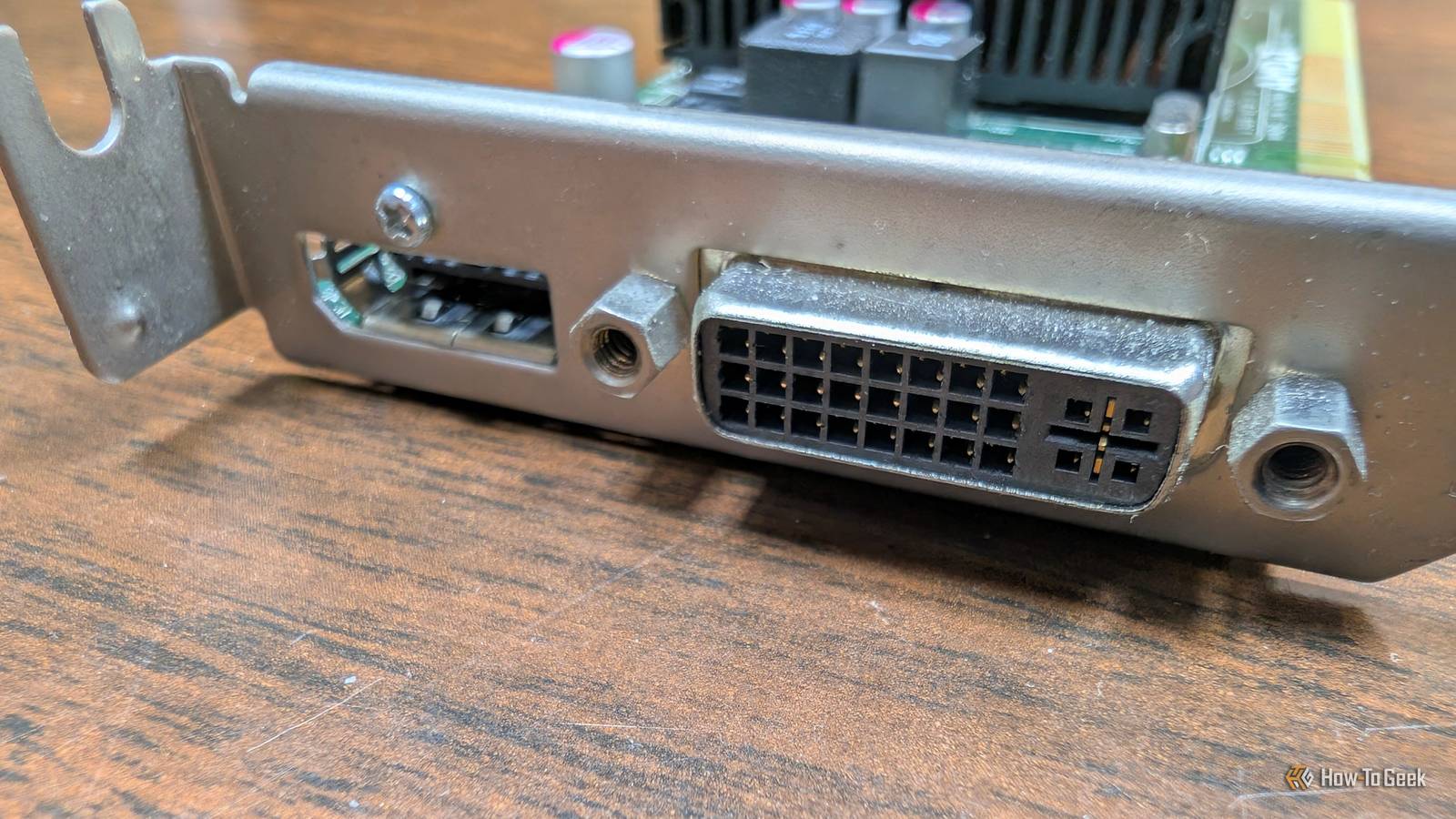
I've started buying "broken" GPUs, and it's not because I know how to fix them
Full Article
Original Source
Read the full article at Howtogeek →KhanList aggregates and links to publicly available news content. We do not host full articles from third-party sources. Always verify important information with original sources.