
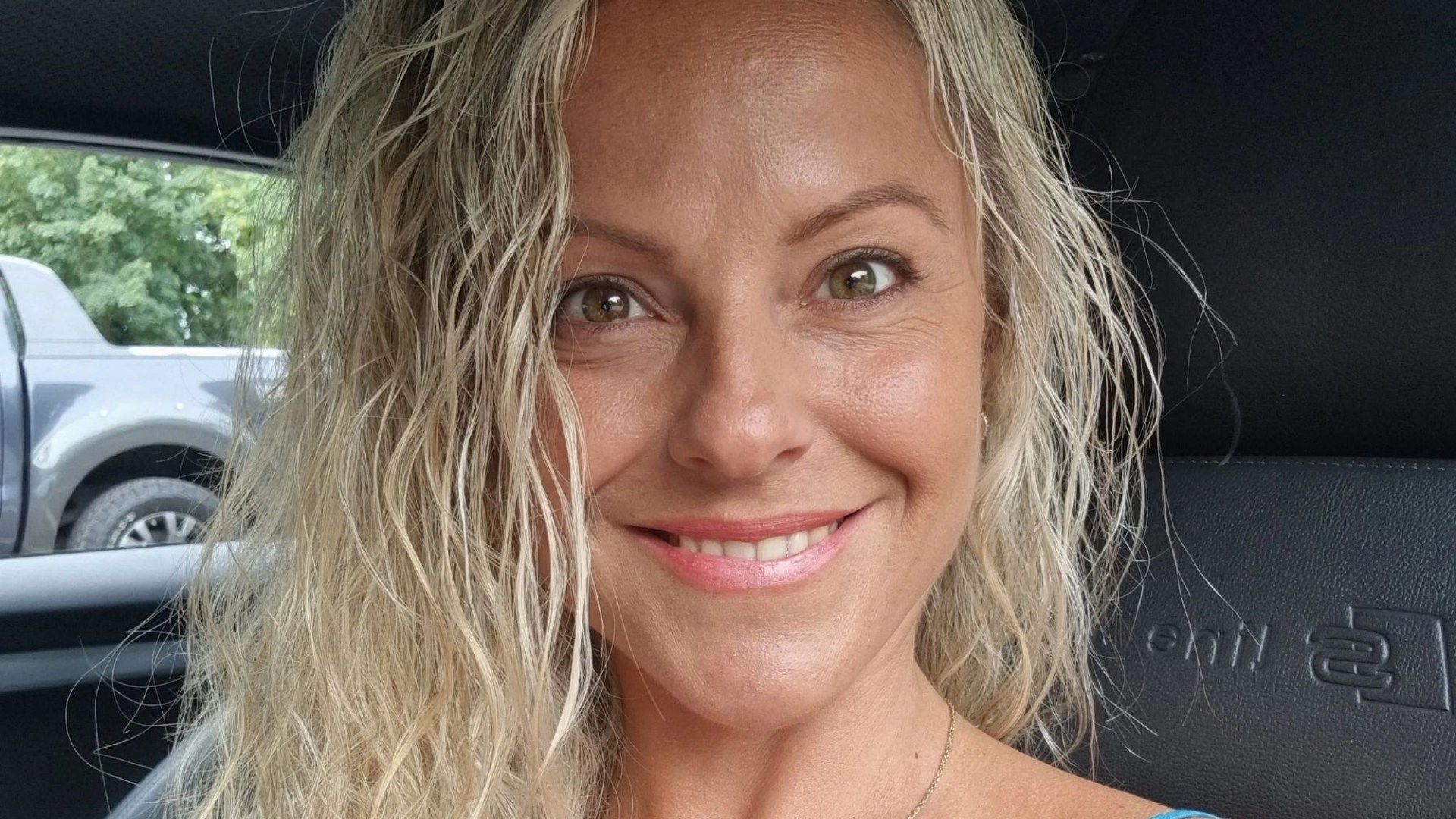
WHEN Lara Vivo began to notice the lights in her work meeting rooms were “flickering”, she initially thought little of it. The 41-year-old, who lives in Bournemouth, told her colleagues in 2019 that the lights were giving her headaches, but they insisted the lights were working just fine. Lara Vivo started to notice ‘flickering lights’ in work meetings which gave her headaches around March 2019 Credit: SWNS She put it down to stress, but ended up going for an eye test as she thought she needed glasses Credit: SWNS Blaming the incidents merely on stress, she then booked an eye test believing she may need new glasses. Her optician, however, referred her straight to the emergency eye unit at Royal Bournemouth Hospital instead. Sign up for the Health newsletter Thank you! Here, tests tragically found she had uveal melanoma, a rare type of eye cancer that starts in the middle layer of the eye, known as the uvea. Lara, who is originally from Valencia in Spain, then flew from her home in Bournemouth to see a highly-recommended private specialist eye doctor in Barcelona who also found a 1cm tumour on her right eye. They told her it had caused her retina to detach, causing the flashing lights and headaches. She underwent three gruelling surgeries costing £30,000 in Barcelona, aiming to destroy the tumour and prevent spread of cancer, but it left her with just 10 per cent vision in her right eye. For the following seven years she had regular checks and was believed to be cancer-free – until January this year where tragically doctors discovered that the cancer from her eye had metastasised in her liver. Told it was incurable, NHS doctors also revealed to Lara and her partner, Roy Bettencourt, 61, that there was no NHS-funded treatment available for her. Most read in Health Now, Lara is fundraising for £120,000 of private chemosaturation therapy – a targeted chemotherapy delivered by needle directly into the liver. It is currently not available on the NHS due to limited research and it not being considered cost-effective. Recalling her heartbreaking diagnosis, Lara, a supermarket store assistant, said: “Now this is life or death for me, if I don’t do anything this will kill me. But I’m not giving up, I want to live.” She was diagnosed initially in 2019 after experiencing “funny vision at work” that she “couldn’t explain”. “Everyone else said the lights hadn’t bothered them at all,” Lara said. “I went for this eye test and I was shocked to be referred straight to the emergency eye unit. Lara underwent three gruelling surgeries costing £30,000 in Barcelona Credit: SWNS She now has just 10 per cent vision in her right eye Credit: SWNS “Even then, I never thought it was serious – I just thought I needed glasses. “So when the consultant told me it was cancer, it was like a stab in the heart. “I came out the waiting room and burst into tears to my partner. “I had three operations over six months where I had to move back to Spain and live with my family, leaving behind my partner and dog.” Uveal melanoma, sometimes called ocular melanoma, is a type of cancer that affects the uvea, the middle layer of the eye that contains blood vessels, pigment cells and provides nutrients and oxygen to the retina. Uveal melanoma can develop in different parts of the uvea, including the iris, ciliary body, and choroid. According to Moorfields Eye Hospital NHS Foundation Trust, it affects roughly seven people in every million each year. There is no known cause of uveal melanoma and it is not related to sun exposure. However, uveal melanoma is more common in those who are fair skinned and have grey or blue eyes. Lara’s operation comprised of three separate surgeries over six months to reattach the retina, remove half the tumour and apply a radioactive plaque to it which aimed to attack the remaining cancer, and which would later be removed. She returned to the UK and had regular check-ups but remained cancer-free. Seven years on, Lara felt more reassured – and Lara and Roy, a firefighter, had discussed getting married and starting a family. Lara is fundraising for £120,000 of private chemosaturation therapy – a targeted chemotherapy delivered by needle directly into the liver Credit: SWNS Ocular melanoma - the signs and causes Eye melanoma doesn’t always cause symptoms. It may be found by an optician during a routine eye test. Uveal and conjunctival melanoma are two types of eye melanoma, but they differ in where they originate. Uveal melanoma develops in the uvea (the middle layer of the eye, including the choroid, ciliary body, or iris), while conjunctival melanoma arises in the conjunctiva, the thin tissue covering the front of the eye. Conjunctival melanoma is rarer and often spreads via the lymphatic system, whereas uveal melanoma, the more common type, typically metastasizes to the liver through the bloodstream. Uveal melanoma symptoms may include: blurred vision seeing flashing lights or balls of lights seeing shadows. Conjunctival melanoma symptoms may include: new brown or dark patches appearing on the white area of the eye existing brown or dark patches on the white area of the eye getting bigger a raised, skin-coloured bump on the white of the eye. These symptoms can be caused by other eye conditions. But if you have any of these or any other eye changes, tell your GP or optician straight away. Doctors don’t know what causes eye melanoma. But there are risk factors that can increase the chance of developing it. Skin and hair type Uveal melanoma is more common in people with: skin that burns easily fair or red hair blue eyes. It’s rare in people with brown eyes or if you are Black or Asian. UV ray exposure The main risk factor for skin melanoma is exposure to ultraviolet rays (UV rays). But it is not clear whether there is a link between UV ray exposure and uveal melanoma. There is some evidence linking conjunctival melanoma to exposure to UV rays through sunlight, sunbeds or sunlamps. Atypical mole syndrome Eye melanoma is more common in people who have atypical mole syndrome. People with this condition usually have more than 100 moles on their body. Primary acquired melanosis Conjunctival melanoma usually develops from a rare condition called primary acquired melanosis (PAM). This causes many brown or dark patches (pigmentation) on the conjunctiva, usually in one eye. PAM can be monitored so that any signs of it changing are found early and treated. Sometimes the melanoma develops suddenly. But it can also develop from an existing freckle or mole on the conjunctiva. But in January, a scheduled MRI scan revealed the cancer had metastasised in the liver. She said: “I had originally been told I was a high risk for metastases in the liver, but by now I thought maybe I was fine. “But as of March 2026, I am considered stage four terminal.” Because of the rarity of uveal melanoma, NHS’s Clinical Commissioning Policy of 2016 for chemosaturation says there isn’t enough evidence of success to support making the procedure available on the NHS. It reads: “No studies were identified of high quality to draw firm conclusions on the safety of the procedure in patients with liver metastasis from ocular melanoma. “No cost-effectiveness studies were identified to comment on the cost-effectiveness of this procedure.” But Lara says it’s her only hope – and is fundraising via GoFundMe to cover the cost of a round of three £40,000-a-go treatments at Southampton General Hospital. To date, her GoFundMe page has raised more than £8,100. She said: “I’ve been given a grim diagnosis but I’ve been researching and I’m not giving up, I want to live. “These seven years it’s just been appointments, cancer, hospitals. We had planned to get married, and maybe have children. “It will never happen now. It’s ruined my life. “I don’t look ill, but I’m fighting for my life now. And this cancer is persistent, but I’m not giving up. “If you’re sensing something is wrong with your eye, get it checked.” Comment now
I’ve got terminal cancer after complaining about ‘flickering’ office lights – my warning to others
Full Article
Original Source
Read the full article at Thesun →KhanList aggregates and links to publicly available news content. We do not host full articles from third-party sources. Always verify important information with original sources.