
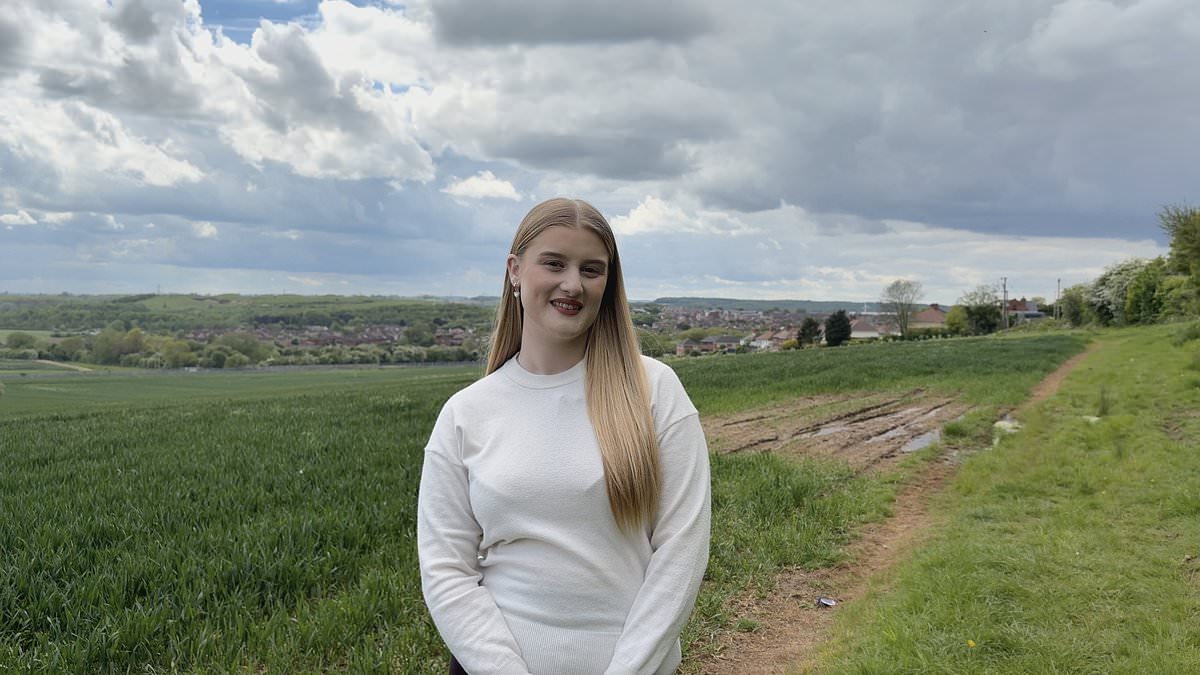
Getting on the property ladder is something many people now achieve in their 30s or 40s... if at all.The average age of first-time buyers has been steadily rising thanks to increasing house prices, stagnant wages and lately, higher mortgage rates and inflation. In England it's now estimated to be 34.But for Saffron Green, 22 and husband Reece, 24, the dream of homeownership has been met remarkably early when they managed to buy a three-bedroom semi-detached house in the market town of Pontefract near Leeds.In doing so, they have not only defied the odds by buying so young, but also accomplishing it without even having a deposit.Saffron credits part of the reason why she was able to buy so young to her decision to skip university and instead just work from a young age.'I have always been a grafter like my mum and dad,' says Saffron, now a travel sales adviser. 'I've been working pretty much full-time since I was 16.'These days people get degrees and end up working at McDonald's, so I just thought why not skip the degree and just get a job at MacDonalds right away. I've worked at B&M, McDonald's, and as cabin crew on airlines.'People said I was too young to buy a house. Most of the people my age I know are still living at home.' Challenge: Saffron says she spent over 18 months renting but struggled to save while covering rent, bills, car costs and unexpected expensesAside from hard work, Saffron says that discovering there were mortgages that cover 100 per cent of the property's value was a game-changer. She and her husband are one of more than 3,500 people to have used Skipton Building Society's Track Record Mortgage since it launched in May 2023.The 100 per cent mortgage product is designed for tenants and enables them to borrow up to 100 per cent of the value of a property as long as they can show a track record of paying their rent on time and can prove they can afford the mortgage payments.While Skipton allows renters to borrow up to 150 per cent of their rent, in reality it limits borrowing to no more than 4.49 times their gross annual income and up to a maximum total mortgage of £600,000. This means a renter paying £1,000 a month on rent could in theory be given a mortgage costing £1,500 a month so long as their income allows it.Saffron and husband Reece spent over 18 months renting but struggled to save while covering the rent, bills, car costs and unexpected expenses. In March this year they managed to buy a £156,000 home and are now renovating the property.Saffron says she felt frustrated trying to save whilst renting and thought she'd be renting for another three or four years before coming across Skipton's scheme.'My husband and I didn't really want to rent, and both always wanted to get on the property ladder,' says Saffron. 'About a year into renting we realised how hard it was to save, pay rent and bills. 'We couldn't get enough money saved for a deposit; every time we saved a bit of money, something happened. I remember we had a £800 vet bill for our dog. That halved all our savings in just one day.'Having read about the 100 per cent Skipton home loan and discussed it with their mortgage broker, the couple started looking for a home to buy with just £600 in the bank.Saffron says she would have bought sooner if it wasn't for the minimum age restriction on the product being 21 – but in the meantime they were able to save up in order to pay the conveyancer and surveyor, which cost an extra £2,000. On the ladder: Saffron and husband Reece spent over 18 months renting. They managed to buy a £156,000 home and are now renovating the propertyThe three-bedroom house they ended up buying in Pontefract is an upgrade on the house they were renting in nearby Castleford.'We were renting a three bedroom terrace, says Saffron, 'and we have bought a three bedroom semi with a drive and conservatory.'The move from renting to owning is also costing them less each month despite the high interest rate.Having agreed to buy at £156,000 – £4,000 below the asking price, they secured a five-year fix with Skipton with the maximum term of 40 years on a 5.29 per cent rate.'We were renting a three bed house with one bath and were paying £875 a month. That was going to rise to £950,' says Saffron. 'Now having bought, we are paying £782 a month and are actually able to overpay the mortgage each month by £18.'My dad kept saying we were buying at the wrong time because mortgage rates were so high - but now they are even higher, so I'm glad we went for it.' Despite the immediate monthly savings, Saffron says that homeownership has also come with somewhat of a reality check. While their plan was always to renovate the house, they have also discovered a few repairs along the way.'The survey cost us £450 and didn't spot any of the hidden issues we are now facing. 'We're about 50 per cent done with the renovation. The kitchen is next on the list. 'We are doing some of the work ourselves but paying for some of the more specialist stuff and also getting some help from dad. 'At first we thought we'd be here for five years but after all the work and with the problems we might be here for longer.'Sometimes it is demoralising, pouring money into the house - but if we just break even I'll still be happy.'It's nice knowing that we can do whatever we want to this house, plus we've found that owning a home does feel more secure than renting as we know we are here until we decide to sell up.'Saffron knows if she and her husband keep earning, continue their mortgage repayments, overpayments and renovating their home, they should have built up some equity by the time their five-year fix ends, irrespective of whether house prices in her area rise or not.Having just 5 per cent or 10 per cent equity will generally enable access to cheaper fixed rates in future.At present, Skipton's 100 per cent mortgage comes with a 5.65 per cent rate. The lowest rate on the market for someone with a 5 per cent deposit is 4.97 per cent while someone with a 10 per cent deposit can get as low as 4.74 per cent.The risks of a no-deposit mortgage And while Saffron and her husband are doing all the right things to reduce their debt, these types of products should not be taken lightly.There will be critics out there who argue that such a product is a risky proposition in the current market.Home values have barely moved over the last four years, according to average house price data and values are actually down in certain parts of the country.With 100 per cent mortgage deals, the fear is that if house prices were to fall further, then it may leave someone at risk of negative equity and unable to remortgage to a different lender or move home.Negative equity is when the value of a house falls below the amount left to pay on the mortgage, which is more easily achieved when the mortgage begins at 100 per cent of the property's value.'Buyers relying on 100 per cent mortgages should have a clear, proactive plan to reduce the loan balance over time, ideally through regular overpayments,' says Ravesh Patel, director and senior mortgage consultant at Reside Mortgages.'This often requires lifestyle adjustments or cost savings elsewhere in the household budget, which not all buyers are prepared for.'It's also important not to rely solely on future property price growth to build equity. 'While the housing market may appreciate over time, this is not guaranteed and exposes buyers to the risk of negative equity, particularly in the early years.'Best mortgage rates and how to find them Mortgage rates have shot up again due to inflation triggered by the conflict with Iran reversing hopes that the Bank of England would cut rates. This means those remortgaging or buying a home face higher costs.That makes it even more important to search out the best possible rate for you and get good mortgage advice, whether you are a first-time buyer, home owner or buy-to-let landlord.This is Money's partner L&C can help you with its fee-free mortgage service.> Compare mortgage rates> Find the right mortgage for you To help our readers find the best mortgage, This is Money has partnered with the UK's leading fee-free broker L&C.This is Money and L&C's mortgage calculator can let you compare deals to see which ones suit your home's value and level of deposit.You can compare fixed rate lengths, from two-year fixes, to five-year fixes and ten-year fixes.If you’re ready to find your next mortgage, why not use This is Money and L&C’s online Mortgage Finder. It will search 1,000’s of deals from more than 90 different lenders to discover the best deal for you.> Find your best mortgage deal with This is Money and L&C Mortgage service provided by London & Country Mortgages (L&C), which is authorised and regulated by the Financial Conduct Authority (registered number: 143002). The FCA does not regulate most Buy to Let mortgages. Your home or property may be repossessed if you do not keep up repayments on your mortgage.
I've bought my first house at 22 with a 100% mortgage: Most people my age are still living with their parents...
Full Article
Original Source
Read the full article at Dailymail →KhanList aggregates and links to publicly available news content. We do not host full articles from third-party sources. Always verify important information with original sources.