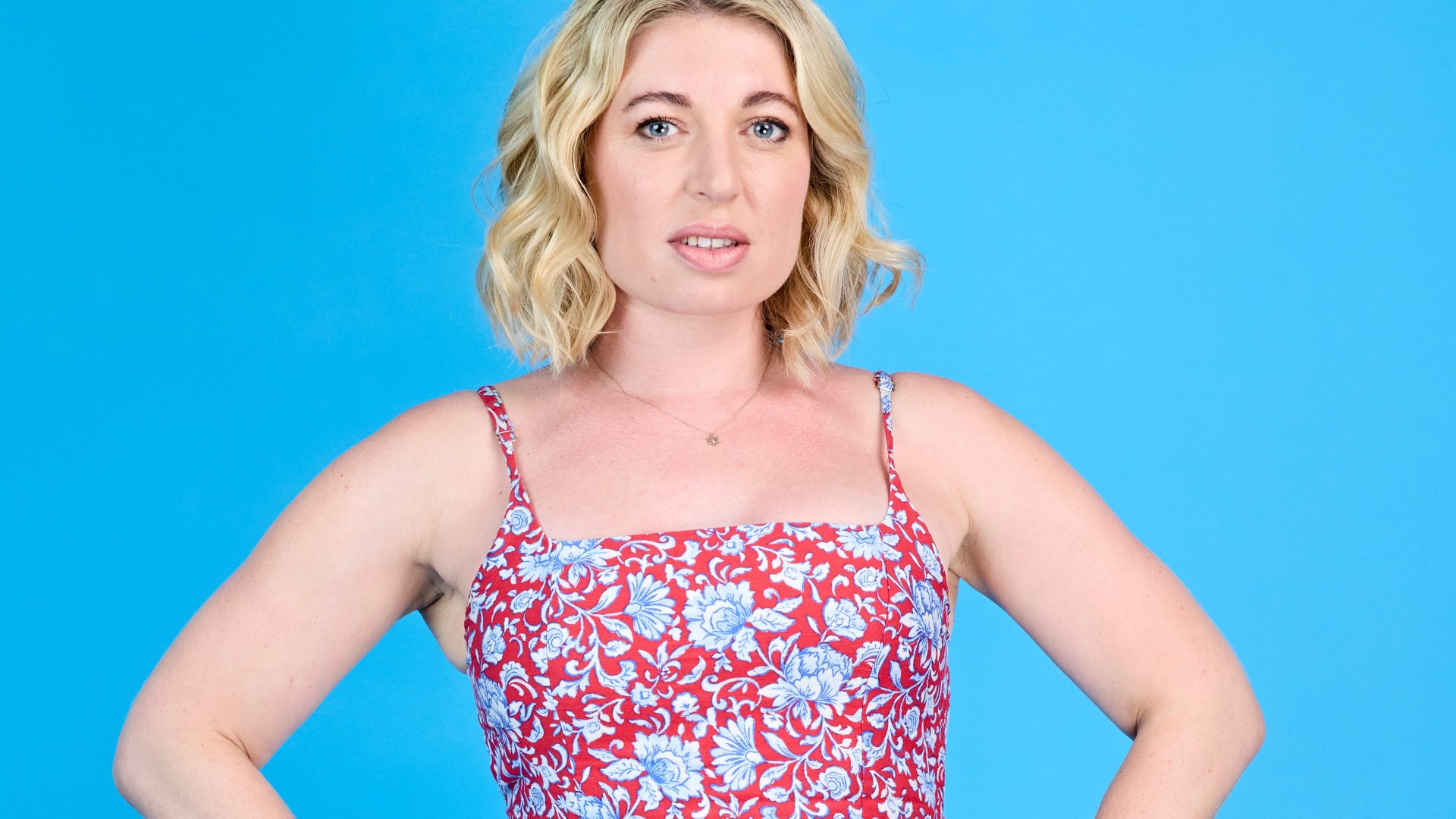
I WAS 11 years old the first time a number told me I was fat. During a PE lesson, we were weighed and measured before being given our body mass index, or BMI – and the result changed my life forever. Hayley Minn asks why the NHS is still using a BMI measurement many experts consider misleading Credit: Lorna Roach News Group Newspaper The writer says a childhood reading shattered her confidence for decades, above Hayley pictured aged 13 when she lacked confidence due to her weight Credit: Unknown Growing up in the Noughties, I was desperate to look like super-slim models Kate Moss and Alexa Chung and envied Girls Aloud star Nadine Coyle’s endlessly long legs, comparing them to my own chunky stumps. At 5ft tall and 8.5st, my BMI calculation – based on height and weight – came to 23.2, putting me in the “overweight” category for my age and gender. So even science was telling me I was fat. That label followed me throughout my teens. I felt like a big lump compared to the tall, slim girls in my dance class, and it didn’t help that when Beyoncé performed on TV, my parents would remark on her “big thighs”. If they thought Beyoncé’s thighs were big, what must they think of my tree trunks? Yet no matter how many fad diets I tried, I never lost enough weight to reach the “normal” BMI category. I stopped growing around the age of 12 and, at 5ft 2in, every pound felt significant. When I was 15, my GP handed out free Slimming World memberships to anyone with an “overweight” BMI. So my mum Helen, now 63, took me along to our local weight loss group. I lost half a stone over a few months, but found it hard to maintain once I stopped going to the weekly sessions. Looking back at photos, I don’t believe I actually was fat. It makes me feel so sad for that little girl, who was repeatedly told she was overweight. I had simply developed earlier than many of my classmates, with larger breasts and thighs on my otherwise small frame. While children’s BMI is adjusted for age and sex, experts agree it still cannot account for the huge differences in the timing of puberty. Dr Clare Thompson, General Practitioner and Weight Management Clinic Lead at London’s Cadogan Clinic says: “It should not be used in children, because during puberty their bodies undergo nonlinear growth spurts, which would make BMI measurements wildly inaccurate.” At the time, I remember feeling disgusting and far less attractive than my friends. I wondered if any boy would ever fancy me, or if I was going to be the ‘ugly friend’ forever. In reality, I think this lack of self-esteem was the real reason boys didn’t want to date me in school. When I went clothes shopping, I never thought I looked as good as my friends. In reality, I was only ever a size 12 at my biggest. Eating bread, chocolate or crisps brought an immediate rush of shame, and I could go through a whole pack of custard creams, or a family-size bar of Dairy Milk Oreo in one sitting. Hayley, above as a teenager, says her GP handed out free Slimming World memberships to anyone with an ‘overweight’ BMI when she was 15 Credit: Unknown Now aged 34, she reveals she exercises four or five times a week Credit: Lorna Roach News Group Newspaper Two decades on, that food guilt still hasn’t disappeared. Now 34, I exercise four or five times a week, including regular weight training. I’m stronger and more toned than I was as a teenager, yet because my weight has generally remained above 10st, placing me in the BMI “overweight” category, part of me has never believed I am healthy. While I’ve been with my husband for almost eight years, I was single for most of my twenties. I always felt much fatter and uglier than my friends. Although I didn’t struggle to go on dates, they never led anywhere – probably because my self-esteem was so low. It took years of therapy and learning to love myself before I met my husband. Worryingly, when I recently entered my height and current weight of 10st 12lb into some online pharmacies’ eligibility checks for weight loss medication, I was told I qualify for the likes of Ozempic and Mounjaro. And even if I silently remind myself that muscle weighs more than fat, a cruel voice whispers: “Perhaps you’re making excuses. Perhaps you really ARE fat and unhealthy.” To finally put my fears to rest, I decided to get a detailed body-composition analysis from preventative healthcare company Randox Health as part of its Everywoman Basic package. During the £269 full-body test at its central London clinic, I had my height and waist measured by a doctor before stepping on the scales. But, unlike normal scales, these send a painless electric current through the body to calculate muscle mass and body fat. Randox recorded my muscle mass at 49.4kg, above the average range of 34.7kg-43.9kg for a woman of my age. Having a high muscle mass is beneficial for health, supporting metabolism, strength, and mobility, according to the NHS. Meanwhile, my body fat percentage was 24.7 per cent, towards the lower end of the recommended range of 21 to 33 per cent. Randox also put my metabolic age at just 23, meaning my body is burning calories at rest at the same rate as someone 11 years younger. Impressive. Most strikingly, my visceral fat rating – the fat stored around the internal organs that is linked to heart disease and type 2 diabetes – was just three, earning an “excellent” classification. For the first time in my life, I had clear evidence that I am in fact much healthier than my BMI of 27.5 would suggest. And I’m far from alone. A recent University of Verona study compared BMI results with hi-tech scans that analyse fat, muscle and bone. Of the 1,351 patients studied, 53 per cent of those labelled overweight were in the wrong category, with three-quarters actually within the normal range. The term Body Mass Index was first popularised in the US in the 1970s, but many practitioners now believe it is flawed. “The model is clearly outdated and is inaccurate for women, who carry a higher percentage of body fat than men,” Dr Thompson says. But if BMI can give such an incomplete picture, why does the NHS still use it? Dr Thompson says it is “backed by population-level research, linking a higher BMI with an increased risk of type 2 diabetes, some cancers, heart disease and stroke”. But the European Association for the Study of Obesity (EASO) has called for a “more nuanced” approach. There is also a risk of BMI results giving an overly POSITIVE impression of someone’s health. “The biggest failing of BMI is false reassurance to people with a ‘normal’ BMI, who actually have harmful levels of visceral fat,” explains Dr David Huang, Director of Clinical Innovation at weight-management provider Voy. “Being told you’re overweight when you’re actually healthy is less common than people think.” NICE recommends considering waist-to-height ratio, as this can help identify potentially harmful fat around the middle. Other factors, including ethnicity and family history, can also provide a more rounded picture of a person’s health. I am just one of possibly millions of people who’ve been made to feel ashamed about their weight from a young age thanks to a BMI reading. I have been plagued by the fear I’m too fat my whole life and I still struggle not to see that unhappy, “overweight” teen staring back at me in the mirror. When I recently discovered children as young as 11 are still being told what their BMI is, it made me so angry. There’s so much shame that surrounds it and it follows you for the rest of your life. But I now know my BMI is just one piece of the puzzle and not a diagnosis or a verdict. I only wish somebody had explained this to the 11-year-old girl nervously standing on the scales in her PE kit.
I’ve been called fat since I was 11 and was even offered skinny jabs… but a shock test proved my BMI was wrong all along
Full Article
Original Source
Read the full article at Thesun →KhanList aggregates and links to publicly available news content. We do not host full articles from third-party sources. Always verify important information with original sources.