
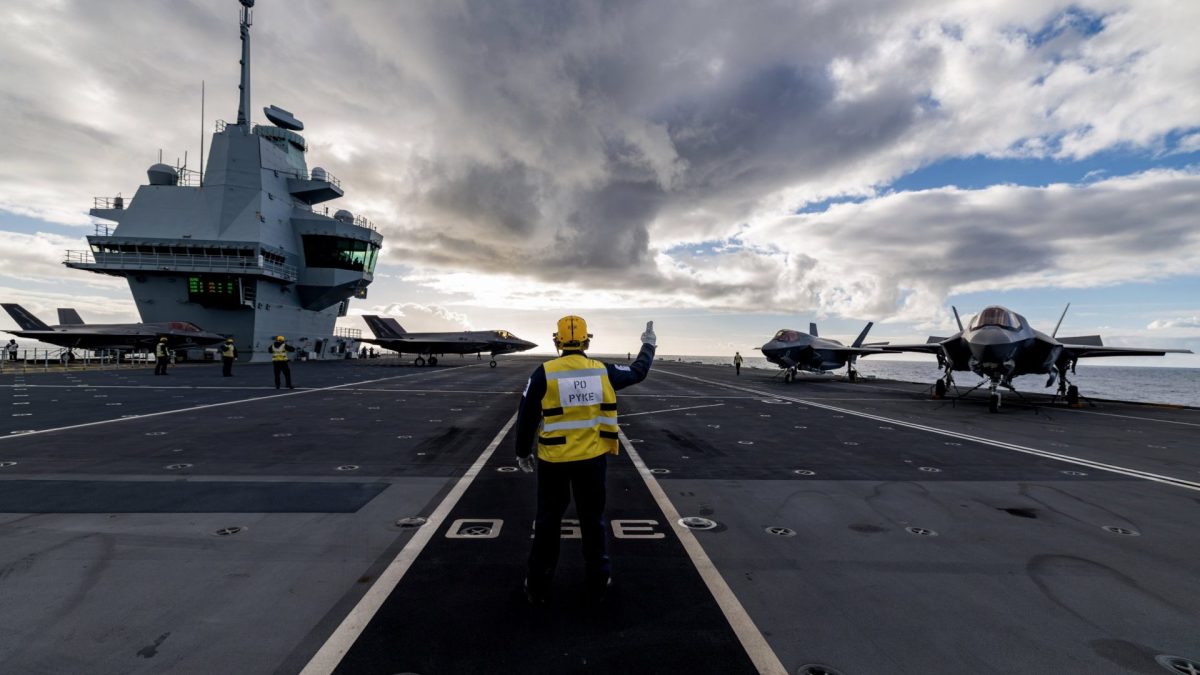
Despite this Government’s frequent boast that it has done more to increase defence spending than its predecessors, Britain is facing another round of cuts in the strength and capability of the armed forces. In Norway this week, ministers declared their intent for Britain to lead European naval forces, not mentioning that we have fewer frigates and destroyers active than all major allies, including France, Italy, Spain and Germany. Sources confirmed to The i Paper that the Army is threatened with a severe reduction in its numbers to levels not seen since demobilisation after Waterloo in 1815. There is a suggestion that recruiting should be frozen. This is Whitehall mandarin nonsense – because while it is easy to turn the recruiting tap off, experience shows it is near impossible to turn it on again. The Army could be cut from 72,000 personnel to 60,000 by 2029, smaller than the armies of Spain and Italy. This means it would be able to carry out just one mission abroad at a time. It would be hard to manage peacekeeping in Europe and at the same time provide back-up to allies in the Gulf. The Navy and the RAF are faced with delays in much-needed new equipment, such as frigates, and in making vital surveillance and early warning aircraft fully operational, complicating Nato surveillance operations over Eastern Europe that are key to defending against Russia. HMS Somerset, pictured in Greenwich on Wednesday, is due to be withdrawn by next spring because of corrosion, despite ‘major sums’ spent on repairs (Photo: Leon Neal/Getty)In last month’s Budget, Chancellor John Healey pledged the Government would spend up to 2.7 per cent of GDP on defence from next year, with an aspiration to meet the Nato targets of 3 per cent of GDP in 2030, and 3.5 per cent by 2035. We were given little clue about how this was to be achieved. The heads of the armed services have been told to trim their operational budgets this year and next. The cuts are to be achieved by “efficiency savings”. The Royal Navy, by reliable accounts, is about to lose another two frigates from its ageing “Duke” class of Type 23, with only one or two replacements likely to arrive before the end of the decade. It will leave Britain with only four, possibly five at the most, workable destroyers and frigates. The Italian Navy has three times that number. HMS St Albans and her sister ship HMS Somerset are due to be withdrawn by next spring. According to Navy Lookout, the Navy’s in-house magazine, “the state of the hull and machinery is the deciding factor … despite major sums being spent on repairs … there are consistent reports that corrosion is still an issue”. In other words, they are knackered. Last month, the French Navy called a conference of allies about how to manage naval security around Europe, faced with the decline of the Royal Navy. French, Dutch, German, Danish and Italian frigates are preparing to take up duties normally earmarked for British forces, including the tricky duty of escorting the Royal Navy’s nuclear missile submarines in and out of the home port of Faslane on the Clyde. Clearing the approaches to the port for the Trident missile boats is a vital task – which should be for the Navy. Under Article 3 of the Nato Treaty, a country like Britain must be responsible and capable in its own defence. Now it is running out of suitable frigates to protect the nuclear force. Some in the Navy are proposing that since Britain is an island and we are a maritime nation, a chunk should be taken out of the Army budget and given to them to speed up shipbuilding and modernisation. I’m told an old plan to close down one of the two Army divisions – and give more money to the Navy – has been resurrected and sent to the Defence Secretary, Wes Streeting. The Army could be cut from around 72,000 to 60,000 personnel by 2029, smaller than the forces of Spain or Italy (Photo: Ole Berg-Rusten/NTB/AFP) Sources across the Army, Navy and Air Force tell me that the defence crisis and deficit are far worse than I had imagined, even a few months ago. We are in a hole. The Government is struggling to fund the Defence Investment Plan, launched incomplete last June. It was to pour £14.5bn into defence programmes, but it had no idea where £4.7bn of it was to come from. Healey proposed all Government departments should take a one per cent cut in their budgets to fund defence. It is not yet clear how this is to be done, and whether ministries such as health and pensions might get exemptions. As things stand, the Army has to cut operational spending by £2bn this year and next. Almost all training has been halted. The size of the problem was hidden in plain sight last year with the publication of the bombastic Strategic Defence Review, which outlined a completely unrealistic strategy, including forces and equipment we couldn’t manage and afford, including a force of 11 attack submarines. Today, the Navy can barely manage three. The powder trail of this crisis began with two chancellors, Gordon Brown and George Osborne. Brown ordered the two carriers HMS Queen Elizabeth and HMS Prince of Wales, currently serving as a conference centre in Oslo. They are outsized, unmanageable and unaffordable. Osborne brought the nuclear weapon programme from central funds into the MOD. He also set three tiers of priority in the defence budget – for nuclear, for operations and for the rest, including veterans, reserves and cadet forces. This has led to serial neglect of support facilities, including dockyards and ship support, as well as the reserves and volunteers – who play an increasingly vital part in national resilience and homeland defence. Veterans are more resigned than angry – a decorated officer from Afghanistan service remarked recently that “they are caught in a churn. It is not just a question of money, but what kind of money? Is it new or recycled? Most of the money announced this week, for example, has already been allocated”. The elephant in the room is expenditure on the so-called independent nuclear deterrent – the Trident missile system, the Vanguard and later Dreadnought submarines. It is questionable how independent the system is, being tied to the United States, and how much of a deterrent it is in the age of AI and Quantum, cyber and electromagnetic pulse weapons and biowarfare. The big question Whitehall dare not face, at least not in public, is how or whether an old country and old economy like Britain’s can realistically afford the enormous bill of both its nuclear defence and welfare programmes. Investment in electromagnetic pulse (EMP) and direct-energy weapons is not what it could be because of the huge fiscal burden of the nuclear programme – £60bn over the next four years, according to the latest published figures. Meanwhile, Russia and China excel in the development and use of electronic warfare weaponry – which threaten cyber connection and communication systems such as GPS and Starlink. Today, elements of the hard right and hard left argue for welfare not warfare. This Government has at times treated defence like an inconvenient dustbin, using it as a dump for problems like the inflated Chagos Islands settlement, the Afghan recovery scheme for former UK employees and dependents escaping the Taliban. These have been costed at up to £9bn for the temporarily stalled Chagos deal and over £4bn for Afghan recovery, spread over this Parliament. Goodness knows what they’ll dole out if the Falklands crisis blows up again, which it shows every sign of doing given the wild rhetoric of Javier Milei of late. Strengthening defence in a democracy like Britain today is not primarily a vote for war and aggression. It is for the prevention of war, for security and resilience at home and abroad.
It’s worse than I feared – my inside briefing on Britain’s defence plans
Full Article
Original Source
Read the full article at Inews →KhanList aggregates and links to publicly available news content. We do not host full articles from third-party sources. Always verify important information with original sources.