
Get your news from a source that’s not owned and controlled by oligarchs. Sign up for the free Mother Jones Daily. A little more than three weeks before Election Day, Gina Hinojosa, the Democratic nominee for governor of Texas, sat back in her chair in a small conference room at a community center in the Houston suburb of Cypress. The 52-year-old Democratic state representative had just spoken for 45 minutes and fielded questions from a roomful of educators and their allies on everything from vouchers to data centers to traffic. She had been criss-crossing the state for months, while beaming into podcasts and TV shows outside it to build buzz and try to persuade national donors to spend money on a contest that was never supposed to be this close. When I walked in, Hinojosa was powering through her first migraine in years and had slathered her hands, she told an aide, with honey Throat Coat, thinking it was sanitizer. But when I asked her to describe her opponent, three-term Republican Gov. Greg Abbott, in a word, Hinojosa brightened. If you’ve been paying any attention to national politics this year, you could probably guess what she said:“Corrupt.” Could she elaborate? She would love to. “He has given a billion dollars in no bid contracts to his donors,” she said. “He’s waived competitive bidding laws in the state of Texas every month since 2020.” Abbott had taken $12 million in campaign funds from “an out-of-state billionaire” voucher activist and pushed through a $1 billion-a-year subsidy for private schools. During Winter Storm Uri, when a massive power failure led to hundreds of deaths, Abbott allowed companies to “make billions in record profits” through a sudden price surge, and then received large campaign checks from the CEO of the company that received the greatest windfall. In Austin, she said, “the only bills we’re really allowed to vote on that are of real consequence and have dollar figures attached to them are bills that are pushed by the moneyed interests who donate to Greg Abbott.” Corruption is the filter through which voters are processing politics right now. Pick any race and you’ll find a Democrat spending millions to connect the dots between voters’ economic pain and the Republicans they say are on the take. To Hinojosa, this intermingling of state business and donor service explained why everyone else was paying more and getting less these days. Taxpayers paid Abbott donors to build National Guard barracks and staff migrant processing centers on the border. Ratepayers got the invoice for grid repairs after Uri. Regular Texans lost out on both ends when Abbott lavished the world’s richest companies with incentives for data centers. And everyone was sharing the tab for Abbott’s misplaced priorities through rising property taxes at the local level. “It is the Greg Abbott corruption tax,” she said, “and we all pay it.” Video by Peter Berger I had come to Cypress to figure out what the hell was going on. While the US Senate race between Democratic state Rep. James Talarico and Republican Attorney General Ken Paxton was always expected to be close, Abbott’s quest for a fourth term was supposed to be a steamroller. That wasn’t a knock on Hinojosa. A state legislator from Austin by way of Brownsville, she first got involved in local politics when she found out her son’s elementary school was slated to close, and ended up leading the school board in one of the largest districts in the state. She was well respected and well connected: Her father, Gilberto, was the longtime state Democratic Party chair; her sister, Xochitl, was a DNC spokesperson. But Abbott had won every election by double digits and his nine-figure war chest was enough to persuade national Democrats to take one look at Texas and give Kansas a chance. But despite $281 million in spending from Abbott, much of it on attack ads, the race remains close. Although the incumbent is still favored, Hinojosa boasted at the town hall that she had led in four different polls in recent weeks. (“And not minor polls, big dog polls,” she said.) Her own fundraising had taken off—nowhere close to parity, but close enough to have a shot. A win would be a generational upset. Even if she loses, she would likely outperform every Democratic candidate for governor since Ann Richards. Just as significant is how she has done it. Ever since Zohran Mamdani started talking about “halalflation,” you’ve been hearing a lot about affordability. But $5.99-a-gallon diesel, rising rent, and higher bills are data points in need of a plot. Across the country, up and down the ballot, against an unprecedented tide of billionaire cash, Democrats like Hinojosa have supplied one: The story of the 2026 election is corruption. Watch enough midterm ads, or literally just watch the local news programs they’re airing on, and you may get the distinct impression that America is not well. As my colleague Russ Choma recently reported, most Americans seem to think so too. In a recent Fox News survey, more voters said they were “extremely” or “very concerned” about government corruption than they were about inflation and gas prices. According to Gallup, the percentage of Americans who believe corruption is “widespread throughout the government” is the highest on record—up 16 points in two years, and 30 since 2006. A survey last December found that 70 percent of Americans thought the government was covering for powerful people in the Epstein files. The belief that high-level members of Congress are habitually cashing in on inside information is so pervasive there are subway ads about it. Years of declining trust in load-bearing institutions propelled Donald Trump to the presidency, and sustained him in office. But now that tide of distrust is coming for him, too. (Do I really have to explain why?) Corruption is the filter through which voters are processing politics right now. Pick any race and you’ll find a Democrat spending millions to connect the dots between voters’ economic pain and the Republicans they say are on the take. A recent NBC News analysis found more than 500 ads about Epstein or other pedophiles—often from Democrats, accusing Republican opponents of doing political favors for sex offenders. “We can’t afford Mike Turner’s corruption anymore,” says a voiceover in an ad targeting the longtime Republican incumbent in another Ohio district. Ads attacking Democratic Rep. Marcy Kaptur’s Republican opponent in another Ohio race say, “We’re paying more because of Derek Merrin’s corruption.” A Democratic super-PAC backing Roy Cooper against Michael Whatley in North Carolina says, “The more you pay, the more Whatley makes.” Kansas Democrat Adam Hamilton says Sen. Roger Marshall is selling democracy “to the highest bidder while Kansans can’t afford groceries.” Ohio Democrat Amy Acton promises to “take on the corruption that’s raising our costs.” Georgia Sen. Jon Ossoff has risen as a Democratic Party star this cycle by turning his stump speeches into little mini episodes of Frontline, regaling audiences with stories about “Prince Eric and Prince Don” acquiring a taxpayer-subsidized tungsten mine in Kazakhstan, “while you pay more for gas, for groceries, for healthcare.” The corruption Rob Sand talks about during his run for governor of Iowa is stripped of the proper nouns and repackaged as a kind of affront to neighborliness. He says he is seeking a new job in part because Republicans limited his ability to find misspent tax dollars as state auditor. Before an event in June, as Sand was admiring a trophy buck at a small county history museum, I watched the museum’s director walk up to him and begin talking about an embezzlement crisis in her town of 88 people, which the auditor’s office had helped clean up. She understood the situation well—she was the new mayor. Some of the corruption narratives are of a boutique, candidate-specific variety, of the sort currently bogging down a certain Maine Republican. (Still, the uni-message pokes through: “Susan Collins,” a former supporter says in a new ad, “is enriching herself while voting with Trump to raise our costs.”) A disturbingly high percentage of these attacks, it turns out, are about predators. A recent NBC News analysis found more than 500 ads about Epstein or other pedophiles—often from Democrats, accusing Republican opponents of doing political favors for sex offenders. It almost feels like cheating to talk about Paxton here, but it’s illustrative. He is corrupt, in Talarico’s telling, in a way that manages to tie all of these disparate threads together. It is intersectional grift. The Democrat and his allies have invoked Paxton’s “Epstein-style sweetheart deal” for a pedophile; hundreds of taxpayer-funded trips; soaring net worth; 15 homes; impeachable favors for a campaign contributor; fealty to a giga-donor; shady investments; legislative self-dealing; stolen Montblanc pen; and, of course, the ultimate corruption, the corruption of the heart. For Talarico and so many others, corruption supplies both the line of attack and the slate of solutions. It is practically expected right now that a battleground candidate will campaign against Big Pharma, congressional stock trading, and billionaire handouts, and that at one point or another they will sum up their campaign like the seminarian from Round Rock did on a recent Thursday night under the lights: “We have an affordability crisis,” he said, “because we have a corruption crisis.” In Texas, and almost everywhere else, the defining image of the corruption election is the data centers that have been crowding out the landscape, ever since Abbott promised to make the state the “epicenter” of the AI boom. The campaign for agriculture secretary is about data centers. The campaign for Senate is about data centers. The campaign for land commissioner is about data centers. The campaign for railroad commissioner does not really have much to do with data centers, actually, but the Democrat got so many questions about them he put out a position anyway. I picked up a free newspaper in San Marcos on my way to see Talarico, and the cover story was about a data center. The billboards on I-35 were about data center construction. The race for governor, as much as perhaps any other race in the country, has been about data centers. To voters, Hinojosa told me, they have become “the physical manifestation of a governor who has sold them out.” Although data centers were beginning to flare up at community meetings in 2025, as AI companies embarked on a historic building boom in the quest for “superintelligence,” they were not something that Hinojosa was particularly fixated on when she launched her campaign. “I’ve had to be responsive,” she said. “I’ve had to learn what is happening. I’ve had to visit with impacted communities to understand what was going on and to understand what the solutions were.” There is nothing inherently scandalous about large buildings filled with servers. But over the last few years, Americans have turned against them to an extraordinary degree. Seven in 10 Americans oppose building data centers in their own communities. What’s happened is that a story about logistics has become a story about corruption: The pace of development, and the opaque nests of shell companies and NDAs, has heightened people’s suspicions that government is in thrall to powerful interests. And in Texas, the scale of investment is striking. Companies are building more data centers there than in any other state, with nearly twice as many projects announced as its next-closest competitor, Virginia. Tech firms have been lured by generous incentives. Under Abbott, Texas is ceding more than $1 billion a year in state revenue on data center tax breaks, while companies and individuals with ties to data centers have showered the governor with $9 million in contributions in his current campaign alone, according to The Texas Tribune. (In October, Elon Musk chipped in $5 million more.) “We’ve been so torn apart by these culture wars, that really the only winners are like 15 billionaire tech dudes,” Hinojosa said. “That is exactly what these data centers are about—it is about billionaires controlling our land, our lives, our future.” Outside Amarillo, Hinojosa walked the grounds of what is projected to be one of the largest data center campuses in the country—a 7,570-acre complex named for Donald Trump, backed by Rick Perry, and powered by four nuclear reactors. In the town of Red Oak, about 30 minutes south of Dallas, she sat with members of an opposition group that had formed to try to slow the spread of data center campuses in an otherwise quiet exurban community of 20,000 people. Abbott had once championed Red Oak as the “centerpiece” of Google’s investment in the state, but with seven different campuses in some stage of development—and data center sites covering more than a quarter of the town’s footprint—residents were fed up. The tightening polls suggest that the Democrat’s data center attacks have struck a nerve. But Abbott’s response may be the clearest indicator of their salience. In September, not long before I made my way out to Texas, Abbott announced that he was declaring a pause on new data center permits until the state could evaluate their impact on water and power. Hinojosa was happy to take credit for the shift, but unwilling to accept that the fundamental conditions were changing. “Most people understand that the pause is lifted November 4,” she said. School vouchers represents a similar story in a more analog form. When Abbott pushed the program in 2023, Hinojosa and other Democrats teamed up with rural Republicans to block the effort. Ahead of the next election, the Pennsylvania-based TikTok investor Jeff Yass, a major proponent of vouchers, donated $12 million to Abbott (including one check the Tribune characterized as “the largest single political donation in Texas history”). The governor, in turn, used that money to defeat voucher opponents in Republican primaries and elect his allies to the legislature. “When I first launched this campaign, I was talking about public schools, and people were like, ‘You talk about public schools too much,’” she said. “I was like, ‘Yeah, I’m going to talk about them some more.’ And I’m glad we did because I think it’ll be the difference in this election.” Hinojosa believed that Democrats had sometimes made the mistake in the past of talking about public education like it was a “program”—something to fund, or reform—when it was more like an extension of identity. It gave communities their purpose, and their football. At the same time Abbott was pissing off parents and educators by taking control of school districts in Fort Worth and Houston, the voucher law was riling voters up in rural areas that tend to vote Republican. It presented an opportunity for a Democrat willing to connect the dots and make new friends. One of the most striking ads of the entire cycle was a pro-Hinojosa spot that featured a woman named Lynn Davenport, a self-described “MAGA mom” from Dallas who has testified at the legislature against vouchers. “I was at the January 6th rally,” Davenport said—but she could no longer support Abbott. He was “bought and paid for by the billionaires and the corporations.” If Democrats like Hinojosa have managed to turn the election into a referendum on corruption, it’s also because Republicans have struggled to make the election about anything else. So much of the fight in Texas since 2010, if not longer, has been over culture issues. Republicans have criminalized abortion. They are bullying trans kids and literally censoring Plato. One Republican statewide candidate wants to expel all Muslims from the United States; Abbott has endorsed him. Against Talarico and Hinojosa, Republicans are feeding voters a steady diet of anti-trans messaging, hoping to repeat their success in 2024, when TV ads claimed that “Kamala is for they/them, President Trump is for you.” But voters aren’t so sure about that second part anymore, and Hinojosa has to some degree turned the tables; the campaign’s central message is that Abbott is for Them—the out-of-state billionaires, the profiteers, the tech lords. At the same time, she and other leading Democrats are not talking much about the GOP’s culture-war agenda at all, in a marked shift from previous cycles, when Democrats ran ads about abortion rights in South Texas. Like Rob Sand in Iowa, she emphasizes that if she wins, the state will almost certainly have a divided government, necessitating a detente. In one notable ad, she spoke about her decision to carry to term a child she was told would not make it. Her daughter, who died shortly after her birth, “gave me the strength to fight,” she said. The things she was fighting for, at least explicitly, were universal—for “the right to send their kids to good neighborhood schools,” for “an economy where their kids can afford to stay,” and above all, for a Texas “where the powerful don’t get to tell the rest of us how to live.” In Republican-leaning Red Oak, Hinojosa told me, some residents challenged her on her position on Shariah law (she does not believe it poses a threat to Texas), and on background checks for gun possession (which she supports). But they “agreed to disagree.” “We’ve been so torn apart by these culture wars, that really the only winners are like 15 billionaire tech dudes,” Hinojosa said. “That is exactly what these data centers are about—it is about billionaires controlling our land, our lives, our future. And if we don’t come together fast to save ourselves, like, they’re about to blow up the world if you believe recent reports.” On the other hand, the people funding the culture war, judging by Abbott’s campaign contributions, do not appear to be giving up. I asked Hinojosa if she was worried that she would cede the fight to people like the right-wing Christian billionaire Tim Dunn—whose money, along with Yass’, helped clear the way for Abbott’s voucher push. “That fight is not winnable,” she told me. “You can’t win the culture war issues because the culture wars are about our differences. They’re about our lived experiences, and in Texas, we’re such a diverse community in all sorts of ways, right? Not just racially, and ethnically, but regionally… We’re like a country. So, if we know there’s no winning the culture wars, why do we keep arguing about them? I’m tired of arguing culture wars for 10 years, and most people are.” Instead of fighting a forever war, she is promising to tap the Rainy Day Fund to give every household a $1,500 “corruption tax refund” and “freeze the rates” set by the public utilities regulator. She told me she believed Texas had a chance to usher in a new “post-partisan” politics this election, although that sounds like something many Republicans might disagree with. I mentioned that her campaign seemed to break from the theory that a successful Democratic candidate in Texas would pitch themselves as a sort of business-friendly moderate. “It’s not about moderating, it’s not about being more progressive, it is about recognizing what is the fight of our time,” she said, chopping her hands down on the table. “And it is: Who does Texas, who does America belong to? That’s it. Does it belong to the people or the billionaires?” Hinojosa threw her hands in the air. “That’s it,” she said. “That’s the fight.”
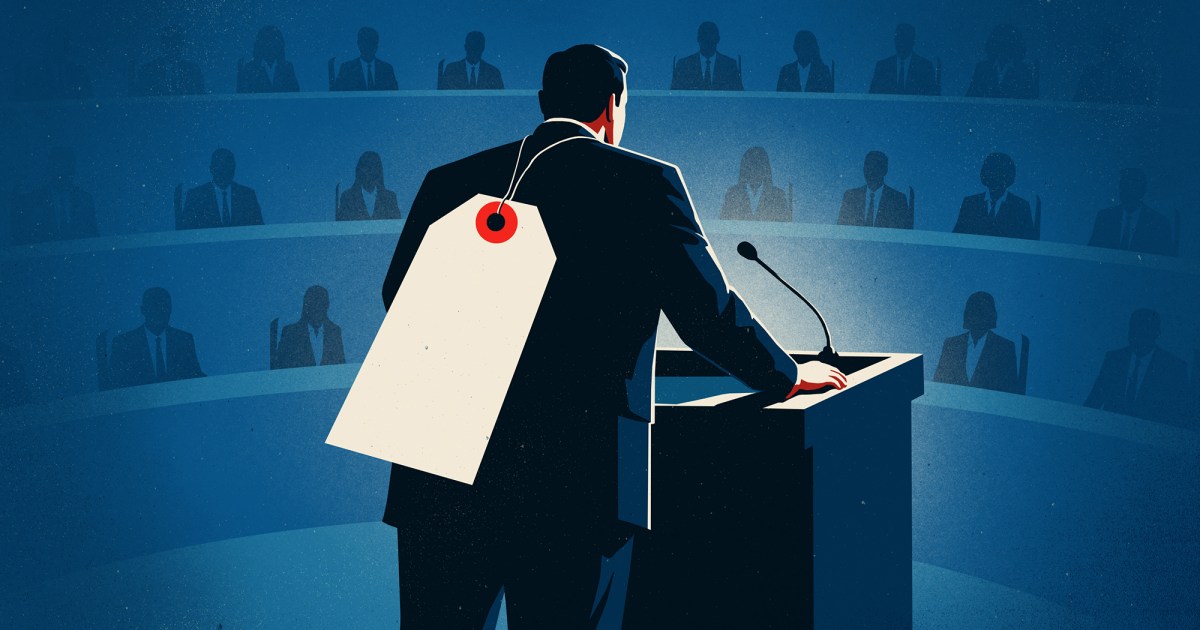
It’s the Corruption, Stupid
Full Article
Original Source
Read the full article at Motherjones →KhanList aggregates and links to publicly available news content. We do not host full articles from third-party sources. Always verify important information with original sources.