
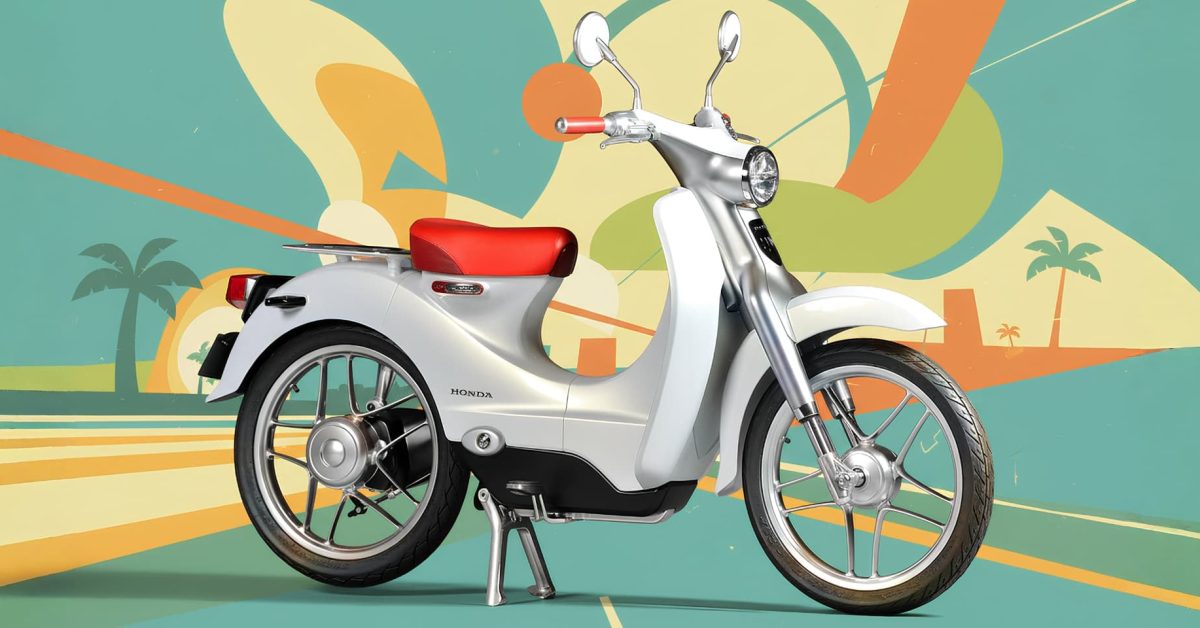
Every few years, I apparently feel compelled to remind Honda that it is sitting on what could be one of the easiest home runs in the electric motorcycle industry: just make an electric Super Cub already. I’m not talking about an electric scooter vaguely inspired by the Super Cub. Not another futuristic concept with swoopy bodywork and a name that looks like a Wi-Fi password. I mean an actual honest-to-goodness Honda Super Cub, except electric. The formula is already sitting right there. The Honda Super Cub is arguably the most successful motor vehicle ever created, with well over 100 million produced since its introduction in 1958. It’s still in continuous production today. And a huge part of that success comes down to how approachable the thing is. It isn’t supposed to be intimidating, excessively powerful, or particularly complicated. It’s simple, practical transportation wrapped in one of the most recognizable two-wheeler designs ever created. In other words, it’s practically begging to become electric. The beauty of the bike is how simple and timeless it is, with the appearance barely changing in nearly 7 decades. And with the design freedom that electric drivetrains provide, upgrading the cute little bike to an electric future would be a walk in the park for Honda’s engineers. An in-wheel motor would be a simple, cheap solution that frees up even more space in the body for batteries. And Honda wouldn’t need some enormous battery capable of highway touring. Give an electric Super Cub enough battery for perhaps 50-60 miles (80-95 km) of real-world urban riding, a motor capable of roughly 50-60 mph (80-95 km/h), and simple Level 1 charging from a normal wall outlet. As a city runabout or a beachside cruiser, those middle-of-the-road specs would be perfect. Even better, make the battery removable. Honda already has its Mobile Power Pack e: swappable battery system used in various electric two-wheelers, and an electric Super Cub would be an incredible platform to expand it. The resulting bike could hit an unusually sweet spot. The Honda EV Cub concept unveiled 10 years ago and subsequently abandoned There are millions of people riding electric bicycles today who will eventually want something faster, but don’t necessarily want a 500-pound (220 kg) electric motorcycle capable of hitting 120 mph (200 km/h). An electric Super Cub would be a natural next step: light, unintimidating, easy to ride, cheap to operate, and fast enough to actually function as a real urban vehicle. It would also be one of the rare electric motorcycles that could appeal to people who aren’t necessarily looking for an “electric motorcycle.” An electric version is in such high demand that companies specialize in retrofit kits to convert classic Cubs into EVs. The Super Cub already has decades of cultural cachet. It’s cute. It’s useful. It’s nostalgic without feeling ancient. It’s the kind of motorcycle that can appeal equally to a lifelong rider and someone who has never considered owning a motorcycle before. And perhaps most importantly, Honda could actually sell the thing globally. The same basic electric Super Cub could work in dense European cities, throughout Asia, and in American cities and suburbs. It doesn’t need to win spec-sheet battles. It just needs to be affordable, reliable, and unmistakably a Super Cub. Honda has already shown that it understands the importance of electrifying small two-wheelers. It’s even made a token gesture with a Cub-like e-scooter in China. But there’s a difference between making another electric scooter and electrifying perhaps the most famous small motorcycle ever made. So here I am once again, Honda. You’ve got the name. You’ve got the design. You’ve got the batteries. You’ve got the manufacturing scale. Just put all the pieces together and give us the electric Super Cub already. The world is waiting, and will thank you. FTC: We use income earning auto affiliate links. More.
It’s that time again – Honda needs to roll out an electric Super Cub
Full Article
Original Source
Read the full article at Electrek →KhanList aggregates and links to publicly available news content. We do not host full articles from third-party sources. Always verify important information with original sources.