
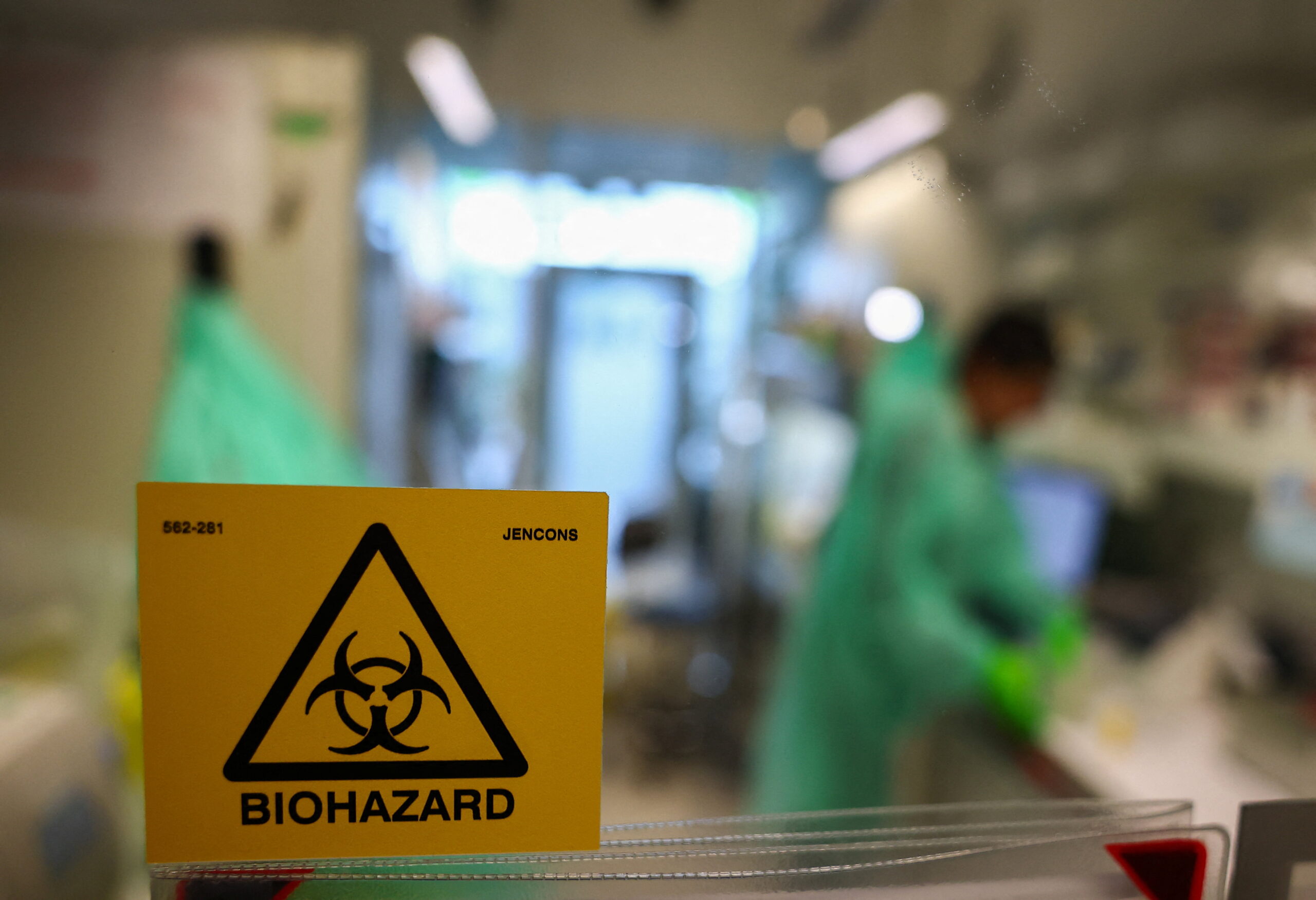
WASHINGTON—Much of the current debate surrounding threats stemming from the convergence of artificial intelligence (AI) and biotechnology focuses on the frightening possibility that AI will enable terrorists and nonstate actors to develop and deploy AI-enhanced bioweapons. There is broad agreement that the use of AI in biological research carries significant dual-use risks. But the current focus on intentional misuse has resulted in too little attention on the potential for accidents. Incorporating AI into biological research Earlier this month, Anthropic announced that it recently established a biological research laboratory in San Francisco, where Claude is embedded in every step of the research process. In one of the lab’s first published studies, Claude autonomously discovered a novel enzyme system associated with DNA repeats, a pattern reminiscent of CRISPR, the bacterial defense system that scientists later turned into a gene-editing tool. This news comes just weeks after scientists at Stanford University used the open-source AI tool Evo to create sixteen viable viruses never before seen in nature. While none of the bacteriophages can infect humans, the experiment demonstrates that AI can help design biological sequences that do not exist naturally. Together, these examples illustrate a growing shift toward incorporating artificial intelligence more extensively into biological research. AI models are already being used to enhance gene-editing techniques by generating designs, analyzing design flaws, and increasing experimental efficiency. AI allows laboratories to work faster and at a lower cost, and its use is spreading quickly. A study published in September by researchers from Google DeepMind, the Massachusetts Institute of Technology, and several other universities found that nearly half of the surveyed scientists use AI every day. In the life sciences specifically, AI models are being used to develop molecular constructs and run complex simulations. These developments have understandably raised concerns that AI models could lower the threshold for developing biological weapons. In September, Anthropic released a report classifying biological misuse cases of Claude as among the most serious. In one case study, a military research institute sought to use Claude to help write a research grant to identify desirable mutations in the Chikungunya virus and develop clones possessing increased virulence. In another case, a researcher attempted to use Claude to assist with redesigning a set of toxins. This concern also extends into open-weight models, which are publicly available for download, can be customized, and therefore may lack adequate safety parameters. These open-weight models, such as China’s Kimi-K3, along with desktop DNA synthesis machines, do in theory reduce the barriers to developing biological and chemical weapons. But the laboratory equipment, training, and funding required to produce a viable weapon still pose significant barriers. This is, of course, still a critical safety consideration, but a tunnel-vision focus on the threat of intentional misuse overshadows equally important concerns about legitimate AI-enhanced research. Anticipating AI-accelerated accidents The integration of AI into biological innovation could begin to outpace policymakers’ ability to safely govern what is being created. Dual-use research itself is not new, and the United States has historically developed policies to manage the risks that such research could be misused. A July 2026 policy from the White House Office of Science and Technology Policy specifically outlines new frameworks for governing dangerous gain-of-function (DGOF) research and international research of concern. Key points include pausing federal funding for DGOF research, requiring researchers to immediately halt work that may meet DGOF definitions and report to the funding agency within twenty-four hours, and requiring institutions to implement mechanisms to identify potential DGOF research that is not federally funded. These requirements demonstrate that the United States is building a stronger framework for managing dual-use research, but this policy is still very new, and its effectiveness remains to be determined. An additional concern is the growing number of high-containment laboratories in countries with less robust DGOF safety frameworks. In the years since the COVID-19 pandemic, the number of maximum-containment laboratories, known as biosafety level 4 (BSL-4) labs, has expanded worldwide. In 2023, the Global BioLabs project identified fifty-one operating BSL-4 labs, three under construction, and fifteen planned, across a total of twenty-seven countries. The number of operational BSL-4 labs is approximately twice what it was a decade ago. Furthermore, the assessment determined that of the twenty-seven countries possessing or developing such labs, only twelve scored high on biosecurity and only one, Canada, scored high on dual-use research governance. That same year, congressional testimony to the Subcommittee on Oversight and Investigations reported that only seven of the twenty-seven scored high on overall biorisk management. Further integrating AI into biological research could enable cheaper research and expand BSL-4 lab networks into countries with weaker biosecurity frameworks. The expansion of high-containment research matters because accidental pathogen escapes from laboratories are not hypothetical. This concern has remained in focus amid debate over the origins of COVID-19. Although the World Health Organization’s latest expert assessment found that the weight of available evidence supports zoonotic spillover, theories about a laboratory-associated origin could not be definitively ruled out, in part because samples and data from the earliest stages of the outbreak were not collected or made available to global investigators. Still, several examples have been documented elsewhere. A 2024 study identified 309 laboratory-acquired infections involving fifty-one pathogens and sixteen accidental pathogen escapes from laboratory settings involving eight pathogens between 2000 and 2021. These reportedly resulted in eight deaths. The documented escapes included SARS-CoV, poliovirus, and H5N1 influenza. A 2019 leak of Brucella from a vaccine facility in Lanzhou, China, for example, resulted in over ten thousand positive tests by November 2020. Similarly, a 2025 study identified 712 such infections across 250 reports between 2000 and 2024 and found inadequate decontamination, needlestick injuries, and ineffective use of personal protective equipment to be major risk factors. These figures almost certainly underestimate the true frequency of laboratory incidents, given that no formal, global reporting system exists for laboratory-acquired infections and accidental escapes. Most data is self-reported or comes from countries that individually require reporting. Countries expanding high-containment research should develop biorisk frameworks alongside their laboratory capacity. At a minimum, this should include national oversight mechanisms for dual-use and DGOF research and adoption of internationally recognized biosafety practices. Canada provides a strong example of what this could look like. The Human Pathogens and Toxins Act, updated in 2026, requires mandatory incident reporting, government licenses to conduct high-consequence pathogen research, and written notification when researchers intend to increase specific high-risk characteristics, such as virulence or pathogenicity. Other nations should use this act as a framework while continually evaluating whether their own legislation is keeping pace with rapid AI innovation. These incidents do not demonstrate that AI will cause more laboratory accidents. But they do suggest that accidental releases are already a serious vulnerability at a time when both AI-enabled biological research capabilities and high-containment research capacity are expanding. As AI becomes more integrated into biological research, preventing those established vulnerabilities from growing will require biosafety and governance frameworks to advance alongside the technology.
It’s not just misuse: AI-enabled biological research also runs the risk of accidents
Full Article
Original Source
Read the full article at Atlanticcouncil →KhanList aggregates and links to publicly available news content. We do not host full articles from third-party sources. Always verify important information with original sources.