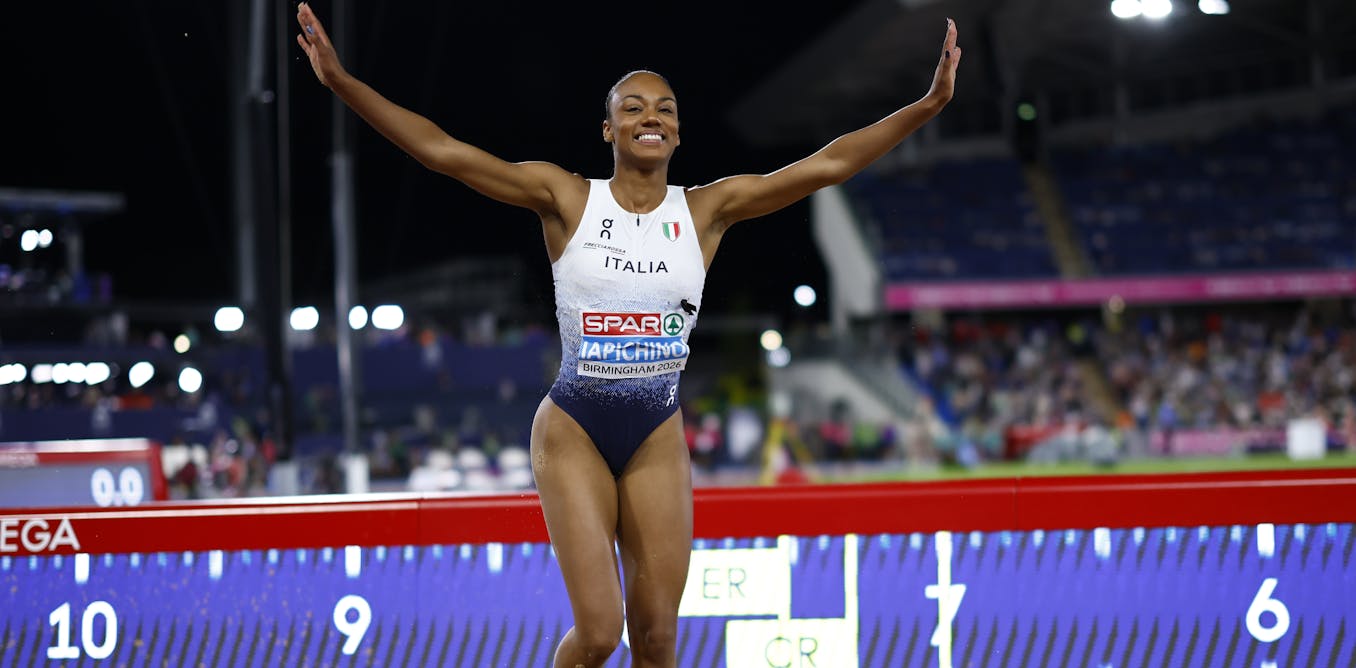
For the second time in a row, Italy has topped the medal table at the European Athletics Championships. With a total of 22 medals (ten of them gold) Italy pipped host nation Great Britain and Northern Ireland to the top spot. Once a nation of footballers – having won the World Cup four times – now Italy is showing itself to be a nation of runners and jumpers. There are a few explanations for how this has happened. First, Italy offers a distinctive form of public support to its athletes. Many elite sportsmen and women are employed by state security forces. While this system has attracted some criticism for “militarising” sport, it has nevertheless proved very successful. Athletes can receive a salary, training support and a degree of financial stability long before they become famous enough to attract commercial sponsorship. Crucially, they do not have to choose between pursuing an athletic career and simply making ends meet. Second, Italian families play a crucial role as the primary financial, material and logistical supporters of young athletes. At the grassroots level, local athletics programmes – often led by former professionals or passionate coaches – are equally important in identifying and nurturing talent. The ‘new Italians’ There is, however, a third important factor that becomes clear when looking at Italy’s medal winners. Five of its ten gold medals were won by athletes from diverse ethnic backgrounds. It’s the so-called “second generation”: the children of immigrants who were born or grew up in Italy and who now make the difference in sport. Nadia Battocletti, the queen of European distance running on the track, has Moroccan heritage through her mother. Larissa Iapichino, the long-jump gold medallist at the European championships held in Birmingham, is the daughter of the British-Jamaican long jumper Fiona May. Marcell Jacobs, the 2020 Olympic champion in the 100 metres and European record-holder at this distance, has an African-American father. And in swimming, the stellar example is 19-year-old world record-holder Sara Curtis. Sara Curtis wins the 50 metres backstroke at the European aquatics championships in August – breaking her own world record. EPA/FRANCO ARLAND In short, Italy’s position in European sport owes a great deal to those I call “new Italians”. The great paradox, however, is that while Italy enthusiastically celebrates its diverse champions in the sporting arena, many of these new Italians experience discrimination in everyday life. As I show in my research, some Italians still express surprise when they hear someone speaking like them, but not looking like them. The Italian national imagination, much like the country’s citizenship law, remains strongly shaped by the principle of ius sanguinis, or descent by blood. This reinforces the idea of an racial core of Italianness that is implicitly associated with whiteness. As a result, however Italian these children of migrants sound, behave or feel, their national belonging can still be questioned by a society in which anti-immigration attitudes and racist incidents remain significant and affect successful athletes. Given this context, it is not surprising that over the last few years Italy’s political scene has also shifted to the right. Prime Minister Giorgia Meloni’s political roots are in the post-fascist right. It is particularly significant that Italy’s fastest-growing political party, Futuro Nazionale, is led by former general Roberto Vannacci. He claimed in a 2023 book that professional volleyball player Paola Egonu’s “facial features” cannot represent Italianness. Futuro Nazionale’s surge means it has a real chance of stealing support from members of Meloni’s conservative coalition in next year’s election. This is not an isolated comment, but reflects a wider and recurring issue. Racism in Italian sport also affects the country’s football. Black Italian footballers have repeatedly lamented racist episodes they have experienced on the pitch, prompting the Italian Football Federation to renew its commitment to combating all forms of discrimination. While Italy waits for the resurrection of its football team, its new generation of champions in athletics and beyond is transforming the country’s sporting fortunes. But these new sporting heroes are also prompting wider debate about what it means to be Italian in an increasingly diverse society.
Italy’s sporting fortunes transformed by immigration, sparking wider debate about identity
Full Article
Original Source
Read the full article at Theconversation →KhanList aggregates and links to publicly available news content. We do not host full articles from third-party sources. Always verify important information with original sources.