
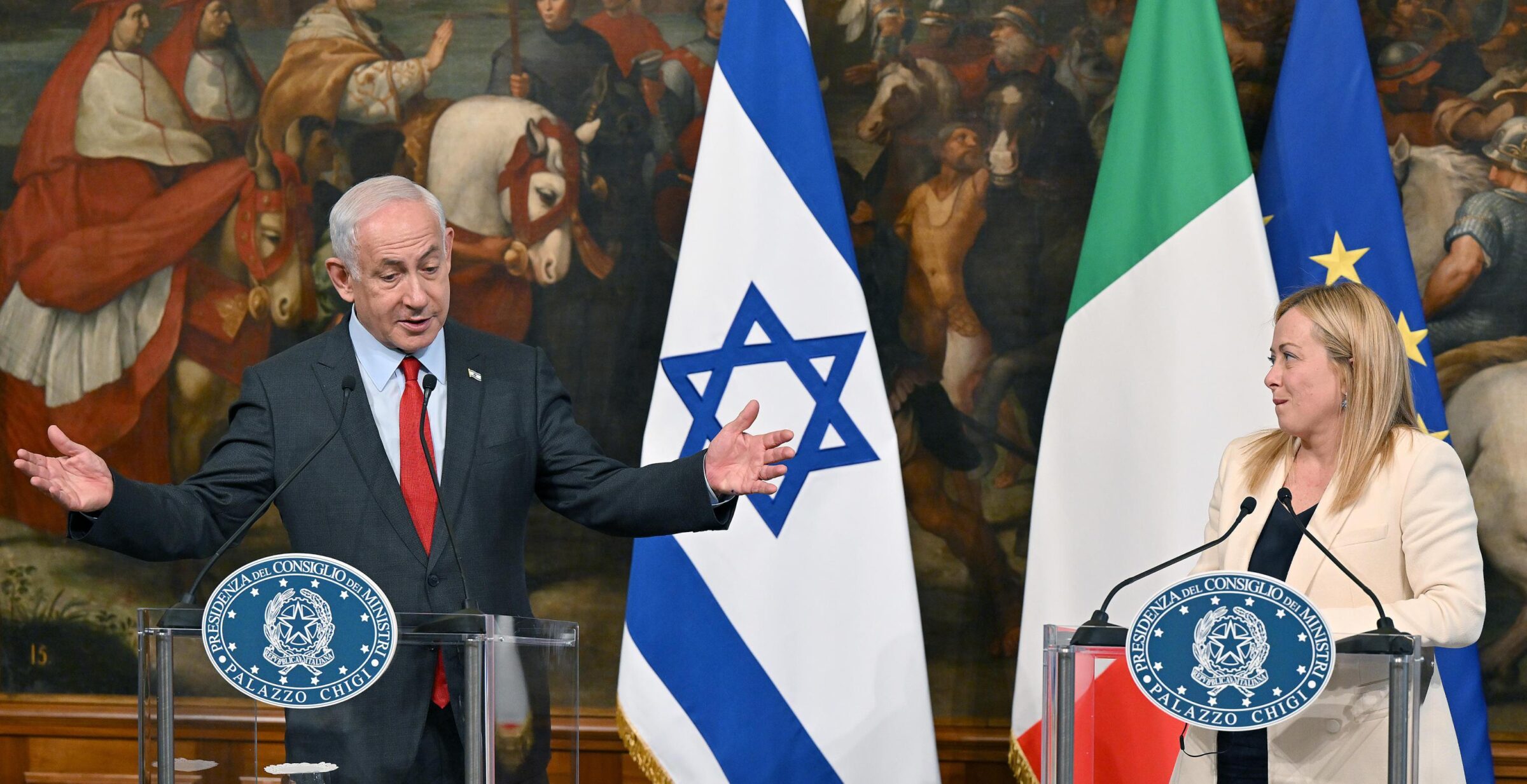
Anti-Jewish discrimination and legitimate criticism of Israeli state actions became conflated into one offence by Italy’s parliament on Tuesday (17 November). Adopting the International Holocaust Remembrance Alliance’s (IHRA) official definition of anti-semitism, Rome’s bill will apply across schools, universities, social-media platforms, and beyond. The move has raised serious concerns about what this will do to freedom of expression and protest. Despite not imposing financial penalties or criminal sanctions for offenders, it shows which side of history far-right prime minister Georgia Meloni’s Italy has chosen. “Branding criticism of Israel’s brutal occupation, its system of apartheid, and its ongoing genocide against Palestinians in Gaza as antisemitic – which could happen under the new law – also risks shielding state policies and practices from legitimate public scrutiny and debate,” said Erika Guevara Rosas, Amnesty International’s senior director for policy and research. “By blurring the distinction between antisemitism and criticism of a state’s actions, the law also risks undermining efforts to identify and effectively address genuine antisemitisms,” she said. Not only does Tuesday mark a bleak beginning for press and self-censorship on issues of public interest in Italy, following the path of the UK’s persecution of the Palestine Action group, who has now arrested over 4,000 activists involved in peaceful protests against Israel’s offences in the occupied territories. Not only does this also indicate the start of an authoritarian slippery slope, which could end in silencing political criticism that is not favoured by the ruling powers, or debate concerning those in office. But it is largely a display of the narrow priorities subscribed to by Meloni’s stagnant government. Although she has held power for longer than any of her predecessors in the history of the Republic, there is little to show for it, with headline measures that included tightened citizenship rules, anti-rave actions, cuts to welfare benefits, and limited offshoring of migrant processing to an exorbitantly expensive centre in Albania. And stalled economic growth matches the trend. Meanwhile, in a 147-93 vote in Rome’s Palazzo Chigi, supporters of the pro-IHRA definition bill cited soaring anti-Jewish violence and aggression as their main motivation, while forgetting about the abundant relics of fascism that still scar whole cities and regions across Italy, influencing every generation with hatred of minorities. Even the granddaughter of Italy’s late fascist dictator, Rachele Mussolini, has quit Meloni's Brothers of Italy party for being too rightwing in its treatment of minorities, which should speak volumes on the government's lack of integrity in its claims to care about Jewish people in Italy. As repression increasingly hits press and NGO freedoms in Europe and beyond, laws that seek to police the vocabulary of crucial democratic debates risk pushing our societies back into dark times, which our grandparents fought to end. In 2024, the German parliament passed a non-binding resolution backing the IHRA definition. Two years later, Germany is considering a law that would make denying Israel’s right to exist a crime, with up to five years in prison.
Italy’s hard definition of antisemitism will shield Israeli crimes and harm free speech
Full Article
Original Source
Read the full article at Euobserver →KhanList aggregates and links to publicly available news content. We do not host full articles from third-party sources. Always verify important information with original sources.