
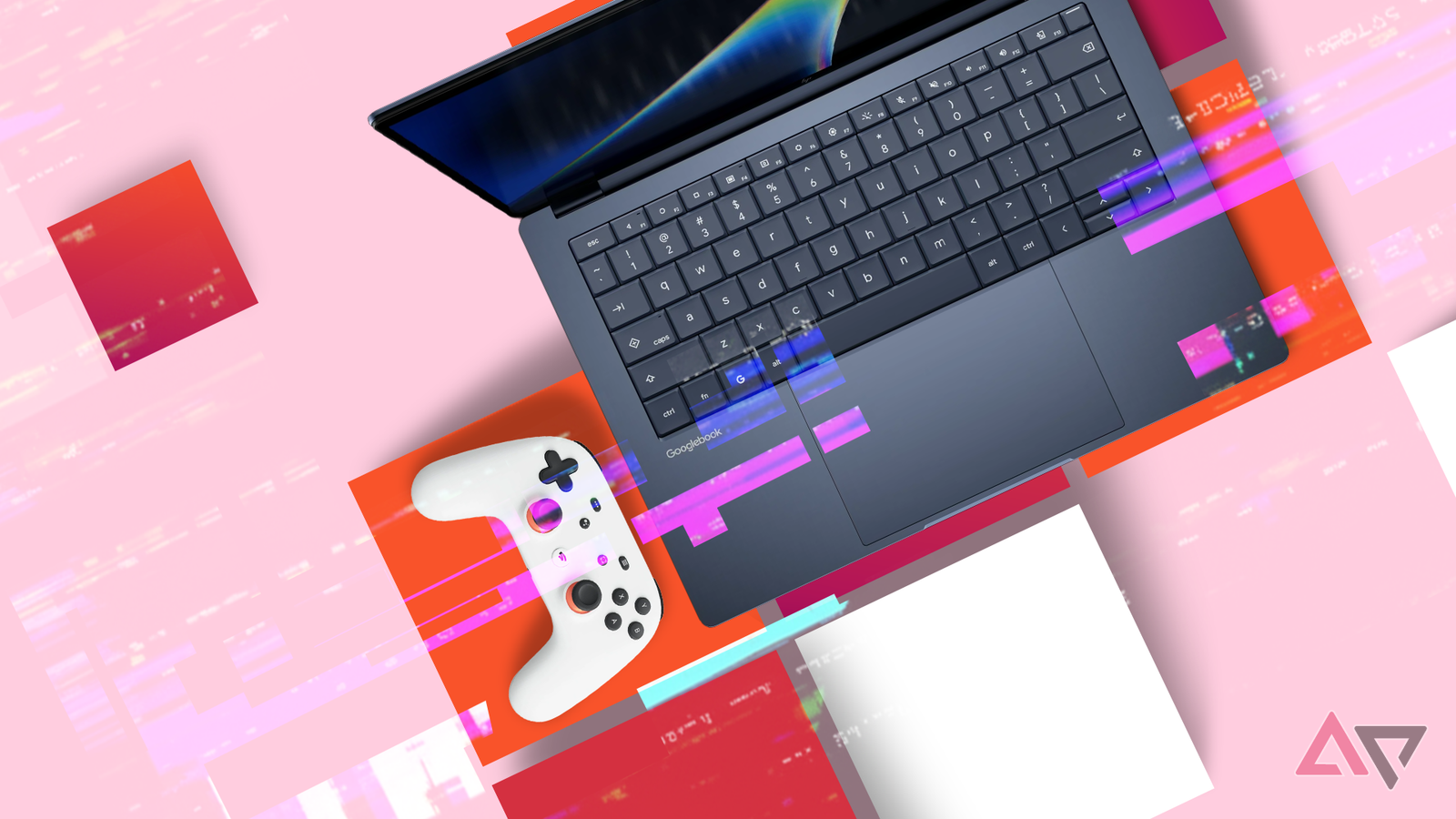
Published Sep 24, 2026, 11:15 AM EDT Ali has spent more than a decade covering consumer technology, with a knack for looking beyond the specs, tinkering with software, and uncovering the bigger stories behind Android, Google, Apple, and everyday devices. I was a Stadia user when it was still cool to say that out loud, even before the gaming community knew how its story would end. Google's track record with new hardware and software categories has never inspired confidence, and Stadia is the one example that taught me the hard way. Google has tried to make gaming work on a handful of its platforms, more than I can count at this point, with more than a decade of separate attempts. Android gaming has always felt secondary to whatever else the platform was doing that year. Gaming Chromebooks came next and didn't leave a mark on the industry. Stadia, the company's online gaming platform, burned three years of resources before Google decided to pull the plug. Now Googlebook wants to sell the same approach as a real reason to get one, and I'm not exactly rushing to believe that it will work this time. Here's exactly what went wrong with Stadia for me Five specific things that never got fixed Input latency made everything feel slightly off, irrespective of how good my internet connection was on paper or how close I was to a good server that day. There was no offline play, so a shaky internet connection meant shaky gaming sessions. There was no way around it, no matter what I did. The image quality wasn't in my control, and I'm the kind of guy who likes to play at the highest settings my system allows. But what I got was something that Google was capable of, and it wasn't much. I could buy games the way I do on Steam, but unlike Steam, I couldn't take them anywhere else — not to my PC, not my Steam Deck — nowhere at all, basically. On top of that, the official controller that Google sold had Bluetooth issues occasionally. It almost felt insulting, given the hardware was the company's in-house design. None of these were minor annoyances; it was the actual experience. So much so that I wasn't even a tiny bit remorseful when Stadia went down. Googlebook is Google's new pitch for Android gaming 20,000 games and a free year of third-party cloud service Credit: Android Police Googlebook launches in October with a starting price of $899, and gaming is a real part of the pitch this time, not an afterthought sticker bolted later on. Google says that over 20,000 titles from mobile and PC will run on the hardware, with a new Level Up program that pushes monthly optimized releases going forward. Almost half of the top 100 games have been optimized for keyboard, mouse, and touchscreen input. That means the system shouldn't burn out or crash, assuming you're holding a phone or a laptop. Every Googlebook also ships with a free year of Nvidia's GeForce Now, alongside the usual bundle of perks these launches tend to come with. The GeForce Now detail is the part that got my attention Google isn't building the cloud streaming platform this time Stadia's entire premise was Google owning the streaming infrastructure end to end, and that's exactly what broke down in real-world use. This time around, for anything that's beyond native Android games, Google is delegating that job to Nvidia. This may be something the company learned from its mistakes running Stadia. It could also be proof that Google isn't fully giving in or committing to gaming as its own service line even now. I'm not the only one who watched the launch with one eyebrow raised instead of clapping my hands. The skepticism is real, based on past experience. This is at least the fourth or fifth time Google has tried this Android gaming, gaming Chromebooks, Stadia, now this Chromebooks aren't dead either, for what it's worth. Google's exec has confirmed that they're sticking around for educational and enterprise purposes. The Googlebook takes a more premium lane, since it's not competing against the MacBook Neo, which it should be. At this price point, Googlebooks are more likely to compete with the MacBook Air, which isn't an odd comparison, but real-world tests remain to be seen. Android has been a massive gaming platform by sheer installation numbers for years, and Google still treats it as secondary to what it's building. Stadia is just the loudest of the bunch, and the most expensive example of that pattern failing in public. None of my Stadia problems are guaranteed to be fixed Native Android games running locally on the device make my latency concerns redundant, since nothing's being streamed over a connection. The GeForce Now portion brings the same streaming dependency back into the picture, just with someone else's name attached to it. Game portability is better this time around, since these are Play Store purchases rather than Stadia-exclusive licenses tied to a service that could vanish overnight without warning. Google has built interesting hardware before, and it still lost the thread on the software front that was supposed to justify it. I'm hopeful it works as intended, but I've also watched the same movie once already with a Bluetooth controller that couldn't hold a connection.
It will be a cold day in hell before I trust Google with my gaming again
Full Article
Original Source
Read the full article at Androidpolice →KhanList aggregates and links to publicly available news content. We do not host full articles from third-party sources. Always verify important information with original sources.