
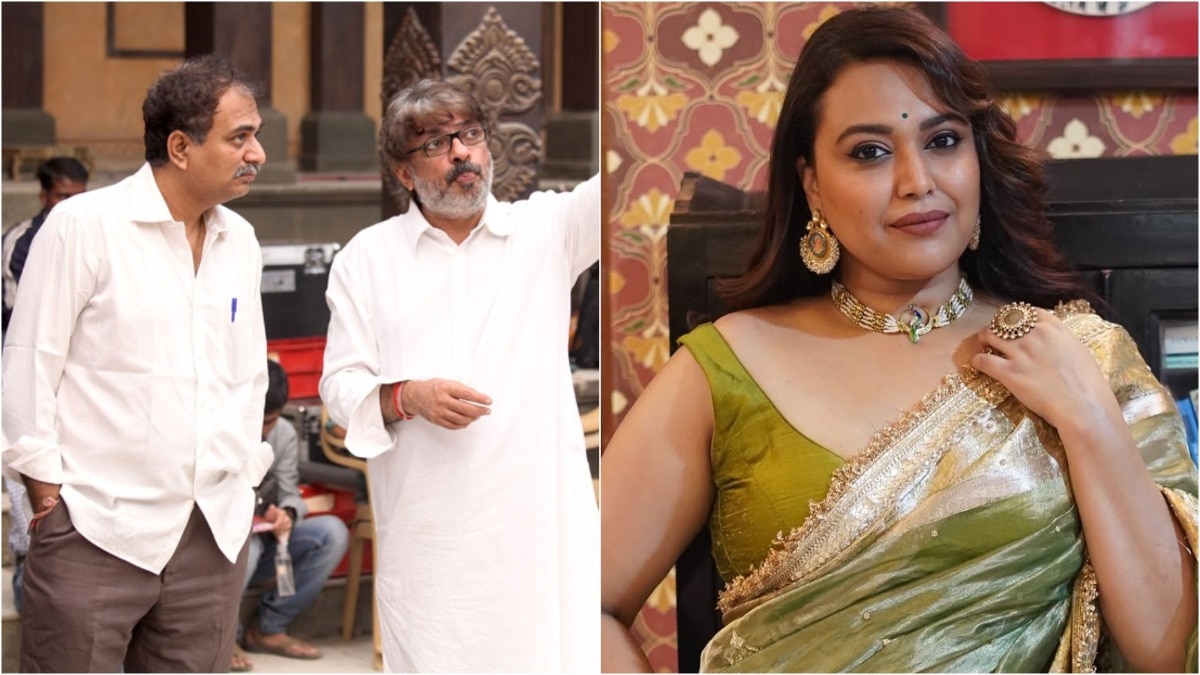
Amid actor Swara Bhasker’s criticism of the jauhar sequence in Padmaavat, the film's co-writer Prakash Kapadia has defended the controversial scene, saying it was based on research and accounts recorded in history books. Kapadia said the sequence reflected the reality of the period depicted in the film, as Bhasker questioned the way it presents sexual violence, women’s honour and the choice between death and survival.Kapadia, who co-wrote Sanjay Leela Bhansali’s 2018 film, said the makers presented what they understood from their research and the historical accounts available to them. “We made the film according to our research and what is written in history books,” he told Hindustan Times.Kapadia said the jauhar sequence reflected the circumstances of the period depicted in the film. “Every person interprets the film differently. What we showed, including the jauhar scene, was the reality of those times. It cannot be changed now. The situation was that of ‘do or die’. Woh log (the male warriors) kesariya kar ke utare thhe,” he said.The writer was referring to the Rajput tradition of kesariya, in which men would dress in saffron and enter battle knowing that they were unlikely to return alive. The jauhar sequence in Padmaavat depicts hundreds of women choosing death rather than facing sexual violence after the defeat of the Rajput forces. Kapadia also appeared dismissive of the renewed debate around the scene. He said he had not been closely following Bhasker’s recent comments but felt that the controversy was unnecessary.“It depends on the person’s mood. Even if it’s a good film, and you watch it with a bad state of mind, you will find it bekaar. It’s also about intention; whether you are going as a viewer, or watching it to find something controversial, or to find negativity,” he said.Swara Bhasker questions the jauhar portrayal The latest debate began after Bhasker, who was part of Padmaavat, revisited her criticism of the jauhar sequence at an event in Delhi. Recalling her reaction to the scene, she questioned what its portrayal could mean for survivors of sexual violence.“I’m watching this and all of these 800 women committing jauhar... God forbid if I was a rape survivor, what is this film telling me? I would feel like a coward. That I didn’t kill myself to save my ‘honour’,” Bhasker said.She also spoke about a scene involving a pregnant woman, saying the visual left her deeply disturbed. She questioned the idea that a woman should have to choose death to protect her honour in the face of sexual violence.Bhasker later clarified her comments through a series of social media posts and a video. She said her words had been misinterpreted and, in some cases, wrongly translated.‘I never questioned Rani Padmavati’Bhasker stressed that she had not criticised Rani Padmavati or the women who died during jauhar. Instead, she said her criticism was directed at the film’s portrayal of jauhar and the way it connects sexual violence with women’s honour and survival.“It is WILD that so many people are triggered (women included) by the basic idea that rape survivors have a right to life after rape!” she wrote in one post.She also urged people to watch her original comments before reacting to headlines or edited interpretations of them. “Number of people tweeting in English but not understanding English is a revelation to me today! The headlines are LYING! Listen to the freakin’ clip you geniuses,” she wrote.Bhasker also said she did not immediately write her open letter to Bhansali after watching Padmaavat. She waited five days to see whether her concerns remained unchanged before going ahead with it.Kapadia, meanwhile, pointed to the protests that surrounded Padmaavat even before its release. “With Padmaavat, people had raised objection even before watching the film and had protested on the streets. The same conversation is continuing years later, so what can I say? Let people say what they want to,” he said.Padmaavat, starring Deepika Padukone, Ranveer Singh and Shahid Kapoor, was released in 2018 after facing intense protests and controversy over its depiction of Rajput history. The jauhar sequence became one of the film’s most discussed moments.- EndsPublished On: Sep 3, 2026 07:09 IST
It was the reality: Padmaavat writer defends jauhar scene amid Swara Bhasker row
Full Article
Original Source
Read the full article at Indiatoday →KhanList aggregates and links to publicly available news content. We do not host full articles from third-party sources. Always verify important information with original sources.