
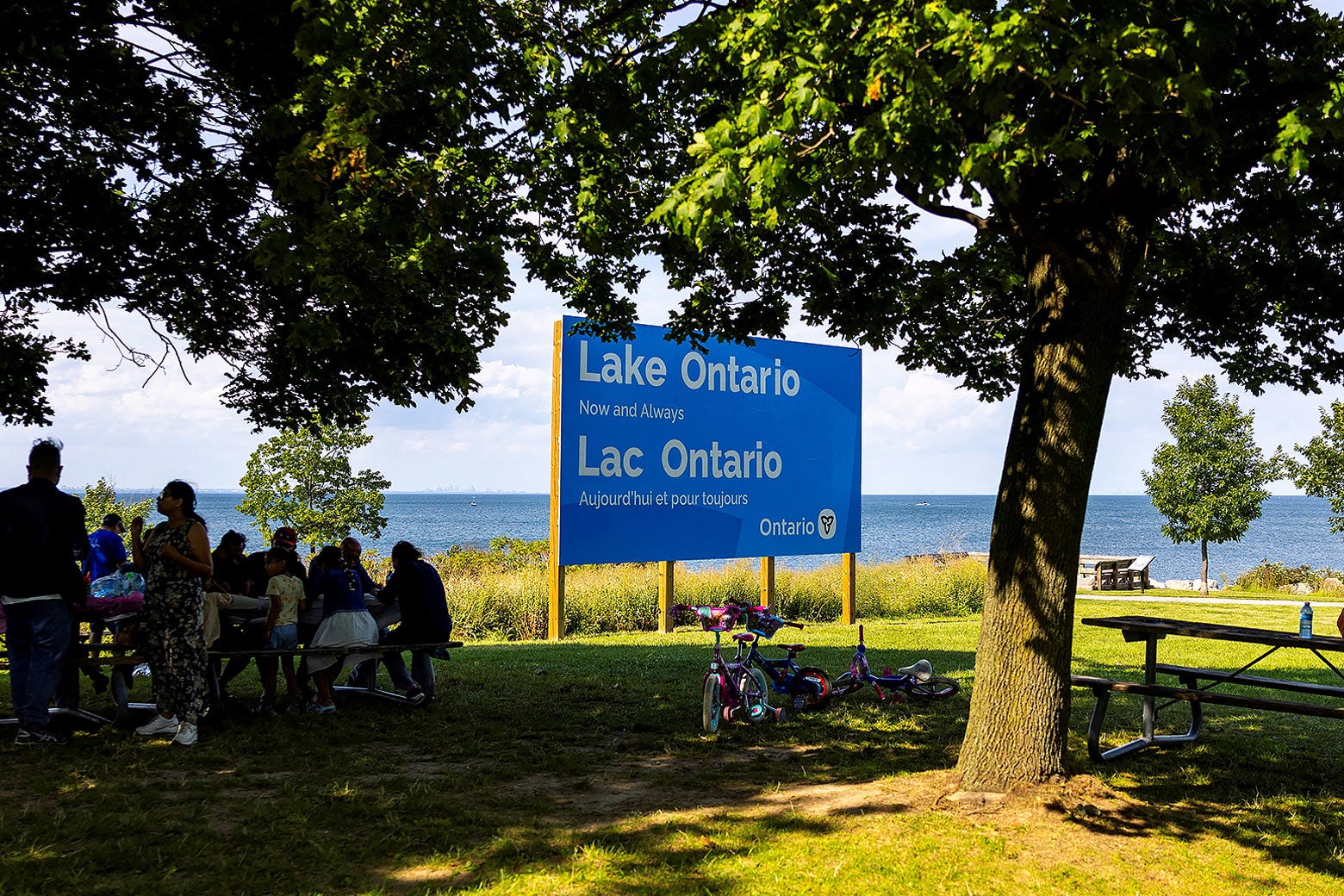
Users All Over the Map After Google and Apple accepted President Trump’s “Lake America” name change, MapQuest took a more defiant stance—and surged in popularity as a result. By Enter your email to receive alerts for this author. Sign in or create an account to better manage your email preferences. Unsubscribe from email alerts Are you sure you want to unsubscribe from email alerts for Nitish Pahwa? Sept 04, 20261:51 PM Carlos Osorio/Reuters Sign up for the Slatest to get the most insightful analysis, criticism, and advice out there, delivered to your inbox daily. A year and a half after rechristening the Gulf of Mexico “the Gulf of America,” President Donald Trump has done the same to Lake Ontario, one of the five Great Lakes that serve as the United States’ greatest source of fresh water. The public reasoning by the chief executive seems to be that calling it “Lake America” will successfully bully Canada into accepting the U.S.’s preferred trade terms; really, it comes across as more aggressive trolling from the man who spent much of last year threatening to annex the entire country. No matter what really led to the name change, the act itself is backfiring steeply. Our northern neighbor is once again pulling out the stops to inflict tariff-fueled economic pain upon us. Red- and swing-state midterms voters who adore the Great Lakes are pissed. And the uproar has extended to Apple and Google, both of which quickly acquiesced in renaming Lake Ontario on their mapping systems, thus driving millions of angered users into the open arms of … MapQuest. That’s right: The self-professed “OG of online mapping” may be the one winner of this “Lake America” brouhaha. The decades-old digital navigator, popular in the early days of the internet but done in by heightened Big Tech competition and a poorly handled AOL acquisition, first saw a revival in interest last year, after Apple and Google controversially accepted the “Gulf of America” change. Refusing to do the same, MapQuest instead earned itself even more favor by introducing a feature that allowed users to rename the Gulf whatever they wanted. Such early defiance well prepared the company for this moment: As soon as Lake Ontario was renamed, MapQuest began to blare the message everywhere it could—on social media, on the app itself, on TV—that it would be keeping the original name no matter what. Soon after, its mobile app was topping the charts. On Thursday, I spoke on the phone with Doug Berger, who started with MapQuest shortly after it was bought by the ad company System1 and has since been promoted to the app’s general manager. During our conversation, which has been edited and condensed for clarity, we discussed MapQuest’s popular revitalization, the reasons it’s sticking with Lake Ontario’s name, and what the company plans to do with its newfound goodwill. Nitish Pahwa: How would you compare the reaction to MapQuest’s stance on Lake Ontario with the surge in attention you gained from last year’s “Gulf of America” post? Doug Berger: The reaction has been extraordinary from the public and from people downloading the app—a much bigger response than we saw last year with the Gulf of Mexico change. Back then, we had between 300,000 and 500,000 downloads. This time, we just announced that we’ve had over 2 million app downloads since last Thursday—in one week. People are engaging a lot more with us on social media, and we’re excited to have all the new people joining us. I know that for many people, including some of my colleagues, the common perception was “Wow, I didn’t even realize MapQuest is still around.” What has MapQuest’s business and public perception been like in the time you’ve been there? So, the app is what’s surging right now. When I started at MapQuest, usage was the other way around: The web was the place where people went to plan, look up contact information, and plan road trips. We also have a trip planner on the web where you can visualize longer routes. That tool is often used by small businesses in order to plan their daily schedules. Now, as the app takes over, everybody here’s working very hard to bring features that people are asking for. I’m not sure everyone knows just how mapping apps work. From what I understand, it’s not like weather apps, which pull and present numbers directly from government databases. How would you explain digital mapping to a layperson, especially the way MapQuest does it? There are a bunch of different layers to that question. One way I describe it is that we license and source data from a lot of different sources, whether governments or private institutions or aggregators. Points of interest are a huge part of the experience, so we like to source from a diverse set of sources and have systems on our side that bring the data together in a way that is digestible by humans and made most familiar to people. That extends to the map layer as well: No one source has every single component of a map, whether those are the gulfs and lakes or counties or cities or airports. There’s no single place that has the best version of that, so we have to prioritize where we draw from the most. And you see that in this moment in regard to Lake Ontario. Did you have people who were preemptively reaching out to you through customer service support or other channels and saying, “Please never make this change”? In the thousands. Via every channel you can imagine. App reviews have especially blown me away: We’re coming up on 1,000 new ones since Thursday, and they follow the sentiment you’re seeing on social media. It’s interesting to me how MapQuest has taken a firm stance on this. It’s not as if someone from the press came to you and you responded, “We’re not going to change it.” These statements have a defiant tone. Where does that come from, especially at a moment when other institutions in this Trump term have just gone along with whatever the president says? If you rewind back to the Gulf of Mexico/Gulf of America moment, we tweeted out a lighthearted joke: “We still haven’t figured out how to update our maps.” The response to that was insane. It was fun to watch. But people were speaking through their downloads at that time as well. So when this moment came along with Lake Ontario, it was a pretty easy decision for the company, thinking about what’s in our best interest and the best interests of our users. And our move was pretty quickly validated. Could we have changed it? On the technical side of things, sure. But we were listening to our customers. Have you heard from anyone in the administration, like Interior Secretary Doug Burgum, considering that federal officials reportedly reached out directly to Apple and Google? We have not heard from any federal institutions. I’ll leave it at that. Now that you’ve gotten this digital momentum, what are you all thinking in terms of future strategy? What role do you see MapQuest playing in the digital mapping space going forward? I want to emphasize that people are not just downloading the app in protest or anything like that. They are coming back the next day and the day after that. They’re actually using the MapQuest app to the point that engagement rates are about five times higher than they were before last week. Our goal is to be the best navigation app on the market. We have an extremely small team, compared to the workforces behind the apps that are preinstalled on your phone. But we’re working fast, we’re being communicative on social media and elsewhere, and we’re even considering opening up a road map to get votes, to get direct user input in a more structured manner. So the focus from here on out is heads down, work on the product, and make it the best service possible. Apple Canada Donald Trump Foreign Policy Google Maps Apps
It Was Once the Internet’s Favorite Map Website Before Falling Into Obscurity. Then Came Trump’s “Lake America” Debacle.
Full Article
Original Source
Read the full article at Slate →KhanList aggregates and links to publicly available news content. We do not host full articles from third-party sources. Always verify important information with original sources.