
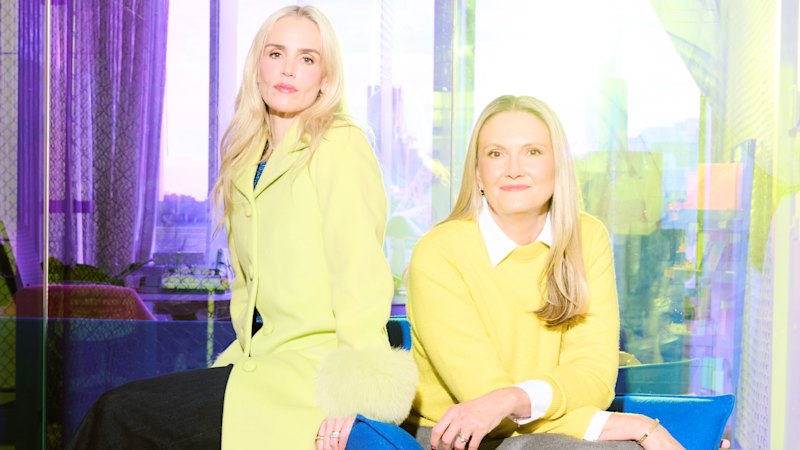
In every dramatic fall from grace, there is a before, and there is an after.For Ava Chandler-Matthews, one half of the duo behind Australian suncare brand Ultra Violette, what preceded the fall that would plague her company was the stuff of bucket lists: a private dinner with billionaire beauty founder Hailey Bieber. What came after would throw this high into sharp relief.It’s been more than a year since consumer advocacy group Choice published that investigation into sunscreen that would upend the industry. On June 12, 2025, Choice reported that 16 out of 20 Australian sunscreens failed to meet their SPF claims of 50 or more, implicating plenty of household names including Banana Boat, Invisible Zinc, Neutrogena and the Cancer Council. Among them, none suffered the kind of fallout that cult favourite brand Ultra Violette did: its “Lean Screen” product, a mineral zinc sunscreen and one of the most premium products in the cohort (a 75ml tube retailed for $52), trailed the pack with a woeful SPF score of 4 – the only one to score in the single digits.Nine months since co-founders Chandler-Matthews, 40, and Bec Jefferd, 50, first agreed to this interview – after cancelling and rescheduling twice – the Melbourne-based friends turned business founders have flown to Sydney for the day for their first sit-down media interview since the story broke. They arrive at a North Sydney cafe in late July bearing a selection of designer tarts from Melbourne – a peace offering after the rescheduling – ready to talk about how they found themselves in the eye of the storm and how they climbed out of it.“A trust rebuild is not an interesting story,” says Chandler-Matthews. “It’s not as interesting as a sunscreen scandal where there are interesting players. It became us versus Choice.”Choice’s initial investigation morphed into a kind of national sunscreen scandal, sowing doubt about the efficacy of sunscreen altogether in the country with the highest rates of skin cancer in the world.Dubbed “SunscreenGate”, the entire affair made global headlines as sunscreen experts, scientists and skincare girlies picked apart the merits of sunscreen testing, the role of medicine regulator the Therapeutic Goods Administration and the validity of Choice’s SPF results, not to mention Ultra Violette’s defiant initial response – quickly followed by a sudden volte-face – and then whether it was worth wearing sunscreen at all.The fallout is ongoing: the TGA’s investigation into the other 15 sunscreens that failed Choice’s testing is yet to wrap, and in March, it opened up consultation for how sunscreen is regulated in Australia, the results of which are expected to be published by the end of the year.The pair will tell you the past 14 months have been “triggering” and “traumatic”. Chandler-Mathers puts it more bluntly: “It’s been the hardest year of my life. So often I would come home and I was mute. I couldn’t talk to my husband. I couldn’t talk to my best friends. I couldn’t talk to my mum.”Of all 16 sunscreens that failed Choice’s testing, the fall of Ultra Violette was the steepest. In the six years between launching the brand in 2019 and the Choice investigation in 2025, its sunscreens had become a darling of the Australian beauty industry – a cult favourite among young women for its pastel-hued packaging and its lightweight, tinted formulas that felt more at home in an upmarket beauty retailer than a chemist. (The Australian Financial Review credited the brand with “making sunscreen sexy”.)Chandler-Matthews and Jefferd, alumni of household names like L’Oreal and Napoleon Perdis, met while working at beauty retailer MECCA – Jefferd as head of product development, Chandler-Matthews as brand manager – and they departed in 2017 to build what would eventually become Ultra Violette.Neither are scientists – they enlisted a force of product developers, in-house regulators and chemists to build Ultra Violette – but their marketing backgrounds were pivotal in the brand’s sharp rise, enlisting influencers like Gen Z-favourite Sophia Begg (@sophadophaa to her 1.5 million TikTok followers).Doors opened for them with financial injections from private equity and the support of beauty retailers such as Adore Beauty, Sephora, Net-A-Porter and Harrods. They had just launched in the US market when Choice’s report forced them to focus not on thriving, but simply surviving.What the saga partially succeeded in doing was exposing the public’s limited understanding of how sunscreen works – and just how volatile the testing process can be.Acknowledged by the TGA and the sunscreen industry, the current standard for SPF testing in Australia and internationally is inherently variable. This method (in vivo) involves applying sunscreen to 10 to 20 human subjects, who are then exposed to UV light. A trained tester observes this process, noting the time it takes for skin to redden (an assessment procedure which is itself prone to error), to determine the product’s SPF.In Australia, most non-cosmetic sunscreens are regulated as medicines, meaning to get on the market they need TGA approval. To do so, brands send a product to a laboratory of their choosing to be tested according to the Australian and International standard. If approved, this is typically the first and only time in a product’s lifecycle it is tested.And because the TGA doesn’t conduct its own testing (except in select circumstances), Choice has historically been the only body in Australia to conduct testing independent of brands. Its last report on Australian sunscreen, published in 2015, found four out of six products tested failed to meet their advertised SPF level.When the worst year of her life began, Chandler-Matthews was in California’s Napa Valley, dining with beauty mogul Hailey Bieber, having just spoken at The Business of Fashion’s global beauty forum, headlined by the influencer.Choice released its report at midnight AEST, and although Chandler-Matthews and Jefferd had known it was coming, they hadn’t been told exactly when. The advocacy group had alerted Ultra Violette about its test results in March, three months prior to its public release, prompting Chandler-Matthews and Jefferd to order additional testing on every batch of Lean Screen then on the market. They revisited manufacturing records and asked Choice for more detail on its testing methods.Ava Chandler-Matthews was in California at The Business of Fashion’s The Business of Beauty Global Forum in June just before Choice’s report dropped.Getty Images for The Business of FashionThe SPF figure that Choice’s testing (conducted at Eurofins Dermatest in Sydney) arrived at – 4 – was incomprehensible to them. “We genuinely could not understand how that result was even possible,” says Jefferd. ” ‘Is this true? Have we been damaging our customers?’. That was our first response. Like, ‘That can’t be right. Have we had any cases of people being sunburnt?’.” Choice was confused, too. When it sent a different batch of Lean Screen to a lab in Germany, it returned a score of 5.Meanwhile, Ultra Violette had received the results of two of its additional SPF tests – sent to Princeton Consumer Research, an SPF certification lab based overseas founded by two British reality TV stars, with no connection to Princeton University – with scores of 61 and 64. Ultra Violette shared these numbers with Choice, to little effect. “We asked a few questions, but we weren’t engaged,” says Chandler-Matthews. “It was not like we were talking every day.”After dinner, Chandler-Matthews returned to her hotel room to tackle customer service queries until the early hours. The next day, she mentally parked everything for a meeting with Sephora US before filming a video to respond to the Choice report and flying home. Fielding calls and messages from retail partners, brand ambassadors, customers and the media over questions the pair didn’t have the answers to, they were shocked to see 15 other brands had also failed their SPF claims.On paper, though, they were less incredulous and more recalcitrant. Ultra Violette engaged a reputation and crisis management consultant to distribute a forceful statement condemning Choice’s results as “not even remotely accurate” and “scientifically impossible”, suggesting that what was most likely to have happened was “human error and the mix-up of samples”. The way the product was decanted, their statement said, may have led to destabilisation (Choice later published all its SPF tests and stood by the validity of the test results).Chandler-Matthews doubled down the following day. In an eight-minute video uploaded to TikTok and Instagram, she pointed to Ultra Violette’s own SPF test results of 60-plus from the same batch Choice tested. “What we do know about Choice is they’re not a regulator. They are not the ACCC. They are not the TGA. They are not the ones who approve sunscreens,” she said to her iPhone camera in the video filmed in her US hotel room. “We stand by the tests we’ve done.”Ultra Violette co-founder Ava Chandler-Matthews and the brand initially defended their testing of Lean Screen in a social media video.Instagram/@ultravioletteIt did little to assuage public concerns. Some looked at Ultra Violette’s distinct blue and purple colour scheme and concluded that the entire range must also be similarly defective (the pair later retested the entire range and said they found no issues beyond Lean Screen). Others accused Jefferd and Chandler-Matthews, who couldn’t help but read every comment on social media, of diluting their product to squeeze more out of their customers.Meanwhile, additional test results returned with figures below 50 – and then another, and another (in Australia, products advertising SPF50+ must actually test at 60 or above). On August 22, the company apologised to customers and announced a voluntary recall of Lean Screen. It looked like a total capitulation – because it was. “We are deeply sorry that one of our products has fallen short of the standards we pride ourselves on and that you have come to expect of us,” their statement read. The next slide on the carousel was a chart of eight test results, returning SPF levels of 64, 61, 60, 33, 26, 21, 10, 4.“We did a full 180,” says Chandler-Matthews. “There was no choice,” Jefferd says. “The product was not safe to keep on the market.”While the recall was announced in late August, Ultra Violette had started refunding customers after Choice published its report. Some sunscreen brands tarred by the same investigation reached out to Chandler-Matthews and Jefferd for advice on how to handle the recall process (one copied their statement so closely that it still contained Ultra Violette’s specific product number). About $1 million evaporated, squeezing cash flow at a time when the company was trying to fund its US expansion. Its chief financial officer, alarmed at the amount of money going out the door, tried to put some limits on the refunds, but the founders say they were refunding just about anyone who asked. “It was absolutely in doubt,” Chandler-Matthews said of the business’ financial viability at the time.So what actually went wrong with Lean Screen? Why were the results that low?Unlike other sunscreens in Ultra Violette’s range, Lean Screen was the only product not developed in-house. The zinc sunscreen used a base formula made by Wild Child Laboratories, a formula which, ABC investigations revealed, was shared by 20 other Australian sunscreens that were all recalled, paused or under TGA review. The TGA would later find that this base formulation was “unlikely to have an SPF greater than 21”, triggering a domino effect of product recalls by brands that hadn’t been called out by Choice’s report.Further ABC investigations cast a shadow on the integrity of the whole sunscreen industry. Sunscreen experts and whistleblowers called into question the data emerging from Princeton Consumer Research, which had tested and certified three of Ultra Violette’s SPF results – the ones they presented to Choice to counter its 4 – and at least seven other sunscreens in Choice’s report. Former employees said they resigned over the lab’s “tendency to cut corners”. In late September, the TGA said it found “significant concerns about the reliability” of Princeton’s SPF testing, and urged sunscreen brands to get their products tested elsewhere.While there’s no suggestion it occurred in this case, fraudulent testing isn’t unheard of. In 2019, the regulator began reviewing sunscreens tested by American lab AMA, whose owner was arrested by US authorities for a scheme involving fabricated test results.Perhaps no business suffered more from the saga than Wild Child. Ultimately, a TGA investigation didn’t find any manufacturing deficiencies that explained why the formula could only ever achieve an SPF of 21 and it pointed to variability in SPF testing as the potential cause. “Our investigation did demonstrate that materially different SPF results were generated when the formulation was tested by different laboratories,” says Wild Child chief executive Tom Curnow.But the negative attention sparked by Choice’s investigation had done its damage; the Perth manufacturer collapsed, was acquired by a group of investors, and rebranded to Heliora. “The publicity, recalls and resulting loss of customer and market confidence in SPF testing caused significant commercial damage,” said Heliora chair Paul Waldren.Ultra Violette stopped working with Heliora, which has ceased production of the recalled base formula, but the manufacturer managed to retain all 20 brands subject to recalls as clients and kept all 70 of its staff employed.Chandler-Matthews and Jefferd accept responsibility for what they put out on the market, but they aren’t keen to say much more about what went wrong with the product. “We still don’t know. It wasn’t our formulation,” says Jefferd. “It’s a manufacturer’s formula. It’s up to them,” says Chandler-Matthews.Princeton Consumer Research did not respond to multiple requests for comment from Good Weekend.Fair or not, Ultra Violette’s tarnished brand became synonymous with faltering trust in Australian sunscreen as a whole, a $270 million-plus market that had been regarded highly by international consumers whose own regulators (like the US’s Food and Drug Administration) are less stringent than the TGA’s.It didn’t help that this came at a time when the sunscreen “scepticism” movement, popularised by right-wing figures like RFK Jr and Joe Rogan who claim sunscreen contains “toxic” ingredients and prevents vitamin D generation, had been gaining traction on social media, alongside tanning culture.“Regardless of whether people buy Ultra Violette or not, the fact that trust in sunscreen in general was shaken was really disastrous,” says Jefferd.Chandler-Matthews hopes they can win back as many customers as possible, but she says some have turned their back for good. “For some people, it may take longer,” she says. “For some people, not at all.”Chemist Dr Michelle Wong, a science educator known to her social media followers as @labmuffinbeautyscience, has followed the scandal closely. The founders’ approach – which took aim at the validity of Choice’s results – worked against, not for them, Wong believes. “I think a lot of the lack of trust actually came from Ultra Violette themselves and how they responded,” she says. Their claim that Choice’s results were “scientifically impossible” turned out to be untrue.“If you compare Ultra Violette’s response to every other brand in the original Choice article, theirs was just out of line,” says Wong, who was paid to copywrite for the brand in 2021. “While I think a lot of what they did behind the scenes to sort out the issue was commendable, publicly it seemed like they were trying to influence their way out of this situation.”Swathes of social media users have expressed that waning confidence in the brand was less because of Lean Screen’s failure in Choice’s report, and more because of their subsequent handling of it, which they claim included deleting unsavoury comments, blocking users and enlisting influencer friends to rage against Choice.How Ultra Violette handled (or mishandled) its response became a PR lesson on how not to handle a crisis, inspiring multiple think pieces and LinkedIn posts on the topic. (It’s normally an excellent strategy to mobilise people in your network to defend you, opined crisis management consultant Sally Branson, but in this instance, Ultra Violette’s ecosystem of beauty influencers and TikTok creators were doing so “without bulletproof information to support it”.)By speaking to customers in a video on social media, Chandler-Matthews had wanted to address customers directly and personally. Given the chance, they’d “absolutely” do things differently, they say now. “There’s a lot to be said for that classic PR response,” says Chandler-Matthews. “By doing that video, did I think I would become the face of a global sunscreen scandal? No, I didn’t. It was defensive.”“We wouldn’t have operated on a platform of as much certainty,” says Jefferd. “We felt we were on really solid footing, and what turned out is that we weren’t.”But while hindsight may offer the gift of perspective, both are emphatic they acted in good faith as passionate founders doing the best with the information they had. “This is not our business,” says Jefferd. “This is our life, and we care deeply about this.”Despite the wreckage to Ultra Violette’s reputation, its cash flow crisis and its social licence to operate, Chandler-Matthews and Jefferd don’t regret the changes catalysed by Choice’s SPF testing. “I think [Choice] shone a light on an important area that needed to be talked about. We wouldn’t be having this discussion about regulatory change if they hadn’t,” says Jefferd.The scale of the problems across the supply chain led the TGA itself to the conclusion that there were broader issues with the current regulatory framework for sunscreens, rather than isolated product failures. A TGA spokesman said this includes addressing known limitations in SPF testing reproducibility, laboratory oversight, and life-cycle quality assurance.In March, the TGA opened up a consultation group seeking feedback on proposed regulatory changes – before its investigation into sunscreens that failed Choice’s testing has been published, which it said would be online “before the end of the year”. The public, and politicians, are getting impatient. When independent senator David Pocock tried to press for answers from a TGA official at a Senate Estimates hearing in June (he was not the first to do so), he was told the investigation was “nearing completion”.“I think a lot of the lack of trust actually came from Ultra Violette themselves and how they responded,” says chemist Dr Michelle Wong.Wong, who is part of the TGA’s consultation group, says industry insiders had been raising the alarm on issues with SPF testing with the regulator for years, without much progress. Choice’s investigation made the problems too big to ignore. “I think Choice felt like they needed to stir up some attention to get the TGA to act,” she says, “which, I think, is kind of justified.”The consumer advocacy group, formed in 1959 at a Sydney Town Hall meeting, enjoyed a level of national exposure and attention it hadn’t had in years. For the first time, Choice was nominated for a Walkley Award, typically reserved for journalism, for its sunscreen investigation.Without it, defective sunscreens would have stayed on the market and regulatory reform may have never happened, said Matt Steen, Choice’s director of reviews and testing. “The existing regulatory system, which relies heavily on companies certifying their own compliance, is clearly not working and cannot continue.”One industry group that had been lobbying for regulatory change is Accord, representing the hygiene, cosmetic and personal care industry, of which Ultra Violette is a member. The organisation would like to see the TGA adopt in vitro [lab-based] test methods to validate results, particularly given many labs operate overseas under different regulatory frameworks. In vitro testing has since been approved for use in Australia, but it has yet to be implemented across the industry. Early analysis shows it is at least as reliable as in vivo testing, says Accord executive director Damien Mitsch, and it is a preferable alternative as it’s cheaper and faster (machines don’t need to be recruited and paid to have their skin burned).Mitsch describes the way Choice handled its publication as “sensationalistic”. “Getting the sunscreen conversation into the public domain was in some ways helpful,” he says. “But at the same time, to throw it out into the ether and watch the chaos ensue is probably not the best way to manage a significant public health issue.”All stakeholders Good Weekend spoke to agree the regulator needs to do more – particularly around eliminating issues with testing variability – but opinions diverge on the nitty gritty about exactly how this might play out.Ava Chandler-Matthews, left, hopes changes they’ve implemented will help Ultra Violette rebuild as a leader in the sunscreen industry and rehabilitate the reputation of Australian sunscreens.Jason SouthUltra Violette has come full circle. In mid-August, 361 days after the company pulled Lean Screen from shelves, it released Velvet Screen, a mineral zinc sunscreen that has gone through two rounds of testing from separate laboratories and is manufactured at a different, TGA-approved third-party manufacturer.The number on the bottle has been lowered to 40 – unlike its predecessor’s SPF 60 claim – a decision Jefferd says was made in the hope consumers take a little extra time in applying sunscreen properly (mineral sunscreens are heavier, meaning users are more likely to apply insufficient amounts), and despite testing returning results in the high 40s and 50s. Velvet Screen’s development has heralded broader changes across the brand, aimed at reducing SPF testing’s inherent variability.They have also engaged French photobiologist Sebastien Miksa, whose job it is to review the validity of test results through his company Suncert and identify potential anomalies. Ultra Violette is pushing for the TGA to have someone perform this role in-house.“The trust in the rest of the range should probably be stronger than ever, because we’ve implemented all of those changes,” says Jefferd.Chandler-Matthews hopes these changes will help Ultra Violette rebuild as a leader in the sunscreen industry and rehabilitate the reputation of Australian sunscreens. “It’s actions and not words at this point,” she says. “It’s just consistency. I think we’ve done the work.”The drama has bruised, but not hamstrung, Ultra Violette’s ambitions to expand across the globe. Despite the public tumult, Ultra Violette didn’t lose any retail partners, and new US investors had come on board some weeks before Good Weekend sat down with the pair. The day after Choice’s investigation came out, Chandler-Matthews met with Sephora US, which renewed its deal and gave them four times more shelf space.This time last year, they were asking themselves why they had bothered to make sunscreens at all.“We could have made a blush,” says Jefferd. “We could have made a f---ing fantastic moisturiser.”Get the best of Good Weekend delivered to your inbox every Saturday morning. Sign up for our newsletter.
It took two Aussie entrepreneurs six years to build a cult sunscreen brand. Then it came crashing down
Full Article
Original Source
Read the full article at Smh →KhanList aggregates and links to publicly available news content. We do not host full articles from third-party sources. Always verify important information with original sources.