
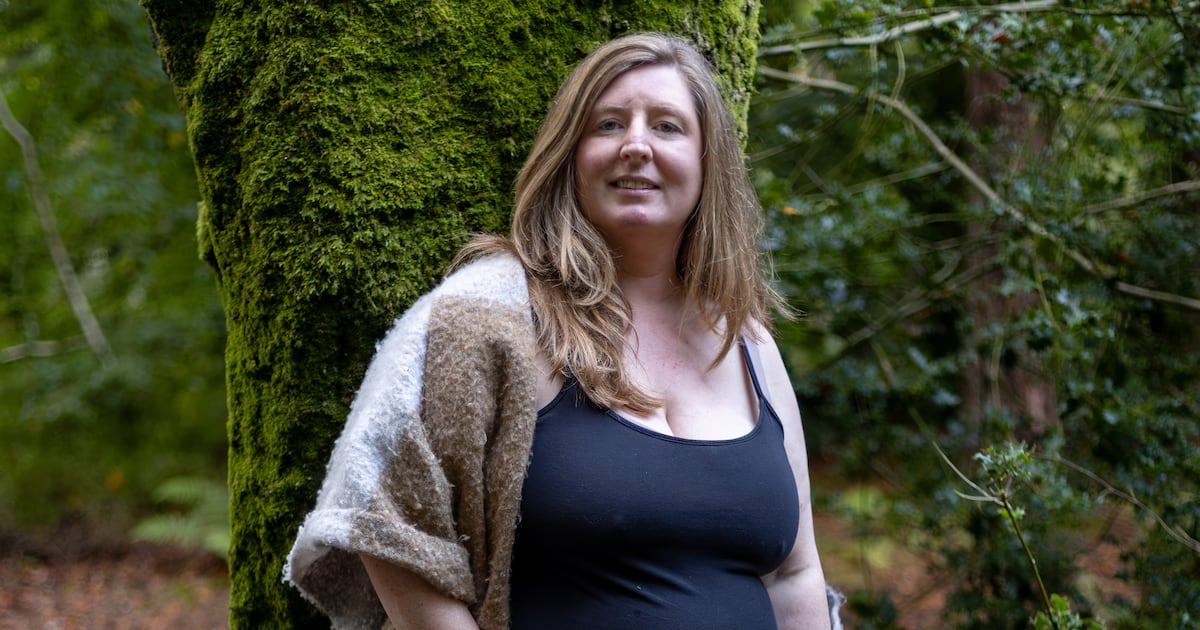
Cat Brogan was initially receiving maternity care in Derry, a 15-minute drive from her Donegal homeCat Brogan, who lives in Co Donegal, has been told she will have to give birth to her children in the State rather than in nearby Derry in order for her wife to be recognised as their parent. Photograph: Cora O'Neill A woman living in Co Donegal who will have to travel to Dublin to give birth to her twins so her wife can be recognised as their parent has called for “urgent” change to parentage laws. Cat Brogan (41), a poet from Omagh, Co Tyrone, was initially receiving maternity care about a 15-minute drive from her home at Altnagelvin Hospital in Derry.However, at 22 weeks pregnant, she learned that if the children were born in Northern Ireland, her wife would not be recognised as their parent in the Republic.“I was shocked when I found out it was an issue. I was really upset,” Brogan said.READ MOREUnder current law, donor-assisted human reproduction and birth must take place in the Republic for both to be recognised as parents.“It shouldn’t be like that. I should be able to give birth in the hospital that’s closest to my house that’s able to cope with the level of care I need,” Brogan said.“We are both these babies’ parents. We made the decision to have them together. We went through IVF together. My wife has been beside me throughout this pregnancy.“Our children should not have a different legal relationship with one of their parents simply because they are born on one side of the Irish Border rather than the other,” she said.Brogan underwent IVF treatment in Dublin, using her eggs and donor sperm, to conceive, as required for both parents to be recognised. This was a “fluke” rather than a plan, Brogan said, having opted for a Dublin facility over those available in Belfast after seeing “better reviews”.Her wife wishes to remain anonymous as she is from a country where it is illegal to be gay. The couple met 10 years ago when Brogan was in her wife’s native country and married two years later.At 22 weeks pregnant, Brogan initially transferred her care to Letterkenny University Hospital in order to give birth in the Republic, but has been an inpatient at the National Maternity Hospital, Dublin since September.She required specialist care in the capital after doctors discovered one twin was growth restricted. Brogan says such care could have been provided in Derry, near her home.She is scheduled to undergo a Caesarean section this week at 32-weeks gestation, after which her children will likely require neonatal care for weeks. She said she does not know where she will stay during that period, adding it is “stressful” not having family or friends in Dublin.Brogan believes there is “no awareness about the issues for donor-conceived children” when they are not conceived and born in the Republic.“And then you could be in a situation where your parent doesn’t have parental rights,” she said.Cat Brogan's children will likely require neonatal care in Dublinand she does not know how she will manage regular travel between the capital and her home in Donegal. Photograph: Cora O'Neill Brogan is self-employed and works in the Republic and Northern Ireland regularly, often spending time in her native Omagh. She believes her circumstances raise questions around how Irish legislation accommodates Irish citizens born in Northern Ireland and families whose lives involve both jurisdictions.William McLoughlin, a barrister assisting several same-sex couples in the courts over the issue of parentage recognition, said it was “shocking” that couples like Brogan and her wife “have to go to such lengths to ensure their families are legally recognised”.He also highlighted a lack of awareness of the regulations, saying many families do not realise “until after their child is born and one parent is a legal stranger to their own child”.A spokesperson for the Department of Health said amendments to the Assisted Human Reproduction Act and changes to the Children and Family Relationships Act will “address issues relating to the recognition of parentage”.This will include cases where a donor-assisted human reproduction procedure takes place in the State, but the child is “born outside the jurisdiction”, they said.The spokesperson said the Minister for Health hoped to introduce the Bill in the Dáil “as soon as possible”.IN THIS SECTION
‘It shouldn’t be like that’: Woman living near Border to give birth in Dublin so wife can be recognised as parent
Full Article
Original Source
Read the full article at Irishtimes →KhanList aggregates and links to publicly available news content. We do not host full articles from third-party sources. Always verify important information with original sources.