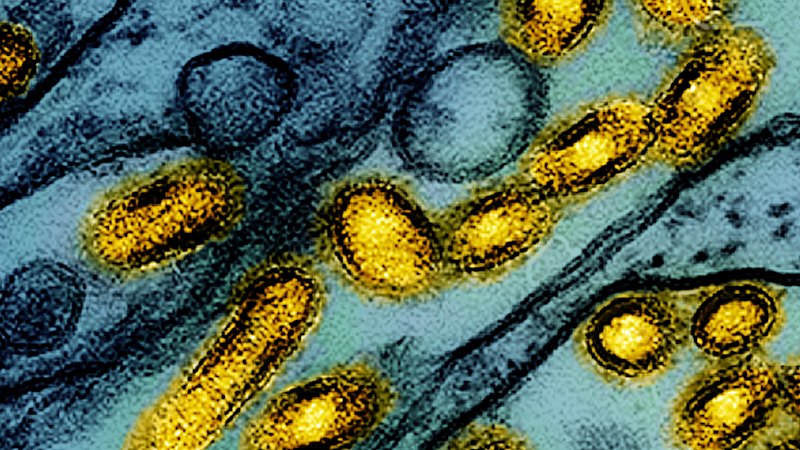
Gus GoswellAugust 14, 2026 — 11:11amThere is a macabre serendipity to the release of Sentinels: When Diseases Spread between Animals and Humans. Yet, as author Michael Dulaney – a freelance environmental writer and former ABC reporter – acknowledges, “Infectious disease is a morbid topic, even more so in the aftermath of a pandemic.”Dulaney began writing in 2020 as COVID-19 took hold, attempting to “make sense of not only what was happening, but why”. Six years later, it is no longer COVID-19 but another highly infectious virus jumping species – a process known as “spillover” – that gives Sentinels its renewed urgency.Sentinels traces H5N1 from its origins in intensive poultry farming, through its mutation, to its rapid global spread.APIn June, wildlife authorities confirmed Australia’s first cases of high-pathogenicity avian influenza (H5N1) – a virus that has killed millions of wild birds, farmed poultry and marine mammals, driving several threatened species closer to extinction. Although human infections remain rare, H5N1 has claimed hundreds of lives globally.Dulaney has described the arrival of H5N1 in Australia as marking “the final stage of a disturbing new environmental reality”, describing this bird flu as “the archetypal disease of our new age, the one that represents all of our failed efforts to address the growing threat of spillover”.He is well positioned to make that assessment. In Sentinels, a dedicated chapter traces H5N1 from its origins in the “biological soups” of mid-1990s intensive poultry farming, through its mutation into the virulent 2.3.4.4b strain, to its rapid global spread. As Dulaney admits: “It scares me more than anything else.”H5N1 is one of several zoonoses (disease-causing pathogens that leap from non-human animals to humans) that Dulaney investigates as Sentinels roams from Melbourne to Mongolia, Edmonton to Indonesia, and from North Queensland to Fairbanks, Alaska. Along the way, Dulaney interviews virologists, birdwatchers, ecologists, wildlife carers, herpetologists, museum collection stewards and citizen scientists.A brown skua that was found sick on a beach near Esperance in Western Australia. It was the first to positively test for the virus in Australia.Esperance Wildlife HospitalFor Dulaney, the ties that bind these epidemiological case studies are threats to nature caused by humans, including habitat destruction, climate change, the global wildlife trade and, ultimately, industrial capitalism. “We know that new diseases are now making the jump at a faster rate than ever before. And the cause for this great acceleration is us,” he writes.The chapter on Hendra virus explains how the pathogen was carried into urban Brisbane by bats forced to migrate after the destruction of winter-flowering native forests. For Dulaney, it is no coincidence that Hendra emerged in Queensland – a deforestation hotspot he labels “the land-clearing capital of Australia”. Turning to Alaskapox (later renamed Borealpox by tourism-conscious officials), Dulaney brings climate change into the frame, showing how global heating, deforestation and urbanisation combine to force wildlife – and their viruses – into closer contact with humans. “As the climate radically changes in the coming century, animal movements and interactions all over the world are going to become increasingly chaotic,” he writes. “How that will affect spillover is an open and urgent problem.”In these ways, Sentinels adds to the Anthropocene library through the prism of virus and disease. Dulaney writes that “a plague is both social and microbial”. Yet, his affection and respect for animals saves this book from slipping into simple anthropocentrism. Sentinels is focused on how the twin biodiversity and climate crises are a human health crisis; for example, Dulaney presents research linking the spread of a frog-killing fungus to parallel increases in human malaria cases in areas now lacking mosquito-controlling amphibians. But we also witness how carefully Dulaney bottle-feeds an orphaned flying fox pup, feel how gently he releases a duck that has just been swabbed for bird flu, and understand the sense of stewardship he feels holding a perilously rare frog. Photo: The tenderness of these moments reflects one of Dulaney’s central themes: humanity’s intimate connection to the fate of the natural world, and the illusion that we can somehow remain immune while the surrounding environment is destroyed. For Dulaney, this connection is one of culpability as well as vulnerability. Having traced the root causes of contagion, he is blunt in his analysis of what must be done now. “In short, there is no way to square the polycrisis of mass extinction, global heating, disease spillover, and so on with preserving the system as we know it,” he writes. “Collectively, we must find ways to sabotage the vast machinery taking biological life and turning it into raw material for profit.”Readers already feeling overwhelmed by the enormity of climate change, the bleakness of the nature extinction crisis, and now H5N1 bird flu’s arrival in Australia, may – understandably – approach Sentinels with caution. But we ignore its lessons at our peril. “For all the doomerism of this moment,” Dulaney reminds us, “it’s never too late to start.”Sentinels: When Diseases Spread Between Animals and Humans by Michael Dulaney is published by Scribe ($37).More:ReviewSpectrumLiteratureCoronavirus pandemicSpectrumBird fluFrom our partners
‘It scares me more than anything else’: Inside the next global health crisis
Full Article
Original Source
Read the full article at Smh →KhanList aggregates and links to publicly available news content. We do not host full articles from third-party sources. Always verify important information with original sources.