
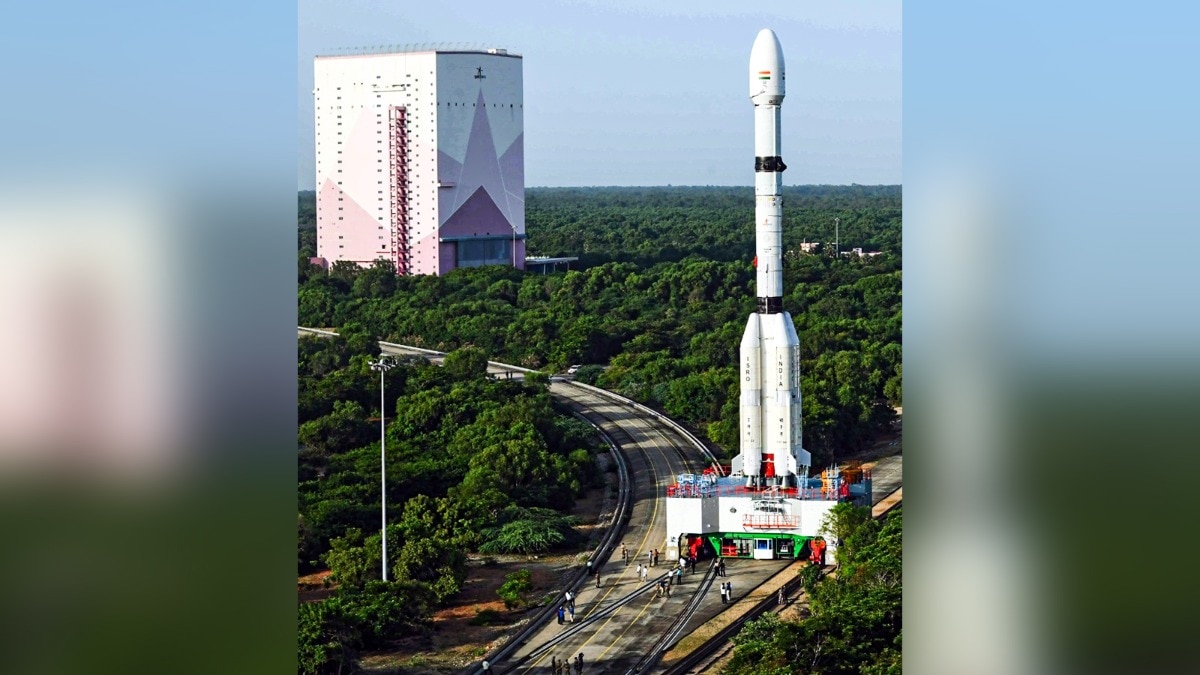
EOS-05 is a state-of-the-art Earth observation spacecraft and will become India's first-ever imaging satellite operating from geosynchronous orbit.The Indian Space Research Organisation (ISRO) is preparing for a crucial return to one of its most ambitious Earth observation programmes with the launch of EOS-05 aboard the GSLV-F17 rocket, nearly five years after the failure of the GISAT-1 mission.The upcoming mission is expected to mark a major milestone for India’s space programme.EOS-05 is a state-of-the-art Earth observation spacecraft and will become India’s first-ever imaging satellite operating from geosynchronous orbit. GSLV-F17, the 19th flight of India’s Geosynchronous Satellite Launch Vehicle programme, will lift off from the Second Launch Pad at the Satish Dhawan Space Centre in Sriharikota.The rocket will carry EOS-05 into a Sub-Geosynchronous Transfer Orbit, or Sub-GTO. The mission will use the GSLV-F17 configuration featuring a four-metre-diameter Ogive composite payload fairing.But beyond its technical significance, the launch carries the weight of a difficult chapter in India’s space history.In August 2021, ISRO attempted to launch GISAT-1, also known as EOS-03, aboard GSLV-F10. The mission failed after the rocket suffered a problem during its cryogenic stage, preventing the satellite from reaching orbit.GISAT-1 had been designed to provide near-real-time imaging of the Indian subcontinent from geostationary orbit.Unlike conventional Earth observation satellites, which repeatedly pass over a location as they orbit Earth, a satellite positioned in geosynchronous orbit can continuously observe the same region.That capability could provide India with an unprecedented advantage in monitoring rapidly evolving weather systems, cyclones, cloud formations, natural disasters and other changes across the region.EOS-05 represents ISRO’s long-awaited return to that vision.Nearly five years after the failure, the replacement spacecraft is once again ready to head towards space, making GSLV-F17 one of the most closely watched missions in ISRO’s upcoming launch calendar.The mission is being seen as a critical test not just for the GSLV, but for India’s ambition to establish continuous Earth observation capabilities from geosynchronous orbit.For ISRO, the launch of EOS-05 is more than another satellite mission. It is an opportunity to complete unfinished business and finally demonstrate a capability India has been working towards for years.After a long wait since the GISAT-1 setback, EOS-05’s journey to the launch pad could mark the beginning of a new chapter in India’s Earth observation programme.- EndsPublished By: Akash ChatterjeePublished On: Aug 29, 2026 22:37 IST
ISRO to launch EOS-05 on GSLV-F17, 5 years after GISAT-1 failure
Full Article
Original Source
Read the full article at Indiatoday →KhanList aggregates and links to publicly available news content. We do not host full articles from third-party sources. Always verify important information with original sources.