
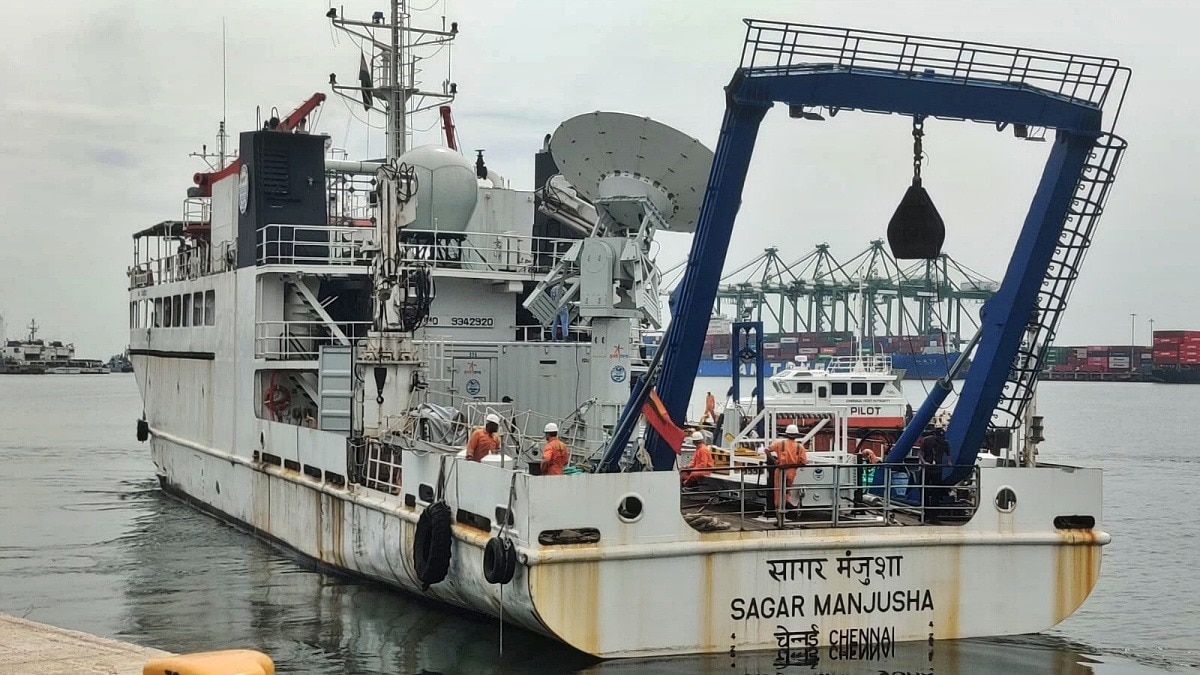
Isro has successfully tested an indigenous ship-borne terminal aboard Sagar Manusha off Chennai. The system will strengthen tracking support for Gaganyaan, satellite missions and future launches.The sea trial validated the performance of the home-grown tracking system. (Photo: NIOT)The Indian Space Research Organisation (Isro) has successfully tested an indigenously developed Ship-Borne Terminal (SBT), a key tracking system that will support future launches, satellite missions and India's first human spaceflight programme, Gaganyaan.The trial was conducted by Isro's Telemetry, Tracking and Command Network (ISTRAC) aboard the National Institute of Ocean Technology's (NIOT) research vessel Sagar Manusha off the coast of Chennai on July 26.According to Isro, the sea trial validated the performance of the home-grown tracking system under real maritime conditions, marking an important milestone in expanding India's space mission support infrastructure.The Ship-Borne Terminal has been designed to track launch vehicles and satellites when they travel beyond the reach of ground-based stations. Since rockets quickly move over oceans after liftoff, tracking ships play a crucial role in maintaining uninterrupted communication during critical phases of flight. The Ship-Borne Terminal has been designed to track launch vehicles and satellites. (Photo: NIOT) The system will also play a vital role in the Gaganyaan programme, where continuous monitoring of the crew module and launch vehicle will be essential throughout different phases of the mission.Apart from human spaceflight, the terminal can support satellite tracking whenever there is no land-based infrastructure available along a spacecraft's flight path. This capability will strengthen Isro's ability to monitor missions over the Indian Ocean and other remote regions.The successful validation demonstrates India's growing self-reliance in developing critical space infrastructure. Until now, such capabilities have often relied on specialised foreign systems or limited tracking networks.The indigenous Ship-Borne Terminal provides Isro with greater operational flexibility for future launches and deep-space missions.The test also highlights the collaboration between Isro and NIOT, with the research vessel Sagar Manusha serving as a mobile tracking platform during the sea trials.As Isro prepares for the uncrewed and crewed Gaganyaan missions, robust tracking and communication systems are becoming increasingly important. Ship-based tracking complements ground stations by ensuring mission controllers maintain continuous contact with launch vehicles and spacecraft, even when they are flying far from land.The successful sea trial is another step towards strengthening India's human spaceflight capabilities and ensuring reliable mission support for future launches and orbital operations.- EndsPublished By: Sibu Kumar TripathiPublished On: Jul 29, 2026 15:20 IST
Isro tests ship-borne terminal to track Gaganyaan mission in space
Full Article
Original Source
Read the full article at Indiatoday →KhanList aggregates and links to publicly available news content. We do not host full articles from third-party sources. Always verify important information with original sources.