
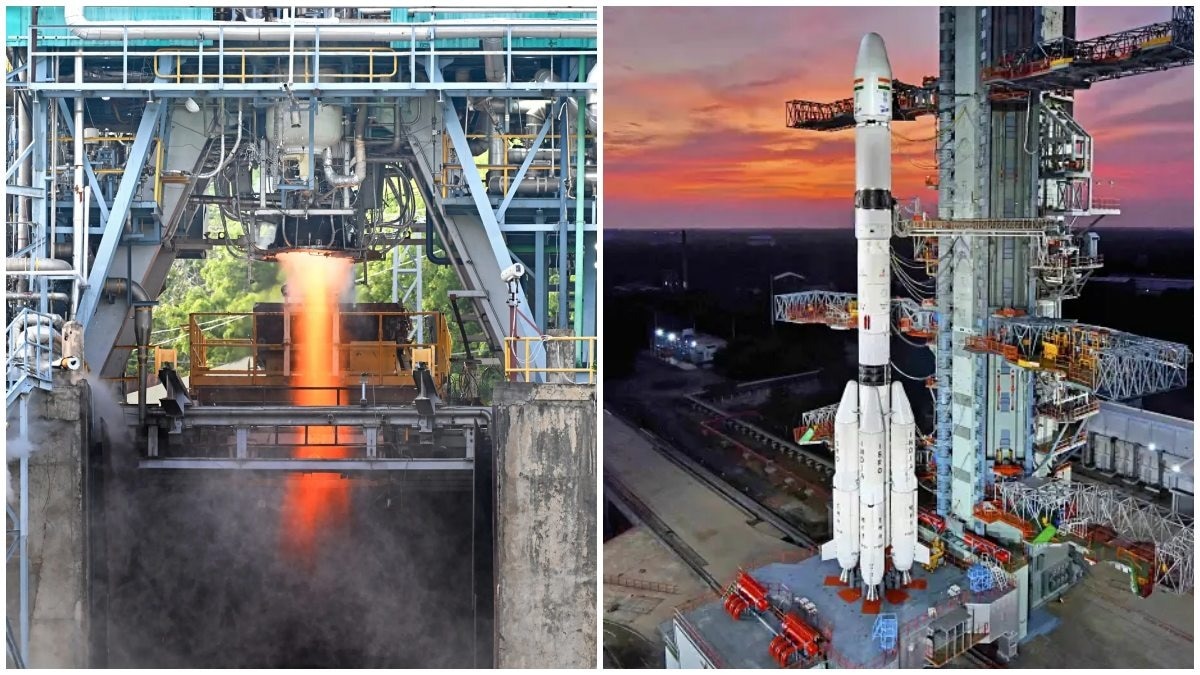
Isro successfully test-fired the cryogenic engine assigned to the GSLV-F19 mission carrying NVS-04. The milestone clears the engine for integration and advances India's next-generation NavIC programme.The engine has been identified for the upcoming GSLV-F19 mission, which will carry the NVS-04 navigation satellite into orbit. (Photo: Isro)New Delhi,Nov 11, 2026 12:47 ISTThe Indian Space Research Organisation (Isro) has successfully test-fired a cryogenic rocket engine earmarked for its next Geosynchronous Satellite Launch Vehicle (GSLV) mission, taking another step towards the launch of India's next-generation navigation satellite, NVS-04.The space agency conducted the flight acceptance test of the cryogenic engine on November 5, 2026, at the Isro Propulsion Complex (IPRC) in Mahendragiri, Tamil Nadu.The engine has been identified for the upcoming GSLV-F19 mission, which will carry the NVS-04 navigation satellite into orbit. The test lasted 200 seconds, with Isro confirming that the engine's overall performance was satisfactory. (Photo: Isro) According to Isro, the ignition of both the Main Engine (ME) and the Gas Generator (GG) took place as expected. During steady-state operations, the engine demonstrated normal performance, remaining consistent with nominal predictions. The test lasted 200 seconds, with Isro confirming that the engine's overall performance was satisfactory and in line with pre-test predictions.Following the successful test, the engine will be integrated into the cryogenic stage of the GSLV-F19 launch vehicle.WHY IS THIS TEST IMPORTANT? Cryogenic engines are among the most complex components of a rocket. They use propellants stored at extremely low temperatures, typically liquid hydrogen and liquid oxygen, to generate the high thrust required to place heavy satellites into geostationary transfer orbits.The cryogenic stage is particularly important for GSLV missions, allowing the rocket to carry heavier payloads into higher orbits.The successful flight acceptance test is a critical qualification milestone, ensuring that the engine is ready for integration into the launch vehicle.NVS-04: INDIA'S NEXT NAVIGATION SATELLITEThe GSLV-F19 mission will launch NVS-04, part of India's Navigation with Indian Constellation (NavIC) system.NavIC is India's independent regional satellite navigation system, designed to provide positioning, navigation and timing services across the country and a region extending approximately 1,500 km beyond its boundaries.The NVS series represents the second generation of NavIC satellites, incorporating improvements to strengthen India's indigenous navigation capabilities.With the successful engine test, Isro has moved another step closer to the GSLV-F19 mission. The upcoming launch will be important for strengthening India's strategic navigation infrastructure and reducing dependence on foreign satellite navigation systems.- Ends
Isro successfully test fires GSLV rocket engine ahead of NVS-04 launch
Full Article
Original Source
Read the full article at Indiatoday →KhanList aggregates and links to publicly available news content. We do not host full articles from third-party sources. Always verify important information with original sources.