
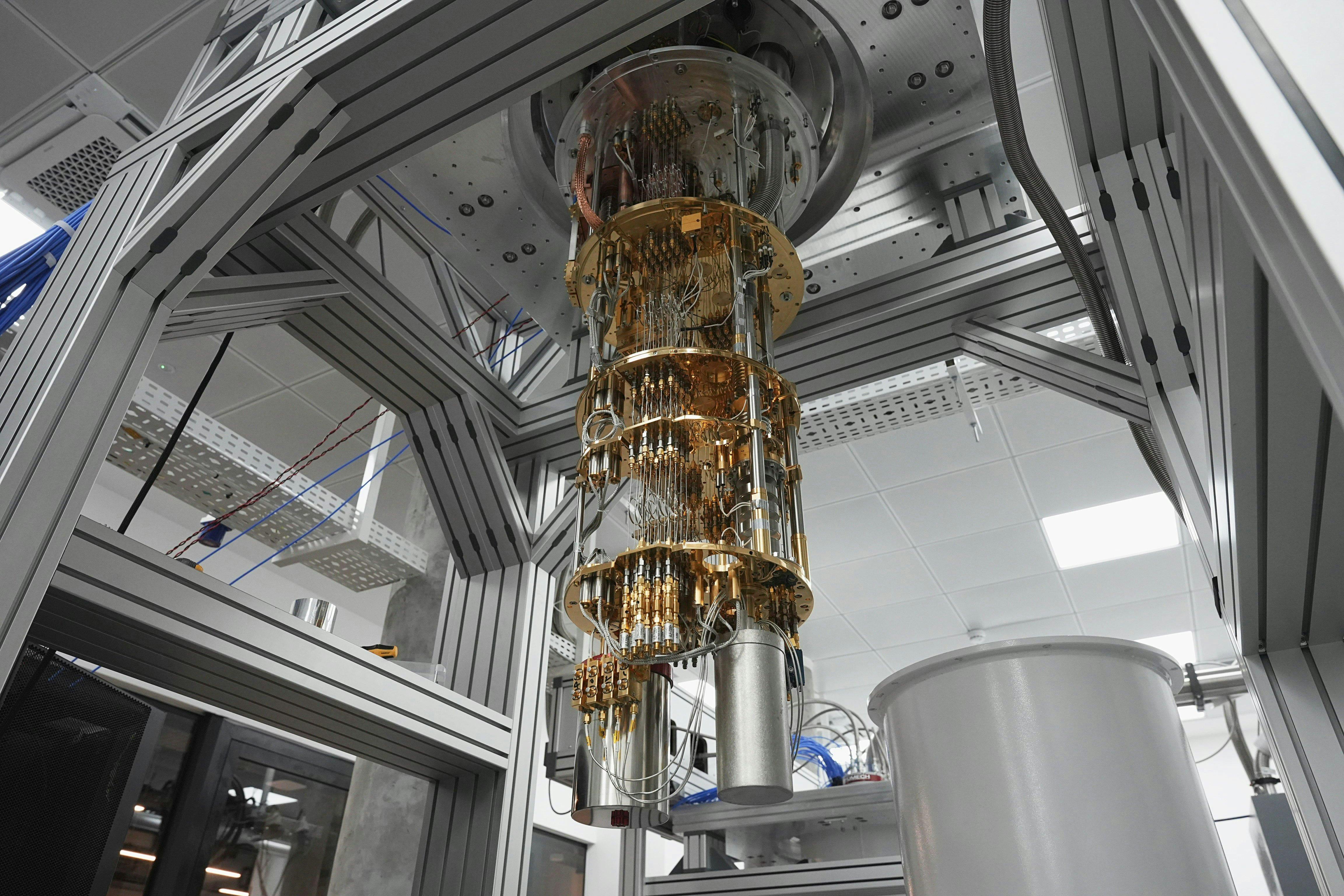
On August 4, 2026, Israel's National AI Directorate and the Ministry of Finance published a public tender. Its goal: build, run, and provide quantum computing services from a national platform. The project is called Project Nexus, and most headlines about it focused on the politics: "technological sovereignty," a large national AI budget, and a race against other countries doing similar things. That's a fair angle for a news story. But it skips a more useful question for anyone who works with infrastructure or hardware: what is a government actually asking for when it puts "build us a quantum computer" out to public tender? Reading the procurement document, instead of just the press release, tells a more interesting story. First, a quick refresher on why quantum computers are hard to buy A regular computer processes information as bits: 0s and 1s. A quantum computer uses qubits, which can represent a mix of 0 and 1 at the same time (a property called superposition), and can also be linked together in ways that let them influence each other even when physically separated (entanglement). Used well, this lets certain calculations, like simulating molecules or breaking specific types of encryption, run dramatically faster than on classical hardware. The catch is that qubits are extremely fragile. Tiny amounts of heat, vibration, or electromagnetic noise can destroy the quantum state they depend on, a problem called decoherence. Keeping qubits stable enough to run useful calculations requires constant calibration, specialized cooling, and active error correction, an ongoing process, not a one time setup. This is the core reason quantum computers aren't purchased the way you'd buy a server rack. The tender isn't for a machine. It's for a service Looking at the listing itself, the scope covers three things: establishing the platform, operating it, and supplying computing services from it. That's not a purchase order for a piece of hardware. It reads much closer to a long term managed service contract, similar to how a government might procure cloud infrastructure rather than a fleet of vehicles. Here's why that distinction matters in practice: One time hardware purchase Managed quantum service (what's being tendered) Who keeps it calibrated Buyer's own team, indefinitely Vendor, for the length of the contract Upgrade path Buyer re-procures for next generation Vendor is expected to keep the platform current What the buyer actually gets A fixed machine Ongoing access to compute time Closest existing analogy Buying a server Renting cloud compute (IaaS) A single hardware purchase would lock Israel into whatever qubit technology existed the day the contract was signed, in a field where the leading approach can shift within a couple of years. Structuring it as a service instead pushes that risk onto the winning vendor, who has to keep the platform state of the art for as long as the contract runs. What the sector codes reveal about who's expected to bid Every public tender gets tagged with classification codes so buyers and suppliers can find each other. This one is filed under two: 48000000, software and information systems 32000000, communications, telecom, and related equipment Neither code says "quantum hardware manufacturing," mostly because that category doesn't really exist yet in standard procurement systems. That detail says something on its own: this is still an early, undefined market from a bureaucratic point of view, not just a technical one. In practice, this classification likely widens who's allowed to bid. Instead of narrowing the field to pure quantum hardware startups, it also opens the door to systems integrators, telecom infrastructure companies, and software vendors who could build the access layer that sits on top of the actual quantum hardware, whichever vendor's chips end up inside. Since the tender is framed as a service, that access layer (the part that lets researchers and companies actually submit jobs and get results back) might end up mattering just as much as the physical hardware. The timeline is unusually tight Published: August 4, 2026 Submission deadline: October 5, 2026 Total window: about 9 weeks Nine weeks is fast for a national infrastructure tender this technically open ended. For comparison, a typical enterprise software RFP with well defined requirements often takes a similar amount of time, and that's for a far less ambiguous kind of project. There are two likely explanations for the short window: The National AI Directorate already has a fairly specific solution in mind, and this tender is mostly a formal qualification step. This first tender is really a structured, official version of a request for information, meant to see who shows up and what they propose, before a more detailed follow-up process happens later. The second explanation looks more likely. Israel's Innovation Authority launched a separate, related national quantum initiative within the same two week window. Taken together, this looks like the opening move in a longer sequence of procurement steps, not a single, final contract award. Why run this as a formal tender this early at all Quantum computing doesn't have a dominant hardware approach yet. Different teams are betting on different physical implementations, including superconducting circuits, trapped ions, and photonics, and there's no agreed benchmark that clearly maps to "useful for our researchers." Procuring something this undefined through a formal, rules based public tender, instead of research grants or direct partnerships, is itself worth noticing. It suggests Israel wants this platform owned and run under normal public contract rules from day one: fixed evaluation criteria, an open field of bidders, and a paper trail that survives audits and changes in government. That's a different approach from most national quantum programs elsewhere, which usually get funded through research agencies rather than procurement offices. Whether that turns into a strength (predictable rules, a repeatable process for future tenders) or friction (rigid criteria applied to a field that changes fast) should become clearer once the original tender documents, published on Israel's government procurement portal, go through their first round of bidder questions. What to actually watch next Who ends up bidding. Whether this draws established quantum hardware vendors, telecom infrastructure companies, or a mix of both says a lot about how the market currently views Israel as a serious quantum buyer. What "operate" ends up meaning in the contract. A service model only works if the government defines clear expectations for uptime, access, and performance, for a technology that doesn't have industry standard SLAs yet. Whether the deadline actually holds. If the October 5 submission date slips, that's a sign the scope was more open ended than the tender first suggested. Not unusual for a first of its kind national quantum procurement, but worth watching given how publicly this has been framed as a fast moving initiative. The official joint statement from the Prime Minister's Office and the Ministry of Finance describes Project Nexus as the first practical step in a broader national AI and quantum strategy, following a government decision earlier this year. Whether "first practical step" turns into a real, usable quantum platform, and on what timeline, is now a question with an actual paper trail attached to it, instead of just a press conference.
Israel’s Quantum Tender Is Really an Infrastructure Story
Full Article
Original Source
Read the full article at Hackernoon →KhanList aggregates and links to publicly available news content. We do not host full articles from third-party sources. Always verify important information with original sources.