
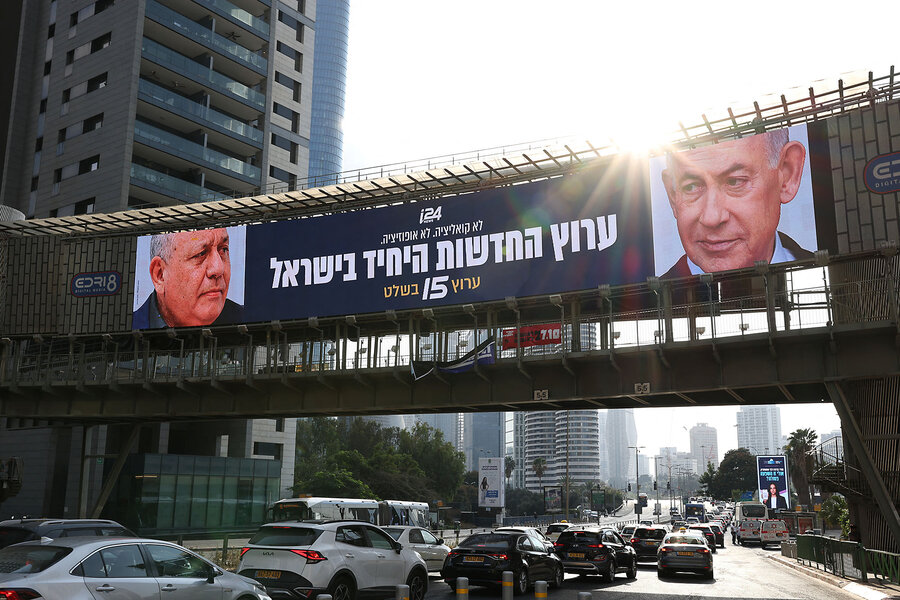
London | Oct. 22, 2026, 6:06 p.m. ET | 4 min read An embattled Israel is electing a new parliament next week, and the question facing voters is straightforward: whether to let their longest-serving prime minister, Benjamin Netanyahu, keep his job.Their verdict will have an impact not just in Israel but beyond.And perhaps most immediately, to judge by Mr. Netanyahu’s renewed call on Wednesday for forced regime change there, on prospects for a return to full-scale war with Iran. Mr. Netanyahu, or “Bibi” as he’s known in Israel, has been in charge for a total of 20 years and leads the most right-wing coalition in the country’s history.In the three years since Hamas mounted a cross-border attack and murdered, raped, or kidnapped hundreds of civilians, he has been the driving force behind Israel’s devastating military response in Gaza.And he’s also been co-architect, alongside U.S. President Donald Trump, of the Iran war, a conflict Mr. Trump, too, has hinted at restarting with Mr. Netanyahu at his side. Ohad Zwigenberg/APIsraeli Prime Minister Benjamin Netanyahu, leader of the Likud party, speaks to supporters during a campaign event in Dimona, in southern Israel, Oct. 21, 2026. Yet even if Bibi is voted out – and while polls have his Likud party trailing, they predict a tight race – wholesale Israeli policy changes appear unlikely in the short term. One reason is Israel’s voting system. A dozen parties are on track to win seats in the next parliament, or Knesset. Neither of the two projected to do best – Mr. Netanyahu’s Likud and the Yashar party of his main challenger, soft-spoken former military chief of staff Gadi Eisenkot – will come close to the 61 seats needed for a majority. That ensures a period of dealmaking to assemble a governing coalition with smaller parties.Yet the main brake on early major policy shifts is Israel’s political landscape.The electorate has moved sharply rightward over recent years.Successive Netanyahu-led coalitions have moved further away from the idea of a negotiated Israeli-Palestinian peace and have adopted an increasingly hostile tone toward representatives of Israel’s own Arab citizens, just under 22% of the population.Once-fringe parties advocating permanent Israeli control over the West Bank, and the expansion of settlements into areas where Palestinians have long lived or farmed, have gained a far more influential voice. The leader of one of them, Itamar Ben-Gvir, is the security minister in Mr. Netanyahu’s current coalition. And there is also the Oct. 7 effect: Hamas’ 2023 attack, and the failure of Israel’s government and military to prevent it, have left voters of all political stripes traumatized. Mahmoud Illean/APGadi Eisenkot, the leader of Israel's Yashar party, visits the Western Wall in Jerusalem's Old City, Oct. 22, 2026. Mr. Eisenkot is the leading challenger to Prime Minister Benjamin Netanyahu in parliamentary elections in Israel on Oct. 27. Many hold Bibi responsible for those lapses and support Mr. Eisenkot’s call for an independent commission to determine what went wrong and who was to blame.That might help explain why Mr. Eisenkot’s 45% approval rating in this week’s preelection poll by Israel’s Channel 12 Television far outstrips Mr. Netanyahu’s, at 33%.Yet the deep sense of insecurity left by Oct. 7 has meant Bibi’s core political message – the need for Israel to hunker down, ignore outside pressure, and rely on its military muscle – has resonated across the political spectrum, even with voters critical of the prime minister himself.That’s helped him shore up his base of support, leaving Likud only a few seats behind Yashar in recent projections.The national mood could limit the likelihood of a major policy overhaul by Mr. Eisenkot if Likud does not come out on top. It could also complicate his efforts to assemble a coalition if, as the polls are suggesting, he’ll need to rely on Knesset support from Israel’s Arab parties. And there’s another barrier to immediate post-election changes if Yashar prevails and Mr. Eisenkot gets the first shot at assembling a Knesset majority: Mr. Netanyahu would remain prime minister until a new government was in place.Mr. Eisenkot shares some of Bibi’s key policy goals: keeping Iran from getting a nuclear weapon, opposing the establishment of a full-fledged Palestinian state, and ending Hamas’ rule in Gaza. Ohad Zwigenberg/APAn Israeli soldier and settlers look out toward the Palestinian village of al-Shuyukh from agricultural land near the Gad Natan settlement in the occupied West Bank, Sept. 29, 2026. Still, in other ways, he would lead very differently. While supportive of existing West Bank settlements, he has condemned escalating settler violence against Palestinians, which Mr. Netanyahu has played down. Mr. Eisenkot has called it “Jewish terrorism under the auspices of the Israeli government.”In Gaza, he’s likely to be more ready to engage with the blueprint of Mr. Trump’s “Board of Peace” to install a technocratic Palestinian administration as an alternative to Hamas and an international “stabilization” force to keep order.But the most immediate, and potentially divisive, difference could be over Iran.Mr. Eisenkot has criticized the war, now 10 months old, for pursuing unrealistic aims such as regime change rather than focusing on the core issue of disabling Iran’s nuclear program.Yet in his comments Wednesday, Mr. Netanyahu reiterated his determination to topple Iran’s regime, framing it as an existential imperative, and citing President Trump’s recent remarks that he was ready to “finish the job.” Opposition politicians have long voiced concern that Bibi might see a renewed war with Iran as a way of postponing next Tuesday’s election if he felt Likud wasn’t going to win. The prime minister’s latest statement prompted one of them to accuse him of turning “Israeli security into an election circus.” Deepen your worldviewwith Monitor Highlights.Politics with respectGet political stories with respectful analysis.There‘s a world of new ideas in everyBooks newsletter.There‘s more to life, enrich yours withCulture & Learning weekly.Follow humanity‘s discoveries withScience & Nature stories in your inbox.Gain a spiritual perspectivefrom the stories in your inbox.Want to understand the deeper impact of critical events? Learn the Monitor‘s insight.Already a subscriber? Log in to hide ads. But another potential scenario has his opponents equally concerned.It’s the possibility that even if the election puts Mr. Eisenkot in position to form a new government, a potentially lame-duck Prime Minister Netanyahu could sideline these coalition negotiations and ask Israel’s military to join President Trump in a major new attack against Iran. ALREADY A SUBSCRIBER? LoginReal news can be honest, hopeful, credible, constructive.The Christian Science Monitor was founded in 1908 to lift the standard of journalism and uplift humanity. We aim to “speak the truth in love.” Our goal is not to tell you what to think, but to give you the essential knowledge and understanding to come to your own intelligent conclusions. Join us in this mission by subscribing.
Israel’s election choices will be felt far beyond its borders
Full Article
Original Source
Read the full article at Csmonitor →KhanList aggregates and links to publicly available news content. We do not host full articles from third-party sources. Always verify important information with original sources.