
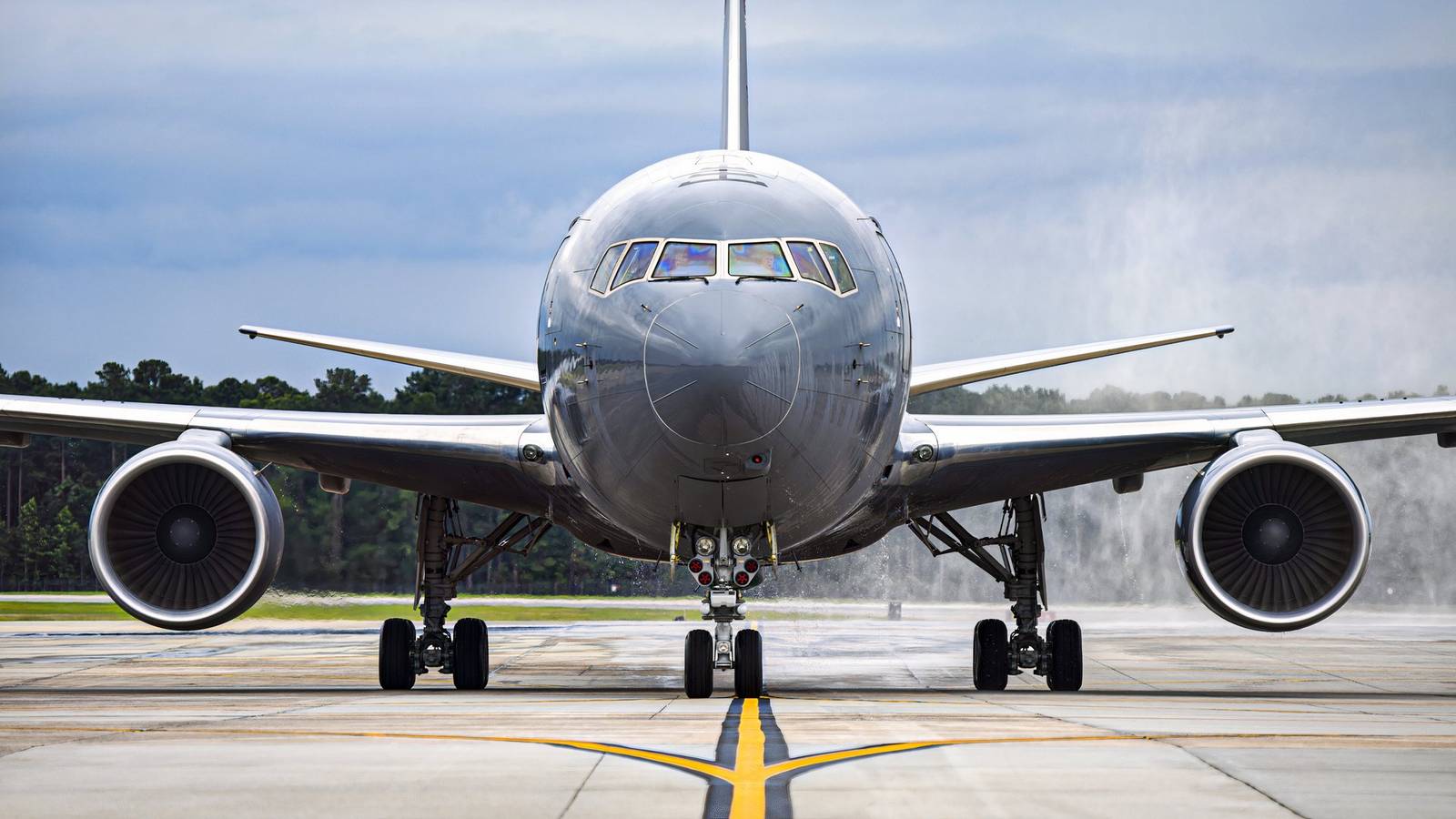
Published Aug 30, 2026, 10:00 PM EDT Chris earned a Master’s degree in Defense and Strategic Studies (Highest Honors) from the University of Texas at El Paso. His graduate work concentrated on Global and National Security, Low-Intensity Conflict, Modern Warfare, and US grand strategy. He also undertook extensive regional studies, analyzing how key regions integrate into the broader US security architecture. This rigorous program provided him with a comprehensive understanding of U.S. military operations, global strategy, and weapons systems. Additionally, he gained a strong appreciation for great power competition.—an increasingly central force shaping international relations and conflict for the foreseeable future. Aerial refueling is a crucial component of modern air power, and a capable tanker fleet enables sustained operations over distant areas. Without these connectors and enablers, aircraft would be limited in their ability to carry out their missions, or a nation would have to rely on regional allies, which could bring added complications. In its nearly 80 years of existence, Israel has undertaken numerous regional military operations. The most recent, Operation Roaring Lion, which took place in the skies over Iran, demonstrated the critical importance of a reliable aerial refueling capability. For these requirements, the Israeli Air Force (IAF) has depended upon its KC-707 Re'em tankers, which have provided the fuel that allowed Israeli fighters to strike targets far beyond the country's borders. Now, as those aging aircraft approach retirement, the IAF is beginning to replace them with a highly capable tanker designed to provide greater fuel capacity, efficiency and operational flexibility. Israel Receives Its Second KC-46 Pegasus Credit: Israeli Ministry of Defense The IAF is in the process of a major upgrade to its aerial refueling capability with the arrival of its second of six KC-46A "Gideon" aerial refueling aircraft at Nevatim Air Base (VTM) on Thursday, August 20. The first aircraft in the class arrived on May 27 of this year, following its maiden flight in the United States on May 4, and was inducted into the Gideon Squadron (formerly Squadron 46), which was activated specifically to operate the new tankers. Regarding the aircraft, the IAF stated, "Its arrival marks a true leap forward in the Israeli Air Force's ability to expand its operational range, extend the duration of operational flight time, and maintain the IDF's qualitative advantage in the years ahead." The induction of the aircraft into the IAF followed US approval for the possible Foreign Military Sale of up to eight KC-46s, valued at an estimated $2.4 billion (£1.76 billion). Israel approved the purchase in 2021, with Boeing receiving a $927 million (£680 million) contract in 2022 for the production of the first four aircraft. All KC-46 production takes place at the company's assembly plant in Everett, Washington. Following production, each tanker is equipped with Israeli systems adapted to the operational requirements of the IAF. KC-46A Pegasus Specifications Technical Notes Prime Contractor The Boeing Company Power Plant 2 Pratt & Whitney 4062 Thrust 62,000 lbs. - Thrust per High-Bypass engine (sea-level standard day) Wingspan 156 feet, 1 inch (47.5 meters) Length 159 feet, 2 inches (48.5 meters) Height 51 feet, 9 inches (15.5 meters) Maximum Takeoff Weight 415,000 lb (188,240 kg) Fuel Capacity 212,299 lb (96,297 kg) Maximum Cargo Capacity 65,000 lb (29,484 kg), 58 passengers Air Crew 15 permanent seats for aircrew The KC-46 can carry approximately 90.7 tons of fuel, roughly 15 percent more than Israel's existing refueling aircraft. The Gideon distributes that fuel through a boom, which is controlled by a fly-by-wire system, as well as a drogue and wing aerial refueling pods. According to the United States Air Force (USAF), the KC-46 can transfer 1,200 gallons (4,542 liters) of fuel per minute through its boom, making it the fastest refueling method. To further enhance the aircraft's efficiency, each KC-46A can be configured with Wing Aerial Refueling Pods (WARPs), allowing the tanker to conduct multipoint, simultaneous aerial refueling. During refueling operations, the Air Refueling Operator (ARO) uses panoramic displays that provide wingtip-to-wingtip situational awareness. In addition to its primary role of refueling, the aircraft can accommodate up to 18 463L cargo pallets, made possible by the onboard cargo-handling system. Furthermore, in cases requiring rapid transport of injured personnel or civilians, the Gideon can accommodate two flight nurses and three medical technicians, though the medical crew can be tailored to patient needs. The Need For A New Tanker Fleet The aircraft that the Gideon is replacing is the long-serving KC-707 "Re'em," which has been in service for around 60 years, having entered service in 1973. With six 707s currently in service with the IAF, the new fleet of Gideons represents a one-for-one replacement. Israel's current fleet of 707s has been described as flying museum pieces, not only due to their age but also because of the aircraft's analog operating machinery. The Re'em's cockpits lack the digital displays and touchscreens found aboard modern tankers. Instead, the aircraft retains an array of analog instruments, switches, and controls, with its primary flight controls still relying on mechanical cables and linkages. While Israel has upgraded the aircraft's electronics and computing systems over the years, much of the underlying mechanical architecture dates back decades. Since 1979, the IAF has operated multiple batches of the Re'em, with the oldest airframes based on the 707-100 already having been retired. The remaining aircraft are based on the modestly newer 707-300, with the newest airframes entering service in 1978. Onboard these aircraft, the fuel is stored in removable tanks within the cargo hold. This configuration was also used by some Royal Air Force VC-10 tankers, in contrast to the Gidons and KC-135, which have purpose-built fuel storage in the wings and lower fuselage. While the Re'ems have relatively low flight hours on their airframes compared to their age, they require constant maintenance. Compared with the new airframes of the incoming Gideons, this could save the IAF time and resources by reducing the time aircraft spend in the shop. Furthermore, the Gideons are expected to have lower lifecycle costs, while their modern Pratt & Whitney PW4062 engines provide better fuel efficiency and cargo-carrying performance than the aging four-engine tankers. Why Aerial Refueling Remains Critical To The IAF Credit: Israeli Ministry Of Defense While the Re'ems are being phased out, the need for dedicated, efficient aerial refueling remains critical. The IAF's most recent high-profile military action was "Operation Roaring Lion," the Israeli effort during Operation Epic Fury. During the complex undertaking, the IAF and USAF controlled the skies over Iran during 12 days of strikes, requiring the IAF to deliver millions of liters of fuel across approximately 700 refueling hookups. The tanker force played a critical role in sustaining the campaign, enabling 10,800 precision air strikes against more than 4,000 targetsacross 8,500 sorties. This operation highlighted the need not only for a newer tanker fleet but also one with greater fuel-carrying capacity, given that Roaring Lion took place roughly 1,200 miles (2,000 km) from Israel. It therefore makes sense for the IAF to have additional fuel available, as this enables Israeli aircraft to remain on station for extended periods, providing greater ground support and enhancing sortie generation far from Israel. While it is unlikely that the IAF will undertake another highly complex air campaign like Roaring Lion any time soon, the nation views its ability to strike at great distance very seriously. While Iran retains some ability to strike regionally, Yemen has demonstrated its ability to not only strike Saudi Arabia but Israel as well. On March 28, the Houthis, a Yemeni terrorist group, claimed it had launched a barrage of ballistic missiles at Israel in support of Iran. The IDF intercepted a missile launched from Yemen, which the group described as part of a barrage targeting Israeli military sites. Should the Jewish state decide that preemptive action against the Houthis is necessary, the KC-46 could play a pivotal role in sustaining air strikes on western Yemen, which is controlled by the Houthis and sits roughly 1,000–1,200 miles (1,600–1,930 km) from Israel. The extra fuel also gives commanders greater flexibility during missions. A fighter that can refuel repeatedly is not limited to simply reaching a distant target and returning home. It can remain on station longer, alter its route, respond to changing targeting information and retain additional fuel for contingencies. Should Israel deem it necessary to conduct a preemptive or responsive strike within territory controlled by the Houthis, the ability to remain on station through aerial refueling could be crucial, as it was during Roaring Lion. A New Era For Israel's Long-Range Airpower The arrival of the second KC-46A Gideon marks another step in Israel's transition away from the aging KC-707 Re'em fleet and toward a more capable aerial refueling force. While the Re'ems have supported Israeli operations for decades, their eventual retirement will remove aircraft whose airframes and underlying designs date back generations. As a replacement, the Gideon offers greater fuel capacity, improved efficiency, and the flexibility to support multiple missions beyond aerial refueling. For the IAF, however, the Gideon's importance extends beyond replacing an aging aircraft. Israel's recent combat operations over Iran have demonstrated the continuing value of long-range airpower and the tanker support required to sustain it. With four more aircraft still to arrive, the Gideon fleet will provide Israel with a modern foundation for maintaining its long-range strike capability for decades to come.
Israel's Boeing 707 Tanker Era Nears End: The Replacement Aircraft That Hauls Roughly 15% More Fuel
Full Article
Original Source
Read the full article at Simpleflying →KhanList aggregates and links to publicly available news content. We do not host full articles from third-party sources. Always verify important information with original sources.