
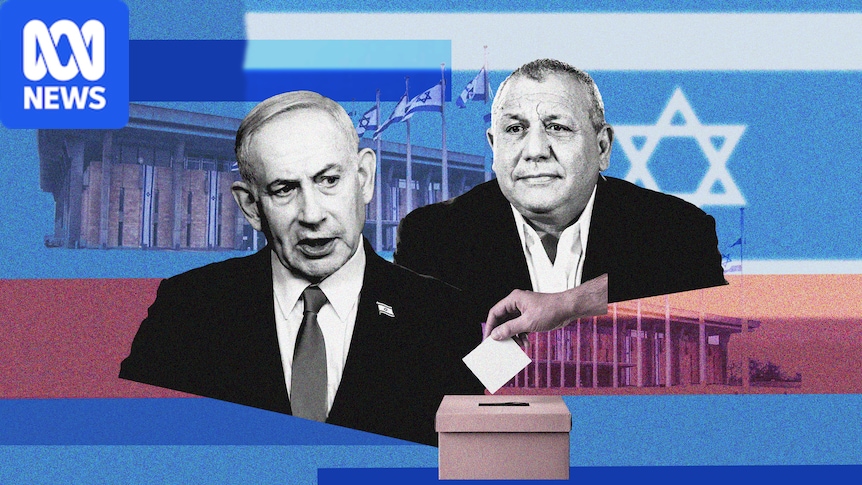
Israel's general election is being held on Tuesday, October 27, with the nation's longest serving prime minister trying to hold on to power.It is the first poll since the devastating Hamas terrorist attacks three years ago kicked off a chain of events that has forever reshaped the country and the region around it, and is effectively shaping up as a referendum on Benjamin Netanyahu's leadership.While some challengers are polling strongly, Israel's complicated coalition structures mean it's not a foregone conclusion who will lead the country in coming weeks and months.In the quest for power and influence, some strange bedfellows could emerge and usual partners may not find themselves joining forces.Here's a breakdown of the key players, what to expect on election night, and the biggest issues driving this election.Who are the main parties in the Israeli election?There are 38 different parties contesting the election — but most will not get enough votes to secure a spot in the 120-seat parliament, called the Knesset.The parties likely to gain seats, based on current polling, are:YasharTranslates to 'Straight'Read more LikudRoughly translates to 'The Union'Read more BeyachadTranslates to 'Together'Read more The DemocratsRead more The Joint ListRead more Yisrael BeiteinuTranslates to 'Israel Our Home'Read more Otzma YehuditTranslates to 'Jewish Power'Read more Religious ZionistsRead more United Torah Judaism (UTJ)Read more The United Arab ListOften referred to as Ra'am in the Israeli pressRead more The ReservistsRead more Amcha YisraelTranslates to 'People of Israel'Read more Kahol LavanTranslates to 'Blue and White'Read more Who could win the Israel election?Polling figures are jumping around a bit, and most of the major media outlets run their own data.With the exception of the right-wing media, which is very pro-Netanyahu and Likud, most polling is suggesting Yashar will be the largest party in the Knesset with between 20 and 23 seats.Likud would run second on 19 to 21 seats.This is where it gets complicated, and why Israeli governments are almost always coalitions.If you consider the right-wing parties, which would naturally gather around Likud and include:Otzma YehuditReligious ZionismUnited Torah JudaismShasAmcha Yisrael… you get to between 49 and 51 seats in the "Netanyahu bloc".If you join up the opposition parties likely to back in Yashar and Gadi Eisenkot:BeyachadThe DemocratsYisrael Beiteinu… the tally gets to between 52 and 55.Roughly 14 to 19 seats fall to smaller groups, including the Palestinian parties.Neither bloc is reaching an outright majority of 61, without the support of groups like The United Arab List or The Joint List.Freshly printed ballot papers at the Israeli Central Elections Commission warehouse. (Reuters: Ronen Zvulun)There could be weeks of coalition negotiations and nothing is certain.There could also be defections from parties — elected members jumping ship to other parties, as part of the process.Loyalty isn't guaranteed.What are the main issues in the Israel election?Much of this election is centred around one man: Benjamin Netanyahu.His brand, and whether he's reached his "use-by date" as leader, drives a lot of the debate during the campaign.Some of the biggest issues Israel is involved in, such as the wars in Gaza and Lebanon, aren't expected to have a huge impact on the election, and opposition parties are not promising radical changes if elected.Even the problem challenging governments worldwide, cost-of-living pressures, isn't that much of a dial shifter in Israel, despite the country being one of the most expensive to live in in the OECD.October 7Read more Netanyahu's legacyRead more National securityRead more Orthodox draftRead more Judicial overhaulRead more International standingRead more SettlersRead more Palestinian citizens of IsraelRead more When will we know the result?Polls open in Israel at 7am local time on Tuesday, October 27, which is 4pm AEDT.Polls close at 10pm local time that night, which is 7am AEDT on Wednesday, October 28.Each of the major media outlets will publish exit polling around that time, likely to give a much clearer indication of the result than pre-election data.Unlike countries such as Australia, the UK and the US, Israel does not have electoral districts. It is a single nationwide vote, and the number of seats each party gets is dependent on their share of the national result.Voters do not even have to mark a ballot paper; they pick a ballot with the logo of their preferred party, and drop it into the ballot box.Israelis also cannot vote early, via post (unless they're soldiers) or while overseas, with all voting happening in person, in the country, on the day.Because of that relative simplicity, the vote count could happen pretty quickly. An indication of how the parties stand might be known within a few hours of polls closing.The final declaration of the results happens a few days afterwards, but the outcome of the popular vote will be largely known by then.
Israelis are heading to the polls in their most seismic election in decades
Full Article
Original Source
Read the full article at Abc →KhanList aggregates and links to publicly available news content. We do not host full articles from third-party sources. Always verify important information with original sources.