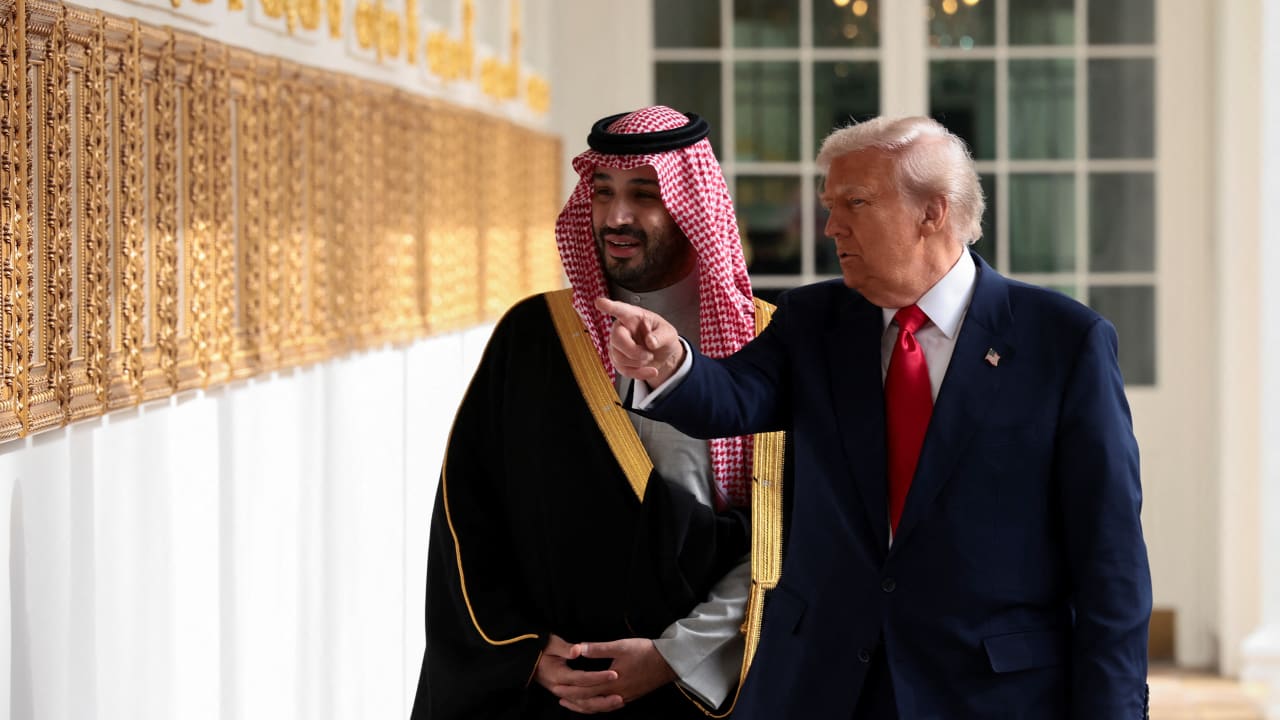
ByHERB KEINONJULY 23, 2026 21:24Updated: JULY 23, 2026 22:54One did not have to be clairvoyant to predict how reports that the US was preparing a civilian nuclear agreement with Saudi Arabia, without requiring normalization with Israel, would play out on Israel’s political sceneIt was all Bibi’s fault.And, indeed, that is exactly how it played out. The Democrats’ head Yair Golan wasted little time.“Netanyahu succeeded in doing the impossible,” he wrote on X/Twitter within hours of the reports on Tuesday. “He both lost the normalization with Saudi Arabia and enabled it to gain nuclear capabilities.”It was a devastating political charge.Israeli Prime Minister Benjamin Netanyahu attends a vote at the plenum hall of the Knesset, the Israeli parliament in Jerusalem, on July 16, 2026. (credit: YONATAN SINDEL/FLASH90)According to Golan, Netanyahu had squandered Israel’s best opportunity in years to normalize ties with the Arab world’s most important state while simultaneously enabling it to gain nuclear capabilities. In this telling, Netanyahu had – in one move – lost both the diplomatic prize and the strategic battle.Opposition leader Yair Lapid struck much the same chord, calling the reported agreement “a total failure” on Netanyahu’s part.Preventing any Middle Eastern country from acquiring an indigenous nuclear capability, Lapid argued, is among an Israeli prime minister’s foremost responsibilities. He noted that when he and Naftali Bennett were in office, they were prepared to confront Washington – even publicly and in Congress – to block any agreement permitting Saudi uranium enrichment.The political verdict appeared unanimous.Then, less than a day later, US President Donald Trump undercut the premise of that criticism.Trump announces deal will require Saudi Arabia joining Abraham AccordsWriting on Truth Social, Trump declared that any civilian nuclear agreement with Saudi Arabia would involve “no enrichment of material.” Just as importantly, he wrote that the agreement would be approved only if Saudi Arabia joined the Abraham Accords.In other words, the two very developments Golan and Lapid had declared Netanyahu had already lost – preventing Saudi uranium enrichment and preserving normalization as part of the deal – were, according to Trump himself, still very much part of the administration’s position.Suddenly, the picture looked very different.Perhaps Israeli diplomacy behind the scenes helped shape the changing conditions. Perhaps these conditions had always been part of the administration’s thinking, and the early reports were simply incomplete. Perhaps Trump was clarifying a proposal that had been widely misunderstood. No one knows for sure.But that uncertainty is exactly the point.The certainty of Golan and Lapid’s political attacks far exceeded the certainty of the underlying facts. In other words, they jumped the gun, looking to score political points before all the facts were in.That, by the way, has become an increasingly common feature in both diplomacy and politics.Sensitive negotiations now unfold amid a constant stream of leaks, anonymous briefings, partial disclosures and media reports, each of which is immediately seized upon by political rivals.In the social media age, there is little reward for waiting until the facts are fully known. The first politician to frame a story often gains the political advantage, even if later reporting reveals that the initial picture was incomplete.That is not an argument that Golan’s or Lapid’s concerns were misplaced. They weren’t.Preventing Saudi uranium enrichment and preserving normalization as part of any broader regional arrangement have long been core Israeli interests shared across much of the political spectrum. Those objectives remain strategically important regardless of who occupies the Prime Minister’s Office.But foreign policy is rarely settled in a single news cycle. Negotiations evolve, conditions are refined, and agreements often look different at the end than they did when first reported – especially when, as was the case on Tuesday, the details of the agreement were very sketchy.The point, rather, is that a measure of patience is warranted before declaring either jaw-dropping failure or spectacular success.Because while politicians naturally focus on assigning blame, successful diplomacy ultimately focuses on outcomes.There is another lesson from this episode as well. Diplomacy does not end when it becomes clear that Washington intends to proceed. On the contrary. That is when the focus shifts – from trying to stop the initiative to trying to shape it.Israel must shape US policy to protect its interestsIsraeli diplomacy has long operated in those two distinct phases. The first is trying to persuade the United States not to adopt a policy Israel believes threatens its security - as many in Israel argued regarding a civilian nuclear agreement with Saudi Arabia. The second, if Washington remains determined to proceed – as is seemingly the case here – is to shape that policy in ways that best protect Israeli interests.Success is not always measured by stopping an American initiative outright. Sometimes it is measured by weighing whether safeguards have been inserted or conditions included that leave Israel in a better strategic position than it would have been otherwise.Trump’s Truth Social post suggests that the Saudi agreement remains in precisely that second phase. The negotiations appear to be fluid, and some of their most consequential elements are evidently still under discussion.The discussion in Israel, therefore, should rise above the predictable election-year argument over whether Netanyahu failed miserably or succeeded spectacularly. The more important question is this: If the agreement is still taking shape, how can Israel best influence its final contours?That is the debate that is needed.Follow us on Google
Israel should focus on shaping, not judging, Trump's nuclear deal with Saudi Arabia - analysis
Full Article
Original Source
Read the full article at Jpost →KhanList aggregates and links to publicly available news content. We do not host full articles from third-party sources. Always verify important information with original sources.