
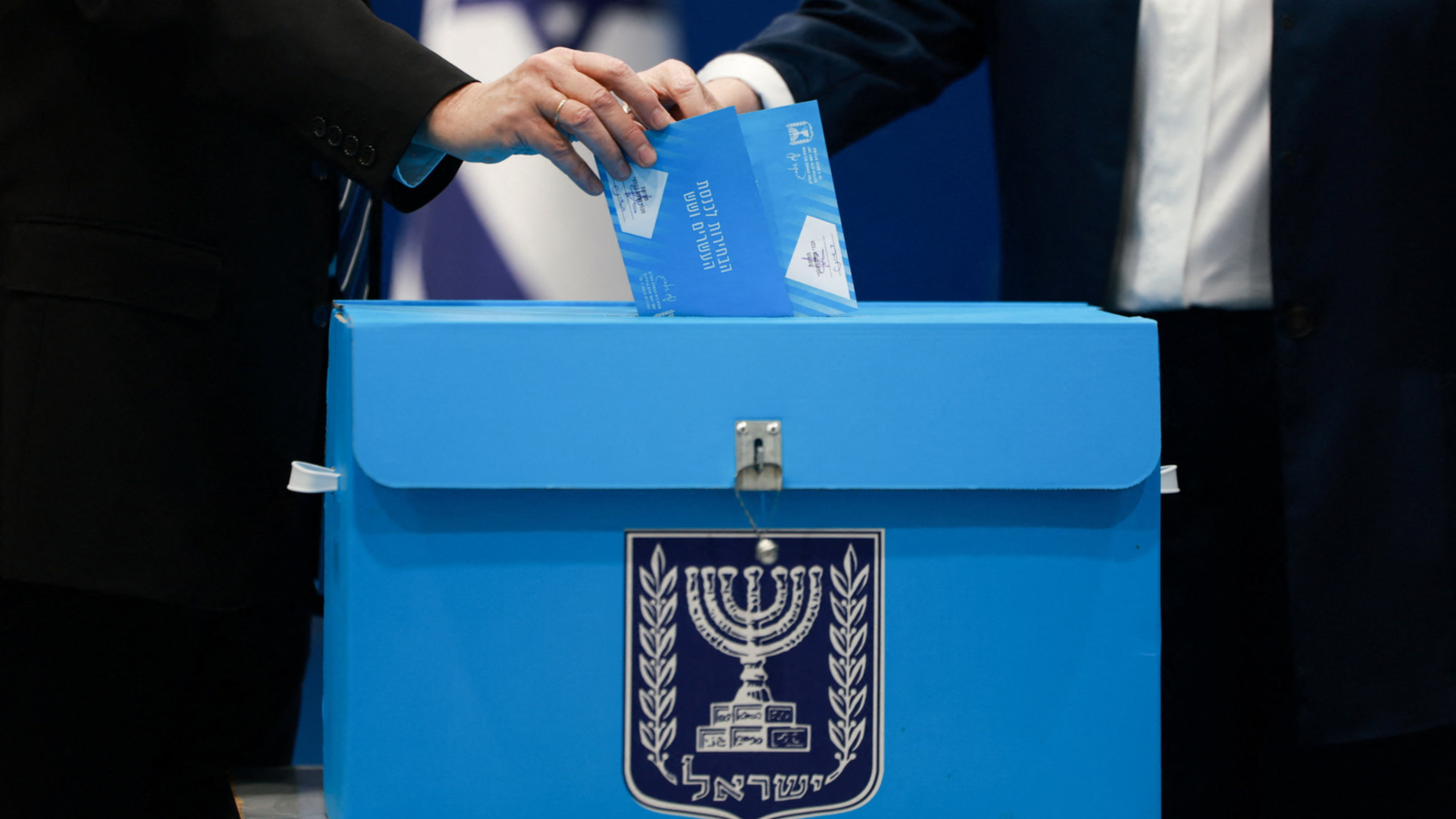
Israel elections: Polls open as Netanyahu fights to retain power The veteran prime minister faces a tough challenge from opposition parties as voters elect Israel’s 38th government Israeli President Isaac Herzog and his wife Michal Herzog vote at a polling station during Israel's national election, in Jerusalem, 27 October 2026 (Reuters/Ronen Zvulun) Published date: 27 October 2026 08:56 GMT | Last update: 15 min 41 sec ago Israelis began voting on Tuesday in the first parliamentary elections since the 7 October 2023 attacks, with incumbent Prime Minister Benjamin Netanyahu facing a tough challenge from opposition rival Gadi Eisenkot. Polling stations opened at 7am local time (5am GMT) and are due to close at 10pm (8pm GMT). A total of 36 electoral lists are contesting 120 seats in the Knesset, Israel’s parliament, in a bid to form the country’s 38th government. Netanyahu’s coalition of right-wing, far-right and ultra-Orthodox parties became the first Israeli government since 1988 to complete a full four-year term, after taking office in December 2022. But polls suggest his bloc could fall short of the 61 seats needed for a parliamentary majority, with projections putting it at around 50. New MEE newsletter: Jerusalem Dispatch Sign up to get the latest insights and analysis on Israel-Palestine, alongside Turkey Unpacked and other MEE newsletters Eisenkot, a former military chief leading the Yashar party, has emerged as a key challenger. He is seeking to unseat Netanyahu, Israel’s longest-serving prime minister, who has spent more than 19 years in office across three terms. He first served from 1996 to 1999, returned to power in 2009 and remained in office until 2021, before beginning his latest term in December 2022. Polls put Eisenkot’s party ahead of Netanyahu’s Likud, but neither the opposition nor the incumbent’s bloc is projected to secure a majority on its own. What's behind the rise of the Palestinian vote in Israel's 2026 election? Read More » Palestinian-led parties are projected to win a combined 14 to 16 seats, potentially giving them leverage in government formation. Both main camps have ruled out including them in a governing coalition. Turnout among Palestinian citizens of Israel could prove significant. Palestinian-majority towns reported high early turnout on Tuesday, according to the Arab48 news outlet. Palestinian citizens make up around 18 percent of eligible voters, or approximately 1.17 million people. Pollsters suggest turnout of 60–70 percent, up from 53 percent in 2022, could help Ra’am and the Joint List secure a combined 14 to 16 seats. Israeli television channels are due to broadcast exit polls when voting closes, with unofficial results expected overnight. The full count is expected by 30 October, while official results are due on 4 November. Middle East Eye delivers independent and unrivalled coverage and analysis of the Middle East, North Africa and beyond. To learn more about republishing this content and the associated fees, please fill out this form. More about MEE can be found here.
Israel elections: Polls open as Netanyahu fights to retain power
Full Article
Original Source
Read the full article at Middleeasteye →KhanList aggregates and links to publicly available news content. We do not host full articles from third-party sources. Always verify important information with original sources.