
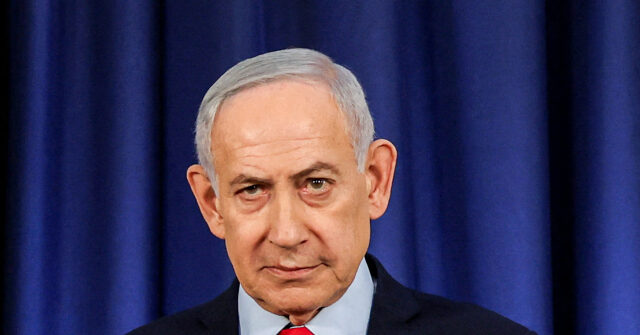
Israel’s parliamentary election ended in a political cliffhanger Tuesday night as initial exit polls showed neither Prime Minister Benjamin Netanyahu nor his chief rival, former military chief Gadi Eisenkot, securing a governing majority amid a surge in support for Arab parties. The projections, released after polls closed at 10:00 p.m. local time following the highest voter turnout in more than a quarter-century, showed Netanyahu’s Likud narrowly ahead of Eisenkot’s Yashar party in the major television exit polls, even as neither political camp secured the 61 seats needed for a majority in Israel’s 120-member Knesset. Three major broadcasters — Kan 11, Channel 12, and Channel 13 — projected Netanyahu’s right-wing and religious bloc winning 50 seats, compared with 52 or 53 for Eisenkot’s opposition camp and another 17 or 18 for the predominantly Arab parties. The Channel 12 exit poll projected Likud winning 24 seats to Yashar’s 22, with Netanyahu’s bloc receiving 50 seats, the opposition 52, and Arab parties 18. Kan 11 projected Likud winning 25 seats to Yashar’s 21, while Channel 13 put the parties at 25 and 23, respectively. Both networks projected Netanyahu’s bloc at 50 seats, Eisenkot’s at 53, and Arab parties at 17. Two other broadcasters offered more favorable projections for Netanyahu, although neither gave his coalition an outright majority. The i24NEWS exit poll, conducted by Direct Polls, projected Netanyahu’s bloc winning 55 seats against 49 for Eisenkot’s camp, with another 16 going to Arab parties. Likud received 27 seats compared with 20 for Yashar in that projection. Channel 14 presented the sharpest contrast, projecting Netanyahu’s bloc winning 60 seats — just one short of a majority — against 43 for Eisenkot’s opposition camp and 17 for Arab parties. Its survey gave Likud 30 seats to Yashar’s 19. The projections followed an election day marked by exceptionally high turnout, particularly in several Arab-majority communities, and increasingly urgent appeals from Netanyahu to mobilize his supporters. “If we don’t go vote now, we will find ourselves with a government of Arab parties,” Netanyahu warned Tuesday. Eisenkot accused the prime minister of resorting to familiar campaign tactics, while his Yashar party charged that Netanyahu was laying the groundwork to challenge the election results by alleging that the vote was being stolen. Voter turnout reached a near-final 77.7 percent Tuesday, the highest in an Israeli national election since 1999, according to figures reported by the Times of Israel. The exceptionally high participation followed a day of heavy voting across the country, including in several Arab-majority communities. The projected Arab-party gains could prove consequential in the next Knesset, with the five broadcasters forecasting a combined 16 to 18 seats for the Joint List and Ra’am. At Eisenkot’s Yashar party headquarters in Tel Aviv, supporters erupted in cheers as the initial projections showed the opposition bloc ahead of Netanyahu’s allies, chanting “Bibi, go home.” Yet the opposition’s projected numerical advantage, when combined with Arab-party representation, does not automatically translate into a governing majority. Several opposition leaders have opposed forming a government dependent on Arab parties, complicating Eisenkot’s path to assembling a coalition. Netanyahu, meanwhile, would need additional parliamentary support even under Channel 14’s comparatively favorable projection. The exit polls also indicated that several smaller parties could fail to enter the Knesset, including former IDF Brig. Gen. Ofer Winter’s Amcha Yisrael party, which had aligned itself with Netanyahu’s political camp. The Reservists-Economic Party and the Haredi Public party were likewise projected to fall below Israel’s 3.25 percent electoral threshold, potentially affecting the final distribution of seats among qualifying parties. The inconclusive projections also raised the prospect of competing claims to the mandate to form Israel’s next government. Netanyahu could point to Likud’s projected standing as the largest individual party, while Eisenkot could cite the broader parliamentary representation of Netanyahu’s opponents. President Isaac Herzog will ultimately consult the elected factions before deciding which candidate has the best chance of assembling a government. Coalition negotiations could produce an agreement among existing rivals, a broader unity arrangement, or, if efforts to form a government fail, another election. Tuesday’s vote marked Israel’s first parliamentary election since Hamas’s October 7, 2023, terrorist attack, and followed years of regional conflict that reshaped the country’s political and security landscape. The election also saw the Central Elections Committee reject a request by Netanyahu and allied parties to extend voting hours beyond the scheduled 10:00 p.m. closing time, while allowing voters already waiting in line to cast their ballots. Crucially, the exit polls remain preliminary projections rather than counted results, with more than 650,000 special ballots — including votes cast by soldiers, diplomats, and other eligible voters — expected to undergo separate verification and counting in the coming days. Those ballots, along with the broader official count, could alter the distribution of seats and determine whether smaller parties cross the electoral threshold. With neither Netanyahu nor Eisenkot projected to command a parliamentary majority, Israel’s next government remains undecided as the country awaits the official results and the coalition negotiations that will follow. Joshua Klein is a reporter for Breitbart News. Email him at jklein@breitbart.com. Follow him on Twitter @JoshuaKlein.
Israel Election Cliffhanger: Exit Polls Show Netanyahu, Eisenkot Deadlocked as Arab Parties Surge
Full Article
Original Source
Read the full article at Breitbart →KhanList aggregates and links to publicly available news content. We do not host full articles from third-party sources. Always verify important information with original sources.