
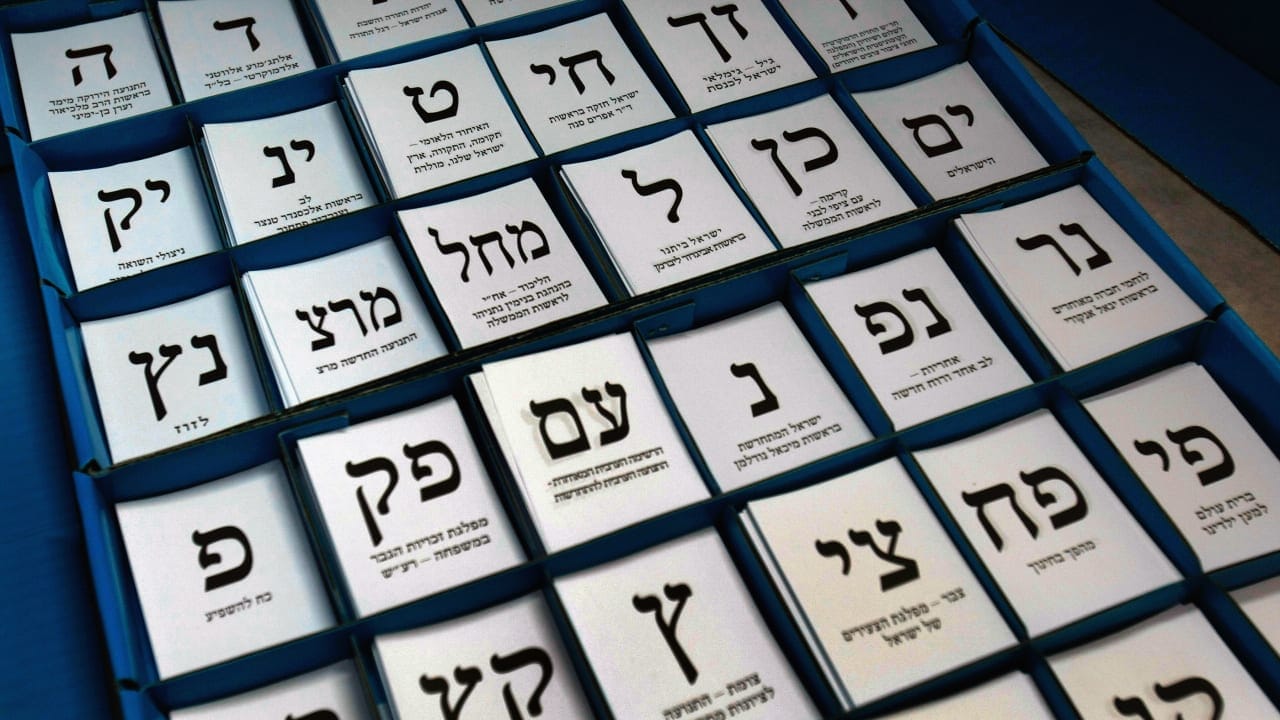
OCTOBER 16, 2026 05:56Updated: OCTOBER 16, 2026 06:10Israelis will head to the polls on October 27, facing a choice that goes far beyond which political bloc wins the most seats or which party leads the next coalition.For the politicians vying for our vote to lead the country, the task ahead is not simply to form the next government, but to begin putting the country back together.After years of war, political turmoil, social division, and eroding public trust, the country needs a government capable of doing more than surviving from one Knesset vote to the next. It needs a government with the stability, breadth, and public legitimacy to begin repairing a deeply wounded nation.Beyond security concerns, the political divisions that have plagued us before the October 7 massacre have not disappeared. Disputes over the judiciary, military service, religion and state, and the distribution of national responsibilities continue to threaten the social contract on which Israel depends.That the next government must be broad enough to bring together Israelis who disagreeThe Jerusalem Post’s editorial board believes that the next government must be broad enough to bring together Israelis who disagree on the fundamental questions about the country’s future but share a commitment to its security, prosperity, and democratic institutions.Israeli voters choose among competing party lists, but election day is often only the beginning of the battle to form a government. (credit: Alexi Rosenfeld/Getty Images)Israel needs a broad government not for the sake of unity itself but to give the country the stability and political capacity to begin repairing itself.The alternative, another narrow coalition, would be beholden to its most demanding partners and vulnerable to the political calculations that have too often taken precedence over the national interest.Israel cannot afford another cycle of paralysis. A narrow government, dependent on the goodwill of its most demanding coalition partners, would struggle to make the difficult choices ahead. A broad coalition would not eliminate political disagreements, but it could create space to address them without letting every dispute threaten the government’s survival.This is why the next government must be judged not only by its ideological composition, but by its capacity to govern – and the objective must be a government built around a clear, limited set of national priorities and a willingness to compromise on everything else.First, it must restore confidence in Israel’s security institutions while ensuring that the failures of October 7 are investigated independently and that those responsible are held accountable.Second, it must address the unequal distribution of national obligations. Governments cannot keep military and civilian service, economic participation, and the responsibilities of citizenship as subjects they repeatedly defer because confronting them threatens coalition stability.Finally, it must begin rehabilitating and rebuilding the country’s democratic and civic foundations. This requires respecting institutional checks and balances, reducing the temperature of political discourse, and recognizing that political opponents are fellow citizens, not existential enemies.The work of rehabilitation must extend beyond these structural questions.It must include rebuilding communities affected by the war, supporting those who have sacrificed years of their lives in reserve duty, and ensuring that bereaved families, wounded soldiers, and those still struggling with the trauma of October 7 are not forgotten once the headlines fade.It must also address the economic pressures facing Israeli households and restore confidence that public institutions can meet the needs of the people they serve. These are not separate challenges. They are all part of the same task: rebuilding the relationship between the state and its citizens.A broad government will contain genuine disagreementsNone of this will be easy.A broad government will contain genuine disagreements, and compromises will inevitably disappoint voters on every side. But compromise is the necessary price of governing a diverse democratic society – particularly one that has endured such profound collective trauma after October 7.On October 27, the country should choose a path away from permanent political crisis and toward the difficult, necessary work of rebuilding. Israel needs a broad government, one strong enough to make decisions, stable enough to implement them, and humble enough to recognize that the national interest is larger than any party or leader.Israelis do not need their politicians to agree on everything. They need them to agree on what cannot wait: a stable, common-sense governing majority; a serious program of national rehabilitation; and a commitment to shared responsibility, for better or worse.Follow us on Google
Israel does not need politicians to always agree, but it needs a unity government - editorial
Full Article
Original Source
Read the full article at Jpost →KhanList aggregates and links to publicly available news content. We do not host full articles from third-party sources. Always verify important information with original sources.