
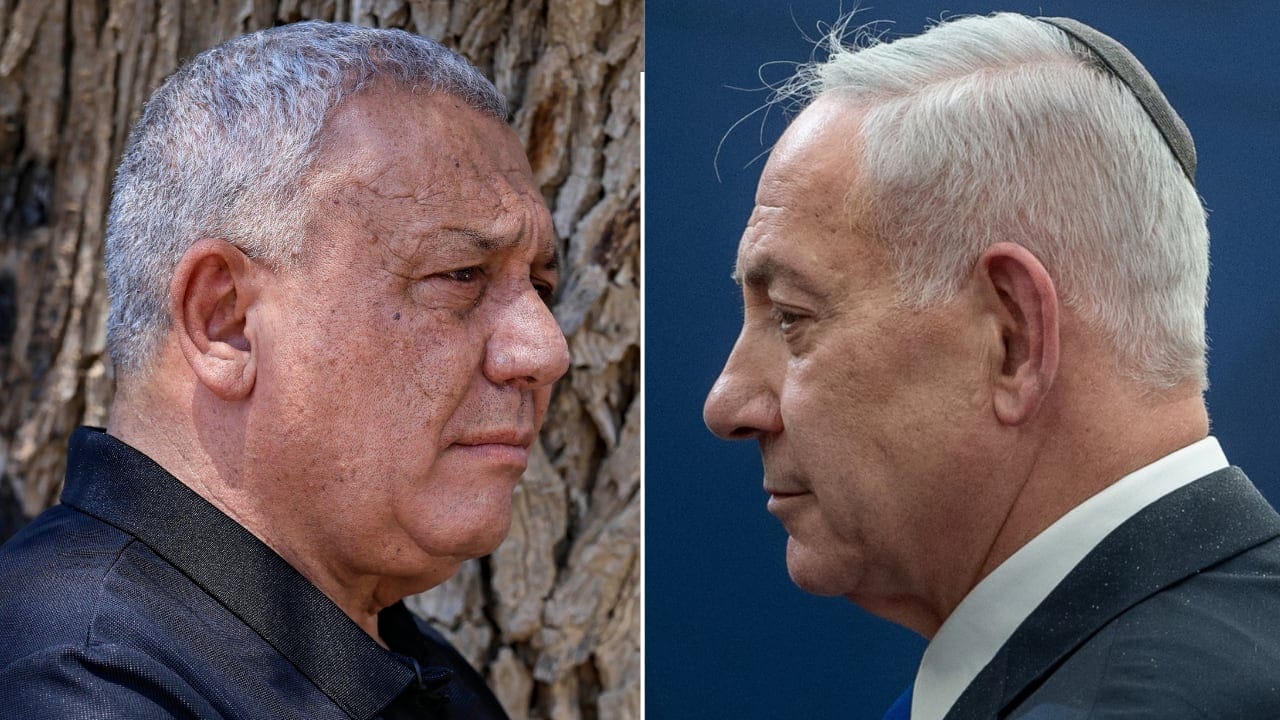
OCTOBER 16, 2026 12:47In the summer of 2019, Yuli Edelstein, then speaker of the Knesset, came to meet with us at The Jerusalem Post.Israel had held an election in April that failed to produce a government and was forced back to the polls in September. It was the first time in the country’s history that one election had led almost immediately to another, and Edelstein, then a senior figure in Likud, had a clear message: This would not happen again. Whatever the personal differences between the political camps, the country would find a way to form a government.Sadly, he was wrong, as were many of us who believed that Israel’s politicians would eventually come to their senses. Instead, the country went to the polls five times in three-and-a-half years, until the current government was established following the election at the end of 2022.When people think about October 7, they understandably focus on the intelligence failures, the IDF’s failure to defend the border, and the questions surrounding the warnings that did or did not reach Prime Minister Benjamin Netanyahu. Some go further back to the year before the attack, when the government’s judicial overhaul tore Israeli society apart. Rarely, though, do we go back further than that.The truth is that Israel arrived at October 7 battered, divided, and polarized in ways we have yet to fully process. The judicial overhaul was devastating, but it did not come out of nowhere. It followed five elections marked by relentless political fighting, personal rivalries, and the growing belief that defeating the other side mattered more than governing the country. The overhaul deepened those divisions, eroded trust in institutions, and made the country weak and vulnerable.Palestinians take control of an Israeli tank after crossing the border fence with Israel from Khan Yunis in the southern Gaza Strip, October 7, 2023. (credit: ABED RAHIM KHATIB/FLASH90)Hamas saw an opening in this division and took it on October 7. The fact that we have yet to establish a commission of inquiry into the events that led to the attack is a gamble with Israel’s future.This history matters as we approach the October 27 election, because the polls suggest that another stalemate is a real possibility. Neither bloc appears to have the 61 seats needed for a conventional majority government, and neither seems capable of persuading enough politicians from the other side to join it. Much can change before election day, particularly with undecided voters and parties hovering around the electoral threshold. But we need to ask now what outcome is actually in the country’s interest.The opposition’s criticism of Netanyahu is legitimate. He has been in office for too long, the failures have piled up, and it is time for change. His decision to govern with the far Right has caused Israel immense damage, internally and internationally. But Netanyahu is also right that the opposition’s boycott of him has contributed to the prospect of deadlock. This is what happens when personality politics overwhelms almost everything else.Three possibilities to avoid another electionANOTHER ELECTION, in my mind, would be catastrophic. Israel is militarily stronger today because its enemies are weaker, but military superiority does not remove the danger of political paralysis. With so many challenges still unresolved, returning to the cycle of election after election would put us back on the same destructive path that preceded October 7.If avoiding that outcome is the objective, there are essentially three possibilities.The first is that one side wins 61 seats, as hard as that is to imagine based on current polling. It could be Netanyahu and it could be the opposition. This would be the clearest outcome – one side would win, and while the other would be angry and disappointed, the voters will have spoken. Even if one side does not get 61 in its current form, we cannot rule out defections – parties switching alliances – something that has happened repeatedly in the past.The second possibility is that neither side reaches 61 seats and the opposition tries to establish a minority government. The most plausible version would bring together Gadi Eisenkot, Naftali Bennett, Avigdor Liberman, and Yair Golan. They would not need the Arab parties to vote in favor of the government, but they would need enough Arab MKs to not vote against it.Such a government could remove Netanyahu from office and establish a state commission of inquiry into October 7, a lofty objective that should have been done a long time ago. Beyond that, however, it will not be able to function, and the minority government would be established simply to take the country straight back to another election.As tempting as this might be, there is a danger in this that the opposition should not underestimate. Firstly, the path leads anyhow to another election, no different than the deadlock option. Second, there is a chance that Netanyahu would return even stronger after the next election, arguing that he had warned voters Eisenkot and Bennett would govern with the support of Arab parties and that they had proved him right.The third possibility is what is often referred to as a unity government. I know how unrealistic this sounds today, but it deserves consideration if the alternative is yet another election. In many respects, this would not even be unity across an enormous ideological divide. The principal obstacle between Netanyahu, Eisenkot, Bennett, Liberman, and Golan is not necessarily their view of Israel’s central security challenges but their view of one another.Set aside judicial reform for a moment and consider the major issues. Is there really such a vast difference between them on confronting Iran, rebuilding support in the United States, the future of the Palestinian conflict, or maintaining far stronger defenses along the borders with Gaza and Lebanon?There are meaningful disagreements on the rule of law, the West Bank, and responsibility for October 7, and they cannot be wished away. But there is also more than enough common ground to at least explore whether a stable government could be formed.THE OBVIOUS objection is that Netanyahu cannot be trusted. He has broken political promises in the past, manipulated coalition partners, and brought down governments when it served his interests. All of that is true, and anyone considering joining him would have to enter such an arrangement with eyes wide open and an incredible amount of suspicion.But politics is not about choosing between a good option and a bad one. Often, it is about deciding which of the bad options will do the least damage. If the alternative to exploring a unity government is another election, followed perhaps by another stalemate, which course would be worse for the country?Netanyahu has been a central figure in Israeli politics for more than 30 years, since first becoming prime minister in 1996. He is a political chameleon who knows how to move left, shift right, settle in the center, and adapt his alliances based on political survival. If staying in office requires him to govern with different partners, and to accept different constraints, he usually knows how to do so.None of this means that Netanyahu can suddenly be trusted politically, and we have no way of knowing whether he has changed. Is survival in office the only objective for him today, or is there still something within him that will put the country first even if it means restraints and policies that for the last four years he has avoided, like a commission of inquiry?It is true that such a government might prove impossible, and that even if formed it will quickly collapse. But surely we owe it to ourselves to test the possibility rather than dismiss it outright.Edelstein’s warning in 2019 was that Israel could not afford to become a country incapable of forming a government. We ignored that warning and allowed years of political division to become normal. October 7 should have taught us that national security depends not only on military strength but also on social cohesion and leadership capable of putting the country ahead of personal rivalries.Hopefully, October 27 will produce a clear winner. If it does not, Israel’s political leaders will have to decide whether their refusal to sit together matters more than the country they are supposed to serve. After everything Israel has endured, another round of elections cannot be treated as an acceptable outcome.The writer is a co-founder of the MEAD policy forum, a senior fellow at JPPI, and a former editor-in-chief of The Jerusalem Post. His newest book is While Israel Slept.Follow us on Google
Israel cannot afford another election: Why Netanyahu, Eisenkot must consider unity - opinion
Full Article
Original Source
Read the full article at Jpost →KhanList aggregates and links to publicly available news content. We do not host full articles from third-party sources. Always verify important information with original sources.