
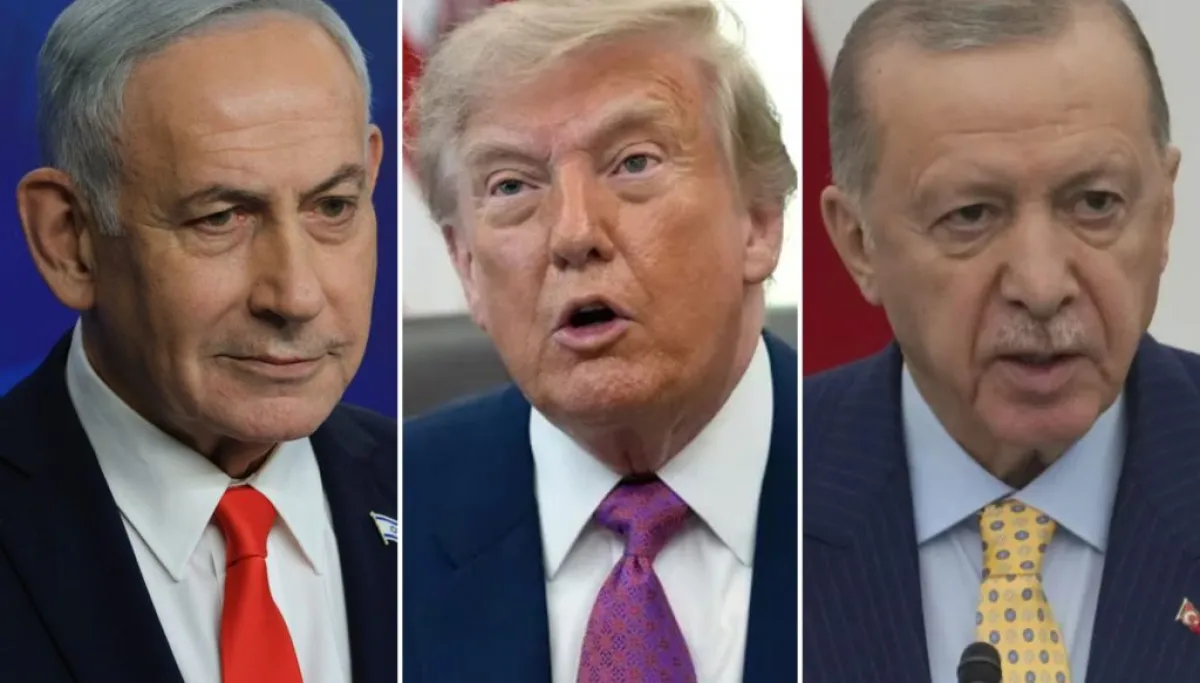
The mid-August Israeli airstrike on the Abu al-Duhur air base in northwestern Syria exposed a dangerous fault line. The strike, which targeted infrastructure to block possible Turkish radar deployments, represents a flashpoint that could easily spark a wider regional war.Israeli Prime Minister Benjamin Netanyahu defended the operation through the Prime Minister’s Office as a vital, preemptive security measure. Yet, the strike highlights a volatile security dilemma between two major Middle Eastern powers: Israel and Turkey. With Israel facing tense elections and Turkey expanding its footprint, the risk of miscalculation remains significant.Managing this crisis requires more than just acknowledging military friction. It requires competent, disciplined diplomacy from Washington. Recent public remarks and subsequent frantic walkbacks by Tom Barrack, President Donald Trump’s U.S. ambassador to Turkey and special presidential envoy for Syria, represented a severe operational failure. Interviewed by Lebanese-Australian entrepreneur Mario Nawfal, Barrack openly speculated about catastrophic escalations like “World War Three”, publicly accused Israel of acting on “wrong” intelligence, and fumbled core tenets of U.S. policy by calling the Golan Heights “occupied” land. While Barrack spent days issuing swift retractions to the Associated Press under heavy political fire, the damage was already done. When a chief envoy steps out in public to air uncoordinated theories and then scrambles to correct his stance, it provides immediate ammunition to defensive regional hawks. It undercuts American credibility. Professional diplomacy demands quiet alignment, not theatrical public stumbles and cleanup operations that exacerbate local panic.Direct trilateral diplomacy between Jerusalem, Ankara, and Damascus remains a political impossibility. The lack of coordination has previously triggered intense diplomatic friction, as detailed by Al Jazeera, between Washington and Jerusalem. To prevent further escalation, there was a clear need for an indirect diplomatic circuit breaker. Through disciplined channels, external actors must work to clarify red lines and manage security demands without forcing adversaries into direct confrontation.Fortunately, that backdoor architecture is finally materializing. Just days after the airstrikes threatened to ignite the border, a high-level Israeli delegation led by Mossad chief Roman Gofman met face-to-face with a Syrian delegation led by Foreign Minister Asaad al Shaibani in Jordan. This summit, mediated by the U.S., marks a profound shift. The immediate priority of the meeting was to establish operational guidelines to prevent further strikes following the Abu al-Duhur bombing. More importantly, it focused on creating a mechanism to prevent tensions between Turkey and Israel from spilling over onto Syrian soil, with security officials floating the creation of a joint operations room under American oversight.Stabilizing the region permanently requires accepting the current realities there. The geopolitical landscape changed permanently after the fall of the Assad regime. According to reporting by BBC News, Syria’s transitional president, Ahmed al Sharaa, now leads a reshaped state architecture. The Trump administration maintains deep ties with Turkish President Recep Tayyip Erdogan regarding military training and logistical support. Expecting Damascus to cut these ties is a diplomatic non-starter given the current level of dependence.However, Syria’s primary mandate today is domestic survival and reconstruction. The new government seeks to avoid letting its regional alliances turn the country into a permanent battlefield. Al Sharaa must balance his relationship with Erdogan with a pragmatic need to avoid devastating Israeli strikes that could destabilize Syria’s fragile recovery.Meanwhile, Israel views the expanding military infrastructure in Syria with deep suspicion, seeing it as a direct threat to its security. As Reuters reports, both nations are actively stepping up warnings against one another over Syrian airspace. Turkey aims to protect its northern Syrian investment while seeking to avoid a full-scale conflict with Israel.This environment highlights the importance of the U.S.’s unique position. Washington maintains foundational relationships with both Israel and Turkey. Crucially, as highlighted by Al-Monitor, there is also a cautious, open dialogue with the new Syrian government regarding counterterrorism and stability. This access provides the exact framework needed to sustain the Jordan channel, provided our diplomatic corps exercises professional discipline moving forward.Effective engagement involves utilizing the U.S.-Turkey alliance to address regional anxieties privately. If Turkey’s role as Syria’s institutional guarantor is acknowledged, it creates space to discuss the limits of military deployments near Israeli-monitored zones. Ensuring that advanced systems are not positioned in provocative locations is a key step in reducing the likelihood of pre-emptive strikes.The immediate goal of U.S. mediation must remain tactical de-confliction. The talks in Jordan proved that the two sides could attempt to revive frozen comprehensive security agreements, possibly establishing border buffer zones, echoing the historical 1974 Separation of Forces Agreement, in which only the United Nations would deploy.The ultimate goal remains the construction of a resilient regional architecture. Leveraging current diplomatic openings could lay the groundwork for restoring comprehensive relations between key regional powers. Rebuilding these axes of cooperation provides a foundation for broader regional integration and shared security interests.By anchoring regional powers in a shared security framework, international mediators can offer a pathway for the new Syrian administration toward greater regional stability. Encouraging Damascus to distance itself from extremist proxies and to focus on economic reconstruction through international cooperation could help secure its borders and promote long-term peace.VANCE JUST ‘JEWSPLAINED’ CARLSON’S ANTISEMITISM TO AMERICAN JEWS — AND THE REPUBLICAN JEWISH COALITION CHEEREDFurthermore, ongoing dialogue allows for the clear communication of international expectations. Emphasizing that international support and integration are tied to responsible security behavior incentivizes pragmatism over destabilizing alignments.Finally, the use of verified intelligence and managed information sharing can reassure regional actors and mitigate the risk of miscommunication regarding troop movements or asset deployments. True stability in the Levant relies on calculated realism and professional competence, replacing public friction with the sober management of borders while allowing the state room to stabilize.Eric Wargotz, M.D., is a geopolitical analyst and policy writer who has held leadership roles across government and medicine. He is Clinical Professor Emeritus at The George Washington University, and a Maryland judge, a former U.S. Senate nominee and elected county commission president. Views are his own it may not represent those of his affiliates.
Israel and Turkey are on a collision course — and Trump’s loose cannons are making it worse
Full Article
Original Source
Read the full article at Washingtonexaminer →KhanList aggregates and links to publicly available news content. We do not host full articles from third-party sources. Always verify important information with original sources.