
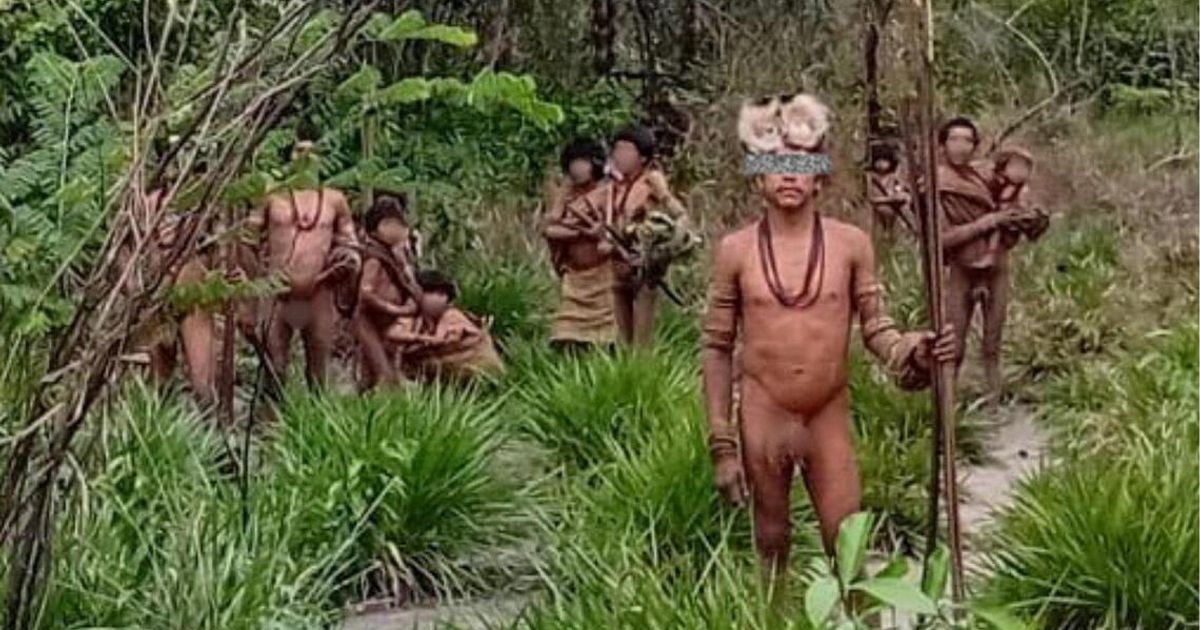
Community members in a Brazilian village in the Amazon rainforest were astonished this week to see a group of isolated Indigenous people emerge from the brush and ask for food, government officials said.On the morning of Nov 16, a group of Indigenous Awa people made rare contact with the villagers, according to a statement from Brazil’s Ministry of Indigenous Peoples. The encounter raised fears that decades of illicit deforestation, cattle ranching and hunting have pushed the forest’s inhabitants to a breaking point.It was the first time in recent memory that a group of Awa had willingly left their isolated lives to make contact, said Sarah Shenker, a campaigner at the Indigenous rights group, Survivor International.“They’ve shown so clearly for so long that they don’t want contact with outsiders,” said Shenker, who has visited the area regularly since 2010. “So this moment is really alarming.”Videos and images of the Awa, taken by community members and shared by Survivor International, a UK-based group, show adults and children huddled near the edge of the forest in the north-eastern Brazilian state of Maranhão. Some are bearing necklaces and headdresses, or holding spears. In all, they numbered around 20, the rights group said.The Awa initially approached nearby officers from FUNAI, a government agency that supports Indigenous communities, officials said.Communicating through gestures, the Awa asked for yams, which they brought back into the forest, Shenker said. Some members of the Awa group continued to come and go in the following days, she said.The immediate concern was for their health, Shenker said.Lacking both exposure to common pathogens and vaccinations, Shenker said, the Awa were vulnerable to any diseases they might catch from the Guajajara. That is a larger group of Indigenous people in Maranhão.As images and videos of the encounter began to circulate on social media, Brazil’s Indigenous peoples ministry mobilised a response involving local and national health authorities.“Brazilian policy for the protection of isolated Indigenous peoples is guided by the principle of non-contact,” the statement said. “Its objective is not to promote relations with these peoples, but to guarantee the necessary conditions for them to remain in isolation if that is their decision, without external interference and with full protection of their territories.”For decades, wildfires, illicit logging, ranching and hunting have led to the destruction of Indigenous peoples’ livelihoods in the Amazon, Shenker said. The government has designated certain areas as protected Indigenous land, she said, but now, “this territory and a few other Indigenous territories in the region are the only places where valuable hardwoods still stand”.About 15 years ago, the Guajajara people formed groups called the “Forest Guardians”, which confronted illegal logging camps and confiscated equipment, Shenker said at least six of them were killed while doing so, she said.While some Awa people have chosen to make contact, Shenker said, about three or four subgroups reject contact with outsiders. The Awa move freely and survive entirely from the forest, she said, hunting wild boar, deer, monkeys and fish and gathering fruit and honey. They build shelters from tree fibres.The forest is also their source of medicine and spirituality, she said.Survivor International has not yet reached any conclusions about why the Awa emerged this week, but said it was troubling.“The fact that they’ve come out now does indicate that they have probably felt forced to for one reason or another,” Shenker said. “And as we say, because their lives are so intricately related to the forest, it would be impossible to completely separate the pressures on the land.” NYTIMESThis article originally appeared in The New York Times.
Isolated Amazon indigenous group makes rare contact
Full Article
Original Source
Read the full article at Straitstimes →KhanList aggregates and links to publicly available news content. We do not host full articles from third-party sources. Always verify important information with original sources.