
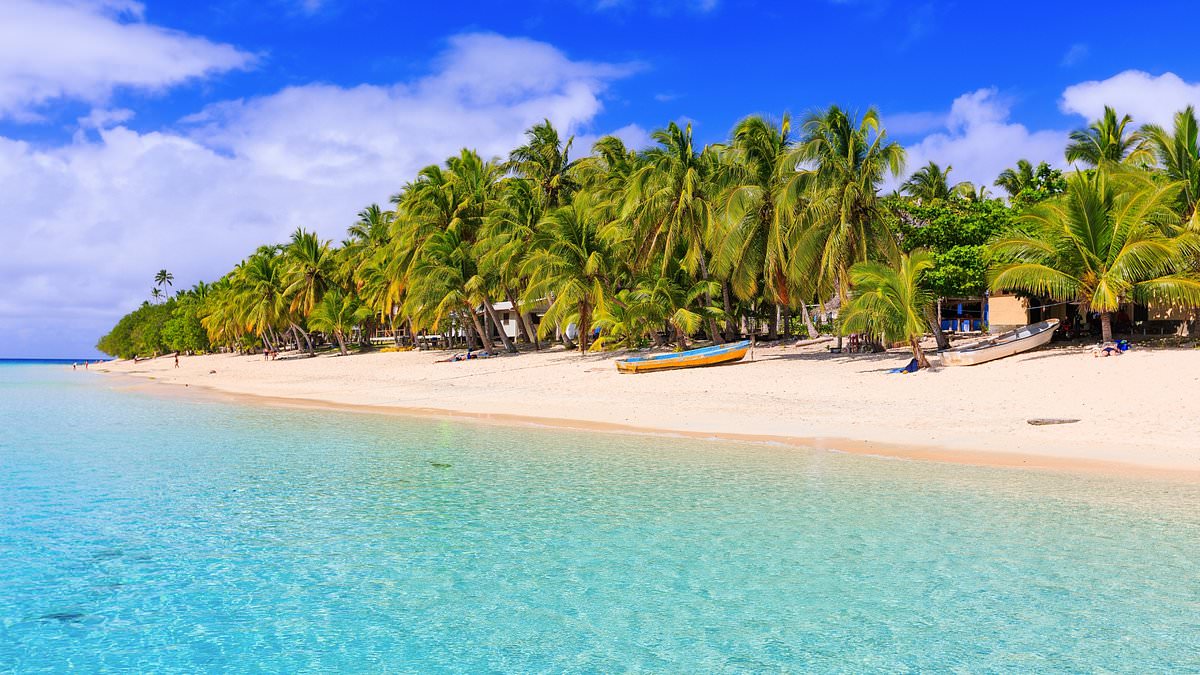
The tropical island paradise of Fiji has declared a national HIV emergency amid surging cases of the disease in the nation.The latest data shows that an estimated one in 60 Fijians are now infected with the virus, nearly three times the one in 167 thought to be infected in 2019.Last year - the latest data available - 2,016 new HIV infections were recorded in the island nation, a 16-fold jump from seven years earlier, and health officials fear many infections may have been missed. Last year, there was also a total of 117 HIV-related deaths, up from 25 deaths overall in 2021 (the earliest year death data is available), including 17 in children under one year old.Issuing a warning, Fijian health minister Antonio Lalabalavu said in a statement: ‘Today I am formally declaring a national health emergency in Fiji.'This decision recognizes the seriousness of the epidemic and the urgent coordinated response our country now needs.'The UNAIDS program, which works to treat people with HIV in Fiji, said the surge in cases in Fiji was ‘one of the sharpest increases in new HIV infections globally’.'It's also a stark reminder to the world that AIDS is not over,' added executive director Winnie Byanyima. 'HIV epidemics can change quickly, and countries need health and community systems that are ready to respond urgently.' An HIV awareness poster is displayed along a main road in Suva, Fiji, as health authorities and aid agencies step up public messaging amid a surge in HIV cases in Fiji Officials in Fiji say the outbreak is not limited to any particular area or population, which - as the island is a major center for trade and tourism - suggests the disease could be spread to other countries.Fijian officials have linked spiraling cases in the island nation to illicit drug use and unprotected sexual contact. HIV is spread via contact with blood, semen or vaginal fluids. Among illicit drug users, people may share needles, which can transmit the virus by spreading blood between people. During unprotected sexual contact, a person can come into contact with blood, semen or vaginal fluids that may contain and transmit the virus.Officials in Fiji claim the use of condoms is 'alarmingly low.'Additionally, illicit drug use in Fiji - which relies heavily on tourism for jobs and its economy - rose after the Covid pandemic, which shuttered employers on the island and left an estimated 100,000 residents - or one in nine - unemployed. In the country, the practice of 'bluetoothing' has also become more common - when a drug user shares the blood of another drug user to get a cheaper high, non-profit workers in the country say.Fiji is also a major transit hub for drugs moving between the Americas, Asia and New Zealand and Australia, according to nonprofits.Estimates from UNAIDS suggest 42 percent of those who were infected with HIV in Fiji last year were diagnosed after injecting themselves with illicit drugs, while half of the patients were diagnosed following sexual contact. In the nation of 938,000 people, an estimated 9,000 residents now have an HIV infection. The above shows the number of new HIV infections recorded by year in Fiji The above shows the number of HIV-related deaths recorded in Fiji by yearOf these, only 39 percent are said to be aware they have it, while only 22 percent are receiving drugs to suppress the virus.Famous for its white sand beaches and teeming coral reefs, Fiji is also a major tourist destination. It received a record 779,000 vacationers last year, the latest data available. Estimates suggest more than 20,000 Americans also visit the country for vacation every year.Fiji first declared an outbreak of HIV in January 2025, but has now upgraded this to an 'epidemic,' which will allow for more support and a coordinated government response.The declaration means the government will now offer more free tests for the virus and more free treatments for people who test positive.Fiji has also boosted harm reduction programs, or programs for drug users, by offering services including exchanging dirty needles for clean ones at selected sites. HIV infections used to be a death sentence because there were no treatments and they would eventually lead to the life-threatening condition AIDS.Fiji, often thought of as a tropical island paradise, declared a national HIV emergency amid surging cases of the disease in the nation (stock image)Thanks to modern medical advances, however, it is now possible for someone infected with the virus to live a long life and remain in good health, with the drugs helping to suppress the virus to 'undetectable' levels.But scientists have yet to find a way to cure an infection, with those who catch the virus considered to be infected for the rest of their lives.The uptick in HIV infections in Fiji comes against a backdrop of many countries registering declining cases of the virus.In the US, infections with the virus fell 12 percent from 2018 to 2022, the latest figures available on the CDC website. An estimated 1.2 million Americans are infected with the virus.Health officials say someone can prevent an HIV infection by using a condom or avoiding having sex. They can also use pre-exposure prophylaxis (PrEP), a prescription medication that can prevent someone from developing an HIV infection.Doctors treat the virus using either shots given once a month or pills taken daily, which contain drugs that can slash HIV levels to 'undetectable' in the body.
Island hotspot declares national emergency over uncontrolled spread of HIV... as experts worry of spillover
Full Article
Original Source
Read the full article at Dailymail →KhanList aggregates and links to publicly available news content. We do not host full articles from third-party sources. Always verify important information with original sources.