
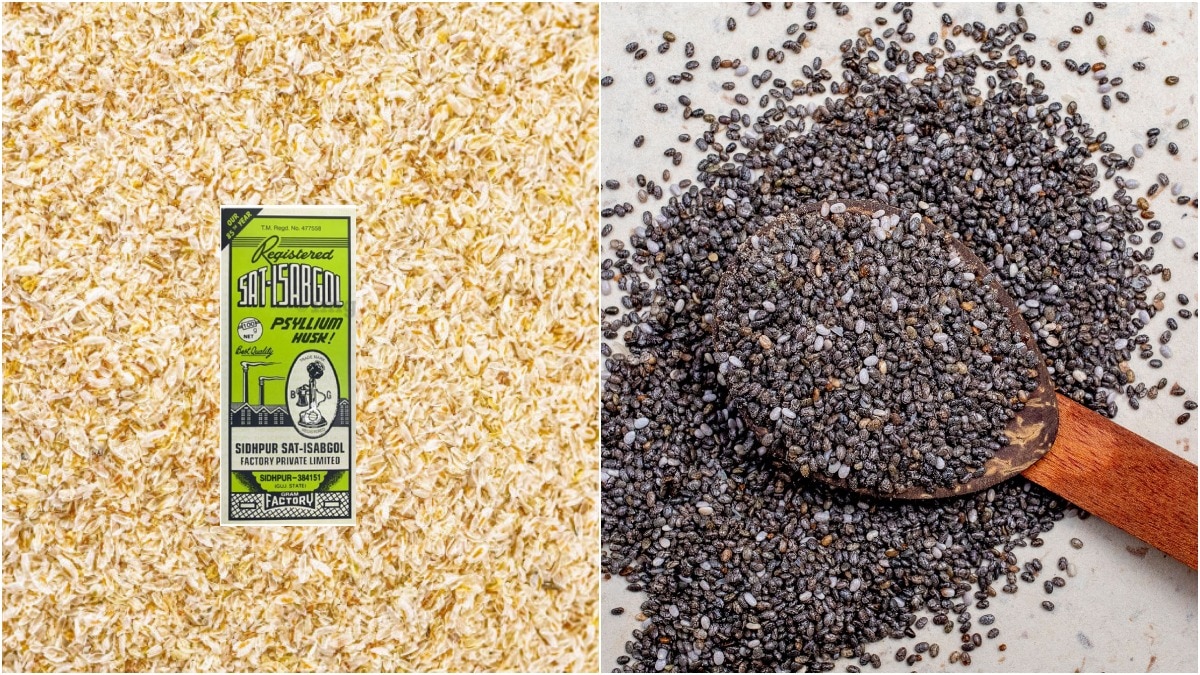
Is it time you swapped chia seeds with Isabgol? Health experts have a lot to say.Isabgol vs chia seeds debate is all over the internet. (Photos: Getty and Pexels)Isabgol (psyllium husk), the go-to laxative in Indian households for generations, is suddenly a hot topic of discussion around the world. As the global conversation around gut health and “fibremaxxing” grows, even the West can’t stop talking about it. It is cheap, easy to consume and known to help with a range of gut issues, including IBS and constipation. But hey, that’s not a green signal to start taking it every day and hope for a miracle. More on that below.Meanwhile, social media is abuzz with videos on how to consume it, how taking it daily can transform your gut health, and how it can help increase your fibre intake—especially since a lack of fibre is considered one of the key contributors to a range of gut-health issues.Another narrative that has gained traction is that isabgol may be a better choice than chia seeds when it comes to targeted gut health. A viral reel by a gastroenterologist has sparked a huge conversation, with the doctor saying, “If Isabgol (psyllium husk) were marketed in India as much as chia seeds, half of the Indian population’s bloating and gut issues could potentially disappear.”Chia seeds have been the poster child of the modern gut-health movement for a while now. They are sprinkled over smoothies, soaked overnight in water and yoghurt, and routinely marketed as a superfood packed with fibre, omega-3s and nutrients. And the question now is: which one is better—chia seeds or isabgol? The answer isn’t as simple as choosing a winner. But the internet is certainly on the hunt for one.So, we spoke to some health experts. The quick answer: both work differently and offer different benefits. You can’t simply swap the chia seeds in your overnight oats and smoothies for isabgol. While chia seeds are more like a whole food, isabgol works more as a targeted fibre supplement. Here’s a lowdown on what each one does—and which one may be better for you.Chia is a food; isabgol is a fibre supplement The biggest difference between the two is quite simple. Chia seeds are a whole food, while isabgol is essentially a concentrated source of soluble fibre.Chia seeds provide fibre along with plant-based protein, omega-3 fatty acids and minerals such as calcium and magnesium. That makes them a nutritious addition to everyday meals, whether mixed into yoghurt, oatmeal or smoothies. Chia seeds work more like a proper food than a supplement. (Photo: Pexels) Isabgol, or psyllium husk, is far more specialised. It is predominantly soluble, viscous fibre. When mixed with water, it absorbs liquid and forms a gel that moves through the digestive tract, helping regulate stool consistency and bowel movements.“Isabgol is predominantly soluble, highly viscous fibre with strong evidence for improving stool consistency, lowering LDL cholesterol, and aiding glycaemic control,” says Dr Tushar Tayal, Associate Director – Internal Medicine, CK Birla Hospital, Gurgaon.“Clinically, isabgol is preferred as a therapeutic laxative/fibre supplement given reproducible dosing and trial data, whereas chia seeds are better regarded as a general dietary adjunct.”And that, essentially, is the key to the chia-versus-isabgol debate.What makes isabgol particularly useful for constipation?Psyllium's biggest strength is its ability to absorb water and form a viscous gel. This can increase stool bulk while retaining water, helping make stools softer and bowel movements easier.That is why isabgol has been used for years as a remedy for constipation—and why it has a more established clinical role than chia when it comes to bowel regulation.Kanchan Sondhi, Senior Dietician, Ganga Ram Hospital, says isabgol is “pure, concentrated soluble fibre” and is particularly useful for constipation and bowel regularity.But that doesn't mean more is necessarily better. A sudden increase in fibre can cause gas, bloating or abdominal discomfort, particularly in people who aren't used to consuming much fibre.What about IBS?IBS can look very different from person to person. Some people struggle mainly with constipation, others with diarrhoea, while bloating and abdominal pain can be common across different types.Soluble fibre such as psyllium has evidence supporting its use for improving overall IBS symptoms, particularly when constipation is involved. But it isn't a universal fix.As Dr Tayal points out, psyllium's established use in IBS and constipation comes from its predictable fibre properties and clinical evidence.So, if you have IBS, the idea isn't simply to start taking isabgol because it is “good for the gut”. The type of IBS you have, your symptoms and your tolerance to fibre all matter.Does it help with cholesterol and blood sugar too?The benefits of psyllium aren't limited to bowel movements.Because the fibre becomes viscous in the digestive tract, it can slow the absorption of glucose following a meal. Regular psyllium intake has also been associated with modest reductions in LDL cholesterol.Dr Tayal cites LDL cholesterol reduction and glycaemic control among the benefits for which psyllium has supporting evidence.Chia seeds can also contribute to metabolic health, but their benefits come as part of their broader nutritional profile. Their fibre, protein and fat content can help make meals more filling, while their omega-3 fatty acids add another nutritional benefit.And what about bloating?This is where the social-media conversation needs a little nuance.Isabgol may help regulate bowel movements, but it isn't a universal cure for bloating. In fact, increasing fibre too quickly can sometimes make bloating and gas worse.If your diet is currently low in fibre, the better approach is to increase it gradually and make sure you are drinking enough fluids.And persistent or unexplained bloating shouldn't simply be treated with fibre. It can have many causes, and recurring symptoms warrant medical advice.So, which one is better?It depends on what you're looking for.If you want to add fibre, protein, omega-3 fats and minerals to your everyday diet, chia seeds make sense. They are a nutrient-dense food that can easily be incorporated into regular meals.If your primary goal is increasing soluble fibre, improving stool consistency or supporting bowel regularity, isabgol is the more targeted option. It also has stronger clinical evidence for certain IBS symptoms and modest benefits for cholesterol and glycaemic control.So, don't ditch your chia pudding for isabgol just because a viral reel says one is better. The two aren't really competitors.So, instead of asking whether chia or isabgol is “better”, the more useful question is: what does your diet - and your gut - actually need?Because when it comes to gut health, there is no one-size-fits-all superfood. A fibre-rich, varied diet, adequate hydration and the right intervention for your particular symptoms will always matter more than whichever ingredient happens to be trending online.The one thing you need to remember with isabgolIf you do decide to add psyllium to your routine, water is non-negotiable.Because it absorbs liquid and expands, it needs to be taken with sufficient fluid. Otherwise you may just choke. A commonly used approach is to mix 1–2 teaspoons with at least one full glass of water—around 240 ml—and drink it promptly. Overall hydration through the day matters too.People with difficulty swallowing or a suspected bowel obstruction or narrowing should not start psyllium without medical advice. And if you take regular medication, check with your doctor or pharmacist about whether you need to space it away from your fibre supplement.- EndsPublished By: Medha ChawlaPublished On: Aug 22, 2026 13:29 IST
Isabgol or chia seeds? What's better for your gut
Full Article
Original Source
Read the full article at Indiatoday →KhanList aggregates and links to publicly available news content. We do not host full articles from third-party sources. Always verify important information with original sources.