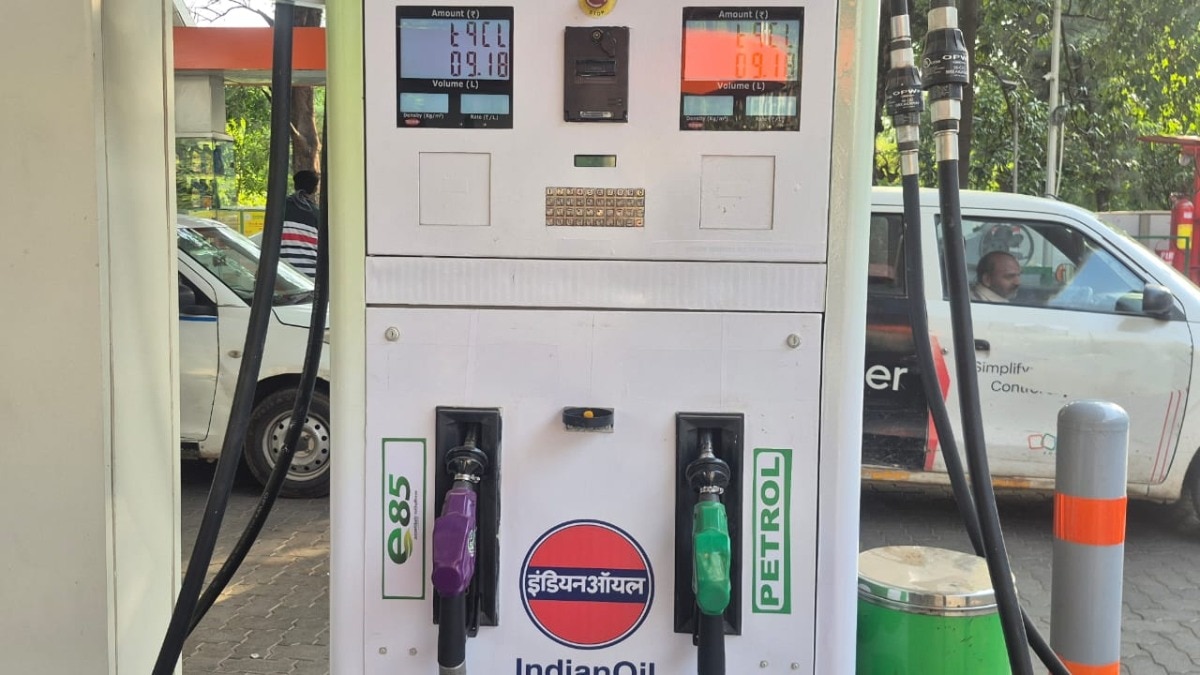
Fuel retailers say the ethanol blend itself may not be the issue. The bigger risk is contaminated fuel caused by water ingress, which can trigger phase separation and lead to engine problems even in E20-compatible vehicles.Petrol pump owners recently raised fresh concerns over E20India's transition to E20 petrol has largely focused on one question: Can your car safely run on a 20% ethanol blend? But a new concern is shifting attention away from vehicle compatibility and towards something that could affect any petrol vehicle, regardless of whether it is E20-compliant: fuel contamination.Petrol pump operators and industry experts say that if E20 petrol becomes contaminated with water during storage, it can undergo a process called phase separation, potentially leading to serious drivability issues. The debate has gained momentum after recent vehicle complaints and legal disputes, including cases involving Maruti Suzuki and Toyota, where contaminated fuel emerged as a key point of contention.The issue isn't always E20, it's contaminated E20Ethanol is hygroscopic, meaning it naturally absorbs moisture from its surroundings. Under normal conditions, this is not a problem because ethanol remains uniformly blended with petrol.However, if excessive water enters underground storage tanks through rainwater ingress, condensation, damaged seals or other sources, ethanol may bind with the water instead of remaining mixed with petrol. Once this happens, phase separation occurs.The ethanol-water mixture settles at the bottom of the storage tank, while petrol floats above it. Since fuel dispensers draw fuel from the bottom of underground tanks, a vehicle could end up receiving a water-rich ethanol mixture instead of properly blended E20 fuel.What can happen to your car? Industry experts and petrol pump operators say contaminated fuel can cause symptoms such as:Difficulty starting the engineEngine misfiring or vibrationLoss of powerStalling after driving for some distancePoor engine performanceImportantly, these symptoms are not necessarily caused by E20 itself, but by fuel that has become contaminated due to water intrusion.This distinction is critical because a properly engineered E20-compatible vehicle is designed to operate safely on E20 petrol. Problems arise when the fuel no longer meets quality specifications.Why the concern is growing nowThe issue has come into focus after videos circulating on social media allegedly showed muddy or water-contaminated fuel being dispensed at some fuel stations.Petrol pump dealers have also raised concerns that the risk may increase during the monsoon, when water ingress into underground tanks becomes more likely.Dealers in coastal regions say the challenge could be even greater because underground tanks may be exposed to sub-soil water. If seals deteriorate or moisture enters the storage system, the likelihood of phase separation increases.Some operators have also expressed concerns about long-term corrosion of mild-steel tanks and pipelines due to ethanol's tendency to absorb water, although oil marketing companies have already upgraded several dispensing components, including seals and washers, as part of the E20 rollout.Petrol pumps are checking more frequentlyAccording to petrol pump operators, oil marketing companies have instructed dealers to regularly monitor underground tanks using dipsticks coated with water-finding paste.During the monsoon, inspection frequency reportedly increases significantly. If water contamination is detected, the concerned oil company removes the accumulated water before fuel is dispensed.Dealers, however, say they often bear financial losses if contaminated fuel has to be discarded and have sought clearer guidelines on disposal procedures.Indian Oil: Zero tolerance for contaminationIndian Oil Corporation says it follows a zero-tolerance policy towards fuel contamination.The company says it conducts regular inspections, surprise audits and scientific quality tests across its retail network. It has also stated that strict action is taken if contamination, adulteration or any violation of fuel quality standards is established.Two recent cases that put contamination in the spotlightThe debate has intensified following two high-profile cases involving contaminated fuel.The first involves a Maruti Suzuki Grand Vitara, where a consumer commission in Raipur directed the company to replace the SUV after accepting the customer's claim that the vehicle was not compatible with E20 petrol. Maruti Suzuki has challenged the ruling, maintaining that the Grand Vitara involved was fully E20-compatible and arguing that fuel contamination, rather than ethanol content, was responsible for the vehicle's problems.The second case involved a Toyota Innova Hycross owner from Bihar, whose videos alleging E20-related issues went viral. After inspecting the vehicle, Toyota stated that the Hycross was fully designed and certified for E20 petrol. According to the company, technicians found contaminated fuel rather than any issue with the ethanol blend itself. The fuel system was cleaned, fresh E20 petrol was added, and the vehicle was returned after functioning normally.So, is your car safe with E20?If your vehicle is E20-compatible, manufacturers say it is engineered and tested to safely use the fuel.The larger concern highlighted by recent incidents is fuel quality, not the ethanol blend itself.Whether a vehicle is E20-compatible or not, contaminated fuel containing excessive water, dirt or other impurities can create serious engine problems. Experts therefore recommend refuelling only from reputed fuel stations and reporting any suspected contamination immediately.As India's ethanol-blending programme expands, maintaining fuel quality across the entire supply chain, from storage tanks to the fuel nozzle may prove just as important as ensuring vehicles are compatible with E20.Subscribe to Auto Today Magazine - EndsPublished On: Jul 20, 2026 13:19 IST
Is your car safe with E20? This is what might cause the biggest problem
Full Article
Original Source
Read the full article at Indiatoday →KhanList aggregates and links to publicly available news content. We do not host full articles from third-party sources. Always verify important information with original sources.