
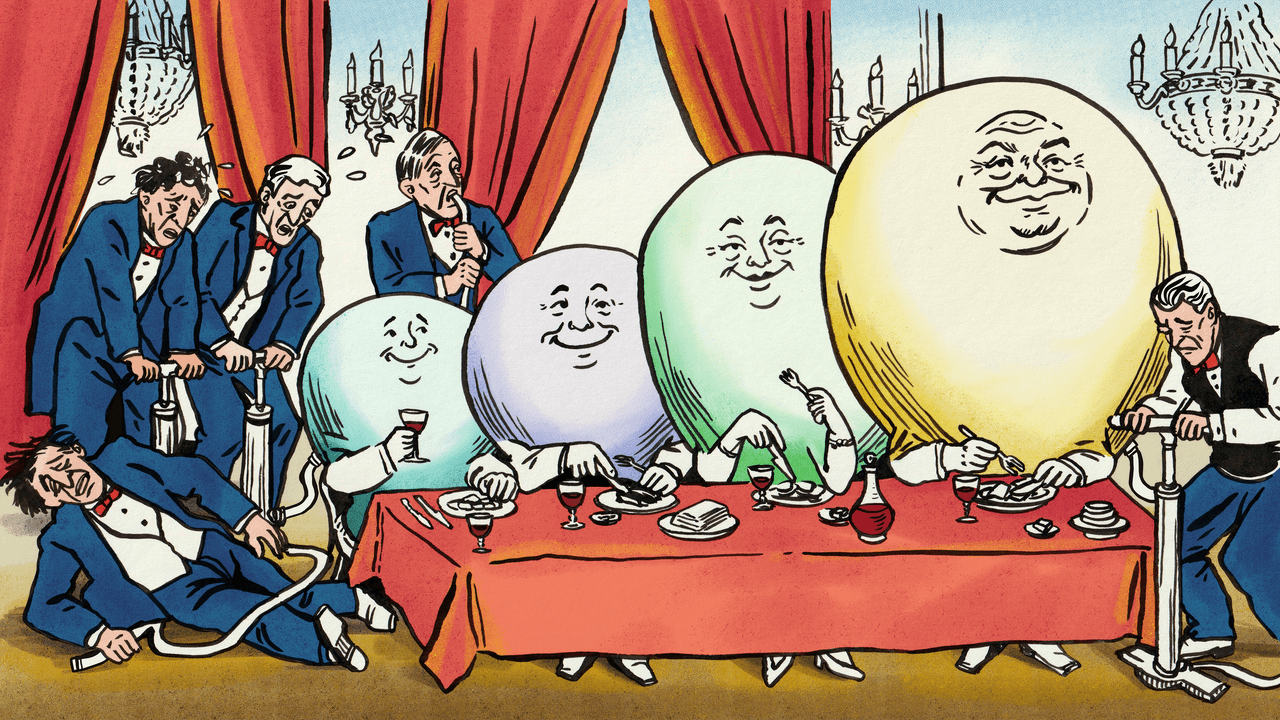
Will Guidara had a mantra that he often shared with the team at Eleven Madison Park: “Their perception is our reality.”I remember hearing this trope uttered often in my restaurant days, where I spent over two decades working as a server in New York City hotspots like Babbo, Carbone, and The Grill. Try-hard managers always seemed to derive joy from reminding staff that no matter how great we thought we were, the quality of our service was always defined by the recipient.Contrary to the old adage, the customer is not always right. But in hospitality spaces, it only matters if they think they are. It’s a lesson that’s taught early in one’s restaurant career and reinforced by prominent voices in hospitality who often glorify the self-effacing behavior that administering restaurant service requires.On the surface, Guidara’s 2022 book Unreasonable Hospitality is a missive on the power of exceeding guests’ expectations. In it, he shares anecdotes from a decades-long career in fine dining that serve as parables for the transformative nature of hospitality. Since its release, the book has found an audience beyond restaurants, selling over a million copies and appearing on the New York Times bestsellers list for 27 weeks.While Guidara’s impact on hospitality culture is undeniable, the book’s success has a hidden cost for the restaurant industry. It puts undue strain on hospitality professionals, who now face a new adversary because of it: unreasonable expectations. Guidara’s ideology may have been inspiring when the book came out four years ago, but it’s become harmful to the restaurant industry at a time when many small businesses, still reeling from the ill effects of the pandemic, are struggling to keep the lights on.In an op-ed for Food & Wine last November, restaurateur John Winterman derided the book’s effect on guest behavior. Since Unreasonable Hospitality was featured on Season 2 of The Bear (Richie is seen reading the book in the “Forks” episode and later reenacts Guidara’s now famous hot dog story, but with deep dish pizza), Winterman noticed more diners coming in with “a heightened and nearly impossible ideal of what a restaurant can or is expected to deliver.” Restaurants like his don’t have the resources to hire a full-time “dreamweaver” like Eleven Madison Park had under Guidara, a position whose sole responsibility it was to design bespoke hospitality magic tailored to individual guests. To Winterman, Guidara’s idealism makes the everyday warmth of a competent restaurant staff seem spartan.With inflation weighing on margins, restaurants shouldn’t be expected to pull hospitality rabbits out the hat for every guest. If anything, the industry needs to disabuse itself of the notion that simply meeting guests’ expectations is a failure and embrace the value of reasonable hospitality.In his book, Guidara frames hospitality as a selfish pleasure. “It feels great to make other people feel good,” he writes. It echoes the sentiments of his progenitor Danny Meyer, who wrote in his own book Setting the Table: “It may seem implicit in the philosophy of enlightened hospitality that the employee is constantly setting aside personal needs and selflessly taking care of others. But the real secret of its success is to hire people to whom caring for others is, in fact, a selfish act.”But hospitality ideologues like Guidara and Meyer never like to talk about what happens when that selflessness becomes self-destructive.The recent New York Times exposé on the systemic abuse by René Redzepi at Noma in Copenhagen should remind us that the guest’s perception of a restaurant often doesn’t match the reality for the people working in it. Valuing perception over reality promulgates such abuses; many Redzepi apologists seem willing to excuse his behavior on the grounds that it was in service of more disciplined cooking or a better guest experience. In Unreasonable Hospitality, we never get to hear from the people tasked with doing Guidara’s dirty work, likely because running out in the middle of a busy service to buy sleds for a bunch of rich tourists isn’t nearly as glamorous as he would like us to think it is.Meanwhile, Guidara is finding new ways to spread his gospel. In April, he published Unreasonable Hospitality: The Field Guide, an Artist’s Way-style companion workbook for fans of the original. The guide is papered with his favorite aphorisms, many of which sound like they belong embroidered on throw pillows like, “Adversity is a terrible thing to waste.” His annual Welcome Conference has become a tent revival for hospitality wonks, where faithful congregants travel from all over the world to swoon over guest speakers’ hospitality flexes.But hospitality is a profession, not a religion.In my book The New Rules of Dining Out, I argue that the restaurant industry needs a new paradigm for what defines hospitality excellence, one that isn’t judged by the magnitude of a server’s obsequiousness or how much joy they derive from subservience.Restaurant workers should never be ashamed of delivering reasonable hospitality – the heartfelt, blue-collar variety that often goes unnoticed because it isn’t fancy enough. The waitress at the family-run restaurant who memorizes your breakfast order; the maitre ‘d at your local Italian place who always seats you at your favorite corner booth; the bartender at your neighborhood dive who nails your martini specs every time. These humble acts of everyday service carry considerable power.Instead of treating Meyer’s and Guidara’s books as scripture, we should embrace more diverse perspectives in how we define great service. For instance, new books like Molly Irani’s recent memoir, Service Ready, present an opportunity to invite more female and BIPOC thought leaders into the conversation and to question the Eurocentric bias that has long stood as the gold standard in hospitality.For guests, reasonable hospitality means being satisfied with getting exactly what you wanted, not feeling cheated because you didn’t get more. Showing up with a wallet and an appetite isn’t good enough anymore. Diners must learn to embrace their role in creating positive hospitality outcomes by engaging more mindfully with staff and understanding that hospitality is a two-way street. They should view every dollar spent in a restaurant as an investment in their local dining landscape, not just as frivolous, self-serving entertainment. Canonizing Unreasonable Hospitality reinforces the idea that guests should think only about what restaurants can do for them, not what they can do for restaurants.The truth is that “their perception is our reality” is a credo that most restaurants simply cannot afford to abide by anymore. Especially not when the reality for so many small businesses is wondering if they can make payroll every month or if one of their immigrant line cooks might be abducted by ICE. Expecting them to conceal their pain to deliver unreasonable hospitality is not only unreasonable, it’s also unfair.
Is ‘Unreasonable Hospitality’ Bad for Restaurants? An Industry Veteran Weighs In
Full Article
Original Source
Read the full article at Bonappetit →KhanList aggregates and links to publicly available news content. We do not host full articles from third-party sources. Always verify important information with original sources.