
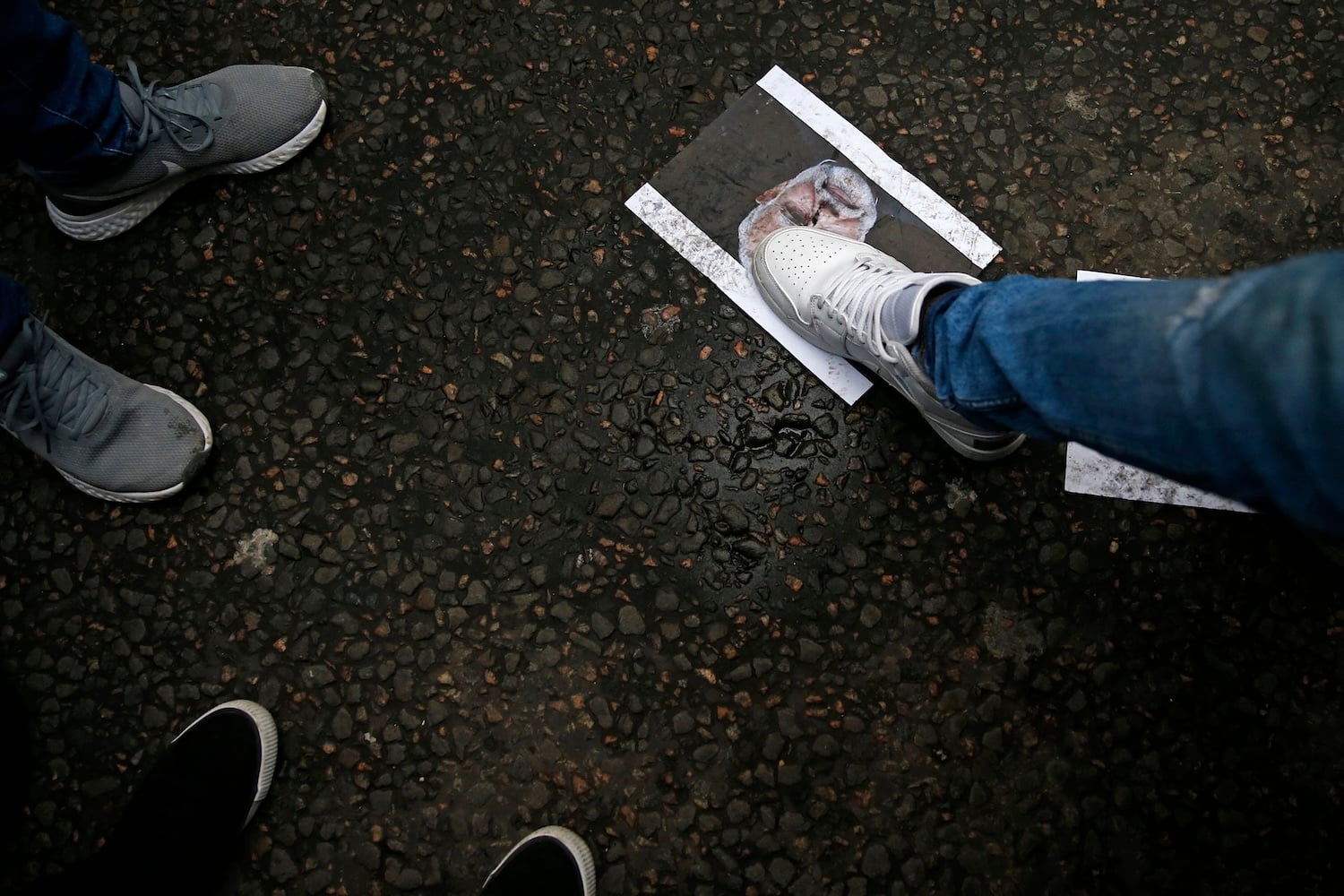
Thousands took to the streets in New Delhi last month to protest irregularities in electoral rolls and alleged election fraud. Reports claimed that more than 130 million voters were deleted from electoral lists, in ways that would benefit Indian Prime Minister Narendra Modi’s Bharatiya Janata Party (BJP). But will this anger in New Delhi spread to the rest of the country, weakening Modi’s 12-year hold on power, or will it simply fizzle out as time passes and other concerns become urgent? A lot depends on India’s opposition parties and whether they can keep up the momentum until elections in 2029 and offer a viable alternative to the people—but equally on how the populace rates Modi’s performance. Has he raised their standard of living? Is the opposition right in alleging that the BJP is systematically hollowing out Indian democracy? Increasingly, those questions are being answered in a way that makes it seem like Modi has peaked. At a Diwali party last month, a young Indian researcher in her mid-20s warned me against attending a protest rally. “The police will pick you up,” she said, her eyes wide open. In a recent protest, the Delhi police had locked down major parts of the capital and cracked down on protesters. The police cut off the internet, shut down local trains in key areas, and detained thousands, including journalists. Even those hanging around weren’t spared. “Our lawyer friends who went to the protest site to help the protesters were also beaten up,” she said. “Because our friends were detained and beaten, now we fear we could be next. You could be next.” This is starkly different from India in 2011, when tens of thousands flocked to Jantar Mantar, a historical protest site near Delhi’s power center, for an anti-corruption demonstration. That protest paved the way for the Congress-led government’s defeat and Modi’s entry into national politics in 2014. Modi’s government, however, appears to have drawn a very different lesson about how to deal with protests. BJP leaders suggested removing protesters because they inconvenienced passersby and businesses. That line was parroted relentlessly in TV studios. In my travels in and around Delhi, I found that message landed with certain people—mostly those who also believed the BJP’s insinuation, which came without any evidence, that protests in India were a foreign ploy to destabilize the country. Protests in India unfolded at the same time as in France and elsewhere in Europe, and this was portrayed as a sign of collaboration. However, there appears to be a pattern in how the current Indian government discredits and responds to protests. A few months ago, when Indian students marched against an exam paper leak and jobless growth, the same police thrashed the students, even firing pellet guns. Some TV anchors claimed the police were the victims. These are unusual scenes in India, a democratic country where the right to protest is guaranteed under the constitution. India won its independence through peaceful protests against the British. On Nov. 1, despite the police’s reported highhandedness, thousands of people from different parts of the country gathered for the mega protest at an alternative and government-approved protest site. By noon, as I reached Connaught Place in central Delhi, Congress workers were marching on the streets and calling for the removal of Chief Election Commissioner Gyanesh Kumar. They accused Kumar of working to benefit the BJP. But Kumar’s role and the discrepancies in electoral rolls weren’t the only reasons that pushed people to protest. Three Gen Z protesters stood in a corner, two of them wearing masks to avoid being identified by the police. “They picked up people after the protests last time, from their homes,” said one of the masked boys. All three had joined the protests for very different reasons but the same cause—saving Indian democracy. The masked boy recounted the story of how his friend, a child, was terrified for his mother’s security when Hindu-Muslim riots unfolded in Delhi early 2020. He blamed the BJP for instigating the riots. The young man standing to his left hailed from West Bengal and was furious that his grandparents, both octogenarians, were knocked off the voters list and denied the right to cast their ballot. “[The government] wanted to exclude a certain community, Bengali Muslims that they falsely say are Bangladeshis, but everyone was affected,” he said. “They are dividing us on the basis of religion; this is not okay.” Mihika Omseema refused to cover up her face. She said her parents supported her and that gave her the strength to reveal her identity and take part in protests. She said she joined to protest against growing Hindu-Muslim polarization, falling economic standards, exam paper leaks, and a whole host of other issues. In Delhi, some neighborhoods showed a mood where parents might join their children—if not at the protest grounds, then at the ballot. A senior gentleman and an upper-caste Hindu said, “Modi will not win Delhi, no chance,” but he confessed that Modi still had many supporters in the country. An 80-kilometer ride to Meerut has been shortened from more than 3 hours to less than 2 hours via a new flyover completed under Modi’s government, which has also built several other key highways linking cities in western Uttar Pradesh. Meerut, for the first time, has a fast train that reaches Delhi in less than an hour and thus expands employment potential. (Uttar Pradesh has the maximum number of electoral constituencies and plays a decisive role in forming the government in Delhi. Although central elections are still more than two years away, the state itself will go to the polls next year.) In Meerut, I heard a different set of complaints against the BJP. Younger people acknowledged infrastructure development but said there was still no work. Only Muslims were worried about growing polarization; Hindus were more upset with slow economic growth and a demolition drive to bulldoze illegal shops and other structures. “Of course, this will affect the BJP in the elections; people are, we are, very angry with the government,” said Aditya Kumar, who sat on a stool in his emptied and recently destroyed shop in a market where rubble had still not been cleared. He sold nuts, bolts, and other construction material. “The structures were illegal, but there is no other employment, so what were we supposed to do?” he said, highlighting the lack of industry and compulsion to resort to small retail businesses. “This is dictatorship,” said Kumar, a staunch Modi supporter until the demolition drive. “And no one raises our voice because the media doesn’t broadcast anything critical of Modi.” About a dozen other upper-caste Hindus in the city who professed to be pro-Modi said the BJP was unlikely to win Meerut even if it retains the state. That could change if there were credible opposition, but they did not see a match. Congress scion Rahul Gandhi marched alongside protesters and promised to seek justice for those wrongfully detained or beaten up. In Delhi, Gen Z protesters spoke in his favor. But in a state deeply divided along caste lines, despite being upper caste, he is still not seen as an alternative. Akash, a 26-year-old from Bulandshahr, said that the BJP will return to power because it had ensured quick payment for sugarcane to farmers like his father. “There are also more roads and police stations,” he said, emphasizing improvement in law and order under the BJP government led by Modi acolyte Yogi Adityanath. He said that Indians like him would rate Modi on economic development over the protests in Delhi or the state of Indian democracy. But he also didn’t want to give up his own right to protest or question the government. “If the choice is between a better economy and democracy, I choose the economy, but if it is between the economy and my ability to question the government, then I choose democracy,” he said. Like Meerut in Uttar Pradesh, in the Shekhawati region of Rajasthan, local factors were adding to a sense that all was not well under the Modi government. But here, too, the protests were not the reason that people said the government could change. “Farmers are not being paid on time,” Bhawani Singh, a tourist taxi driver, said. “Our children will never go and protest like those in Delhi. But we are upset about the Agnipath scheme and the shortening of military service,” he said, referring to government plans to cut down the length of service below the rank of officer to four years and retain only a quarter for a full term. “Most kids here want to join the army or the police,” he said. (The government appears to have noticed the grievance, announcing earlier this month that two more years of service could be offered and a second chance at joining longer-term,, for those who meet the selection criteria.) Local factors remain paramount for Indians deciding how Modi has fared in his third term. The protests have had some effect on their overall assessment—distancing those affected by other government policies, while many remain ambivalent or supportive. The weakening of institutions isn’t yet a factor in how they vote, but it has been registered, as former supporters say the media is largely pliable, and now the Election Commission is suspected of being subservient. The fence-sitters are the upper-caste Hindus who form the backbone of the BJP’s voter base. And while many are still firmly behind the party and backing Hindu dominance, at least some appeared uncomfortable with a slide away from democracy. “He wants to be Putin,” an upper-caste Hindu said . “Now with the delimitation bill, the BJP is trying to ensure it always has enough seats to keep them in power,” he added, referring to legislation that will come up for voting in parliament next month and intends to expand the number of seats based on population. The same exercise in Jammu and Kashmir, Chief Minister Omar Abdullah said, helped the BJP. The recent protests are occurring in the middle of Modi’s current stint in office. He still has time to assuage concerns. But the opposition will also have a chance to highlight its case about the weakening of democratic institutions and the threat to Indian democracy. And just as a political wave pushed Modi into office 12 years ago, another one could be building that will eventually sweep him out.
Is This the Beginning of the End for Modi?
Full Article
Original Source
Read the full article at Foreignpolicy →KhanList aggregates and links to publicly available news content. We do not host full articles from third-party sources. Always verify important information with original sources.