
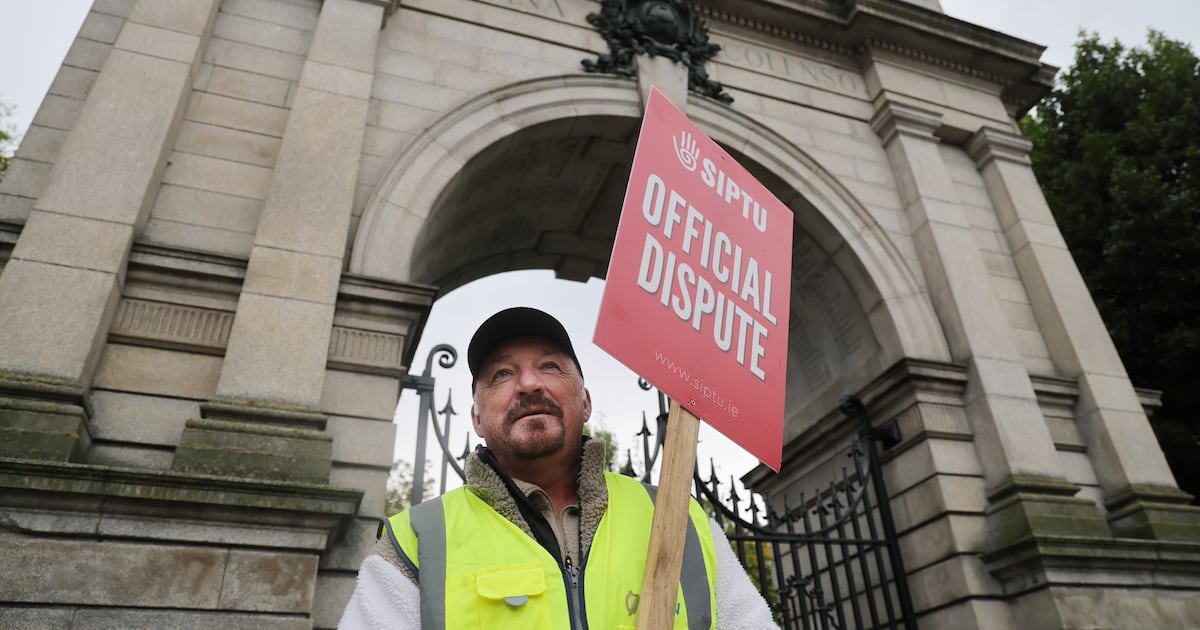
Government’s 10.5% offer blows a hole in last month’s budget arithmetic but trade unions still wary Government is racing against time in public sector pay talks to forestall any further strike action. Photograph: Bryan O’Brien Public sector pay talks are on a knife edge. The Government says its latest offer – a 10.5 per cent (11 per cent compounded) pay hike – represents a “substantial” improvement on what had been on the table up to now. Unions are concerned about the duration of the deal and where the backdated elements will kick in. Specifically, they are concerned that spreading 10.5 per cent over 2.5-3 years (out to 2029) will dilute its annual value and won’t cover cost-of-living increases.The unions are planning to stage a 24-hour strike on Thursday unless the impasse is resolved. The strike will coincide with a major summit of European leaders taking place in the Convention Centre in Dublin, as part of Ireland’s EU presidency, potentially paralysing the capital. How much will the Government’s offer cost?The Government has been repeatedly criticised by the Irish Fiscal Advisory Council and others for failing to adequately budget for things. The €1.2 billion allocation in Budget 2027 for the first year of the public sector pay deal is a case in point. It’s woefully short. READ MOREThe Government’s latest offer is estimated to cost up to €2 billion next year. One insider said the Coalition had already “blown a hole” through its allocation. The total cost of the Government’s proposed deal is put at about €4 billion, though, as of now, there are a lot of unknowns on how much will accrue to those on the lower levels of the Civil Service and where backdated element will start from – June or November. A recent report by the Parliamentary Budget Office (PBO) noted that the public sector wage bill would account for €31.2 billion (or 27 per cent) of gross spending this year. On the basis of a public sector pay deal similar to the last one, which was slightly less than the 10.5 per cent currently on the table, the PBO estimated the cost to the exchequer would be between €3.6 billion and €4.7 billion by 2029. This includes projected increases in the public sector headcount (adding new teachers, nurses and gardaí to the payroll).How will it affect the Government’s fiscal position?The rule of thumb is that each 1 per cent hike in the public sector pay and pensions bill costs the exchequer roughly €370 million.On that basis, in 2027 the Government’s proposed deal would cost about €1.3 billion on a recurring basis but about €2 billion in cash terms. The €700 million gap reflects the back pay carried over from the previous deal.So the Government’s fiscal position would be €800 million worse than forecast in 2027. The additional pay bumps for 2028 and 2029 are also not factored in. That additional money will have to come out of tax resources and will reduce the Government’s budget surpluses over the period.On the other side of the ledger, the State’s financial position is expected to be boosted by corporate tax receipts, which are predicted to rise to €45 billion by 2030. Either way, the State will be wrapping more day-to-day spending into potentially risky tax receipts. How does Government offer compare with what private sector workers are getting?The Government’s recent economic and fiscal outlook, published alongside last month’s budget, forecast that wages across the economy – which is mainly private sector – would rise by 4.1 per cent in 2027 and by 3.7 per cent in 2028 and 2029. The Government’s 10.5 per cent deal gives public sector workers a 3-3.5 per cent bump in pay across those years, according to one estimate. On that basis, the hikes are roughly comparable.Private sector wages have outpaced those in the public sector since 2008. According to the official data, private sector wages are up by between 52-56 per cent over that period versus 25 per cent in the public sector.Private sector wage growth data is skewed by multinationals that pay their workers significantly more than the average. That said, tech companies in Ireland have been pruning their wage bill. What is the likelihood of unions accepting the deal?Workers are in the midst of a nasty cost-of-living shock, compounded by an energy price surge. Meanhile, the Government is attempting to rein in spending that has been something of a runaway train since the pandemic. Hence the fraught atmosphere around these negotiations.Minister for Finance Simon Harris said the Coalition’s ability to offer income tax cuts in the recent budget and increases in public sector wages was in stark contrast to many other European governments, who were short on money and facing “extraordinarily difficult” economic decisions.Trade unions insist, however, that the surge in inflation has severely degraded the purchasing power of their members, particularly those earning €50,000 or less, and must be addressed. They also insist there are acute labour shortages in education and healthcare and argue that a lacklustre deal will worsen the exodus of young nurses and teachers.With more industrial action looming, a breakthrough needs to come quickly.IN THIS SECTION
Is the public sector pay offer affordable and fair compared with wages in private firms?
Full Article
Original Source
Read the full article at Irishtimes →KhanList aggregates and links to publicly available news content. We do not host full articles from third-party sources. Always verify important information with original sources.