
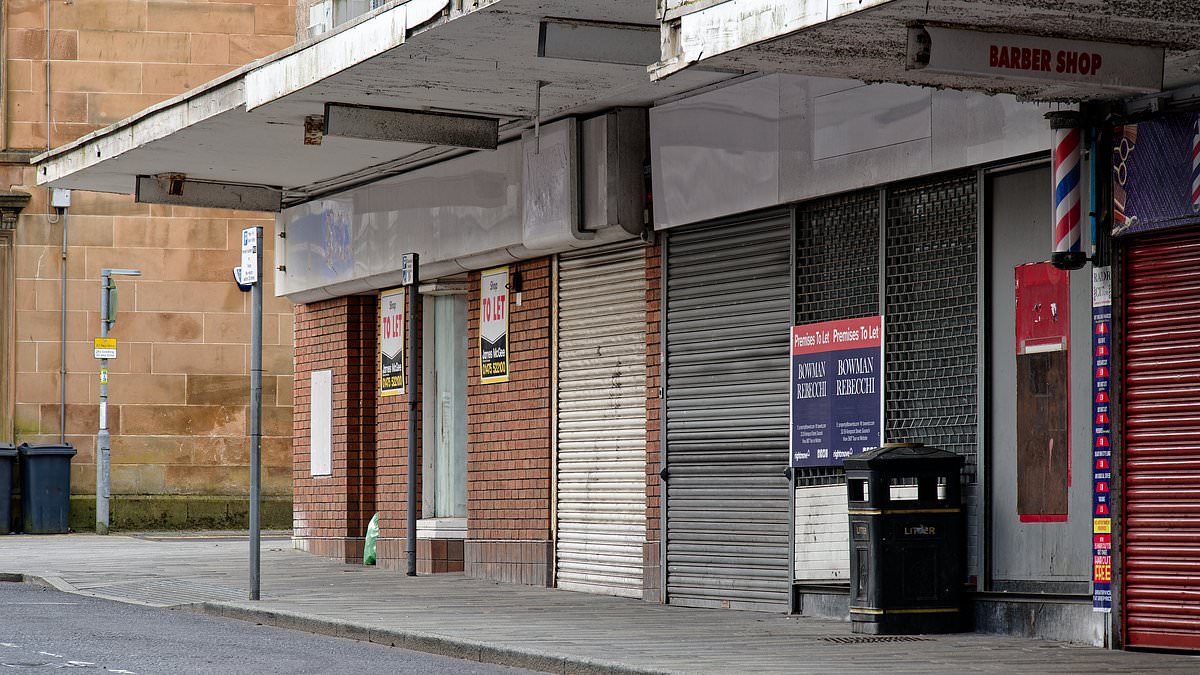
The past few years have seen high streets across Britain deteriorate beyond measure, with cafes and independent shops increasingly replaced with vaping and gambling outlets – or worse: boarded up, abandoned, storefronts. But it appears that here in the UK, not all high streets are created – or decline – equal. A report from think-tank Centre for Cities has revealed a striking divide in the state of the UK's high streets. Indeed, the study shows how city-centre shop vacancy rates are more than twice as high in Newport and Bradford as they are in London and Cambridge. The report, Checking out: The varying performance of high streets across the country, draws on millions of anonymised card transactions and new estimates of local retail vacancy rates in the UK's 63 largest cities and towns to understand why some high streets thrive and others don't. According to the research, Newport, in South East Wales, had the highest vacancy rate, followed by Bradford, West Yorkshire and Blackpool, Lancashire. 'As a group, large cities have the lowest vacancy rates. City centres close to London also tend to have lower rates despite their proximity to the capital,' says the report, which was first published in July 2025. As some British high streets continue to suffer, which are the ones with the most empty shops? Newport had the highest vacancy rate, according to a study by Centre for Cities'This is in contrast to city centres close to other large cities, which as a group have higher rates. Finally, there is a mix of performance in city centres without any large rival neighbours. Edinburgh, York and Cambridge have some of the lowest rates of any city centre. 'In contrast Blackpool, Swansea and Stoke have some of the highest – they perform poorly despite not having any neighbouring competing centres of leisure.'There are three key reasons for the decline, the first being low local spending power.A second factor is too much retail space: Newport and Wigan – where more than one in seven shops are vacant – all have over twice the amount of retail space per person as Brighton and Liverpool – where the vacancy rate is below 10 per cent. Retail spending leakage to bigger cities is the third reason. Newport and Bradford lose nearly 5 per cent of high street spending respectively to nearby Cardiff and Leeds, while Birkenhead loses 7.5 per cent to Liverpool. Bradford is the second-worst high street for vacancy rates, at 18 per centPlaces with strong high streets have risen to the challenge of out-of-town shopping and online retail by pivoting from retail towards food, swapping redundant shops for cafés and restaurants.In more affluent York and Edinburgh, £1 in every £4 is spent on food. Meanwhile in Bradford, Stoke and Wigan, it is around £1 in every £10. This change reflects the varying performance of the wider local economy: places with large shares of high-paid jobs generate more money to spend on high streets. In poorer areas, the lack of spending power means this shift hasn't happened.Centre for Cities says city and town centres with high vacancy rates should be remodelled to tackle an oversupply of retail space.To turn around struggling high streets, the report recommends that the Government treats city centres as critical parts of the national economy, and remakes city centres with more office space, improved public realm and fewer shops. In third place is Blackpool, with a 17.6 per cent vacancy rateIt adds that the Government should reform business rates.Cities should also increase the size of the catchment of their city centres through building more homes in inner-city locations, as opposed to more developments on the edge of town, where there is demand for this type of inner-city living.Cities should be realistic about visitor strategies, the report advises. They should prioritise making city centres attractive to residents first; visitor appeal will follow. Cities with the highest retail vacancy rates, 2025 City Estimated city centre high street vacancy rate, %Shops per 1,000 people in the catchment 1. Newport19.0 2.9 2. Bradford 18.0 1.7 3. Blackpool 17.6 2.4 4. Basildon17.4 2.3 5. Sunderland 16.8 2.4 6. Birkenhead 16.3 2.2 7. Stoke 16.3 2.2 8. Wigan 16.3 2.5 9. Swansea 15.4 2.1 10. Southend 15.4 2.2 Sir Andrew Carter, chief executive of Centre for Cities, said: 'The high street has long been the bellwether of the local economy. Shuttered-up shops influence people's opinions about how successful their areas are.'Our research shows the high street isn't failing everywhere. Where it is, the cause is not just cosmetic, it is economic. Policies relating to shopfronts, rents or parking miss the bigger picture.'City centres that struggle are over-supplied with shops and under-supplied with people. If local residents don't have money to spend or a reason to be in the centre, high streets suffer – no matter what interventions are made.'It is possible to revive the fortunes of struggling high streets. But it will require local and national governments to start by fixing the economy, and not just focusing on the high street itself.'
Is the high street officially dead? Newport and Bradford top list for highest shop vacancies across the UK - with more than one in seven shops abandoned amid cost-of-living squeeze
Full Article
Original Source
Read the full article at Dailymail →KhanList aggregates and links to publicly available news content. We do not host full articles from third-party sources. Always verify important information with original sources.