
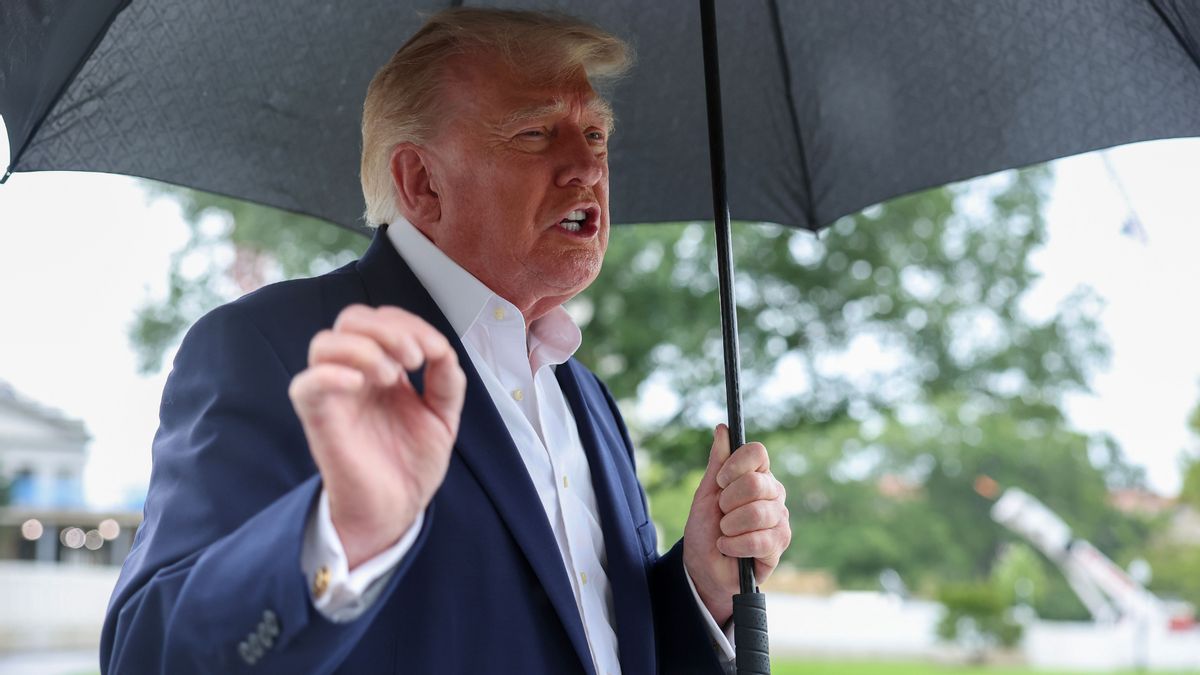
Claim: The official poverty rate in the U.S. hit an all-time historical low in 2025. Rating: ContextAccording to the U.S. Census Bureau, the 2025 official poverty rate was the lowest since records began in 1959. The bureau also publishes a supplemental poverty measure rate. The 2025 supplemental poverty rate was not the lowest since records began in 2009. A claim (archived) circulated online in September 2026 that the poverty rate in the U.S. hit an all-time low in 2025. The claim came from a video that social media users (archived, archived) said showed Trump saying the U.S. had "the best poverty numbers ever in the history of our country." For example, one X user shared the video with a transcription that read, "Trump: 'We have the best, uhh, I guess you could say poverty. They talk poverty. We have the best poverty numbers ever in the history of our country.'" According to a video posted on the White House YouTube channel, Trump did make the statement (time code 00:37) in question while talking to reporters on Sept. 27, 2026. Trump's full comment about poverty in the U.S. read: We have the best, I guess you could say poverty, they talk poverty. We have the best poverty numbers ever in the history of our country. In other words, there's less poverty now than at any time in the history of our country. The statement is true according to the official poverty measure rate, one of two poverty rates published annually by the U.S. Census Bureau. A White House Press Office spokesperson confirmed to Snopes via email on Sept. 28 that Trump was referring to a Sept. 16, 2026, report by the Census Bureau that found the official poverty measure rate in 2025 was 10.2%, which is the lowest rate since records began in 1959. The official poverty rate of 10.2% in 2025 was lower than the previous all-time low of 10.5% in 2019. The Census Bureau's annual poverty reports cover calendar years, meaning the 2025 report covered the first 11 months (and 10 days) of Trump's second presidency. The bureau calculates official poverty measures by comparing a family's income to the poverty threshold for its size. For example, the bureau considers a family of four with two children under the age of 18 to be below the poverty threshold if that family's pre-tax income is below $32,649 per year (Page 11). The bureau sets the thresholds using the Consumer Price Index for All Urban Consumers, which tracks price changes for many household goods and utilities. Family income includes cash benefits like Social Security or child support but excludes non-cash benefits like food stamps (Page 17). An official poverty measure rate of 10.2% means that in 2025, for every 100 people in the U.S., 10.2 people fell below the poverty threshold the bureau determined for their family size. (In this case, it might be easier to think of the poverty rate as 51 people in every 500 falling below the poverty threshold, as people of course cannot be divided into parts of a whole.) Census Bureau tracks 2 different rates of poverty Besides the official poverty measure rate, the bureau also tracks what it calls the supplemental poverty measure rate. According to that second measurement, poverty rates had not seen meaningful changes between 2024 and 2025 and were not at an all-time low in 2025. The supplemental poverty measure considers more factors than the official poverty measure when determining whether an individual or family falls below the poverty threshold. The bureau wrote in its 2025 report on poverty that (Page 3): The SPM includes noncash benefits, accounts for income and payroll taxes, subtracts other necessary expenses, uses a more inclusive resource sharing unit, and accounts for geographic differences in housing costs. The 2025 poverty report found that the supplemental poverty measure rate in 2025 was 13.1%, "not statistically different" from 2024. A graph within the report (Figure 4, Page 6) showed that the supplemental poverty measure had generally trended downwards from 15.1% since records began in 2009 until it hit an all-time low of 7.8% in 2021. The supplemental poverty measure rate then rose to 12% by 2022 and 13.1% by 2024. Social media users frequently attribute all manner of quotes to the president, not all of them correctly. For further reading, Snopes previously debunked a collection of fake Trump quotes.
Is official US poverty rate at all-time historical low, as Trump claimed?
Full Article
Original Source
Read the full article at Snopes →KhanList aggregates and links to publicly available news content. We do not host full articles from third-party sources. Always verify important information with original sources.