
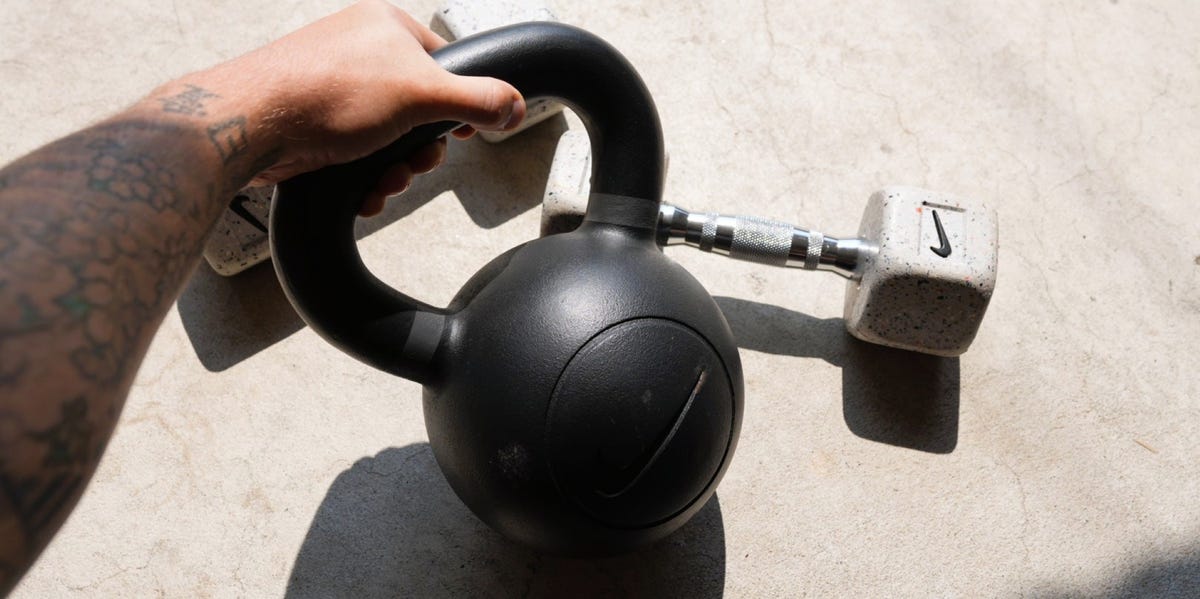
ProsSimple, versatile, and beginner-friendlyAvailable from 9 lb to 88 lbWide handleCast-iron constructionConsOne kettlebell can be limiting as strength improvesHandle size changes depending on kettlebell weightAgain, Nike didn’t reinvent the wheel here—and that’s probably a good thing. A kettlebell does not need a flashy redesign. It needs a stable base, a comfortable handle, a durable finish, and enough weight options to serve everyone from beginners learning deadlifts and goblet squats to experienced lifters who swing, clean, and press heavier bells.Nike’s version checks those basic boxes. The kettlebell is made of cast iron and comes in weights ranging from 4 kilograms (about 9 pounds) to 40 kilograms (about 88 pounds). Nike lists a handle diameter range of 30mm to 40mm, depending on size, and a handle width range of 160mm to 238mm, which gives heavier bells more room for two-handed swings and goblet work.The downside is cost and commitment. Nike sells these individually, so building a full run quickly becomes expensive.But as a single-piece purchase, the kettlebell might be one of the easiest Nike Strength products to justify. MH Fitness and Reviews Editor Charles Thorp, NASM has a 44-lb version that has suited him well for more than a year of workouts in his garage gym. Buy the right weight, and you get a compact tool for swings, carries, squats, presses, rows, and conditioning work that takes up almost no space.Read More: The Best Kettlebells, Tested by UsWeight Range9 lb to 88 lbsHandle Diameter30 mm to 40 mm, depending on sizeHandle Width160 mm to 238 mm, depending on sizeMaterialCast ironProsMade with at least 20 percent Nike Grind rubber by volumeAnti-roll hex-style constructionMedium knurled handleWide weight range from light to heavy pairsConsFixed dumbbells require more space as your collection growsSold in quantities of two, so the price climbs quickly when building a setFixed dumbbells aren’t inherently better than adjustable pairs, but plenty of lifters prefer them for their stability, durability, and commercial-gym feel. They’re also a little easier to use for supersets, since you don’t have to return them to a cradle and adjust the weight between movements.If these dumbbells are anything, they’re eye-catching. Made with at least 20 percent Nike Grind rubber by volume, they get their speckled, funfetti-like look from ground-up scraps from footwear manufacturing, giving each bell a more distinctive look than the usual black rubber pair. The sculpted anti-roll shape helps keep them in place between sets and makes them usable for movements like dumbbell pushups and renegade rows, while the medium-knurled handles add grip without feeling overly aggressive.Thorp has a few pairs of these at home, and the lighter weights are used often by the whole household; because they are aesthetically pleasing, they don’t look out of place in a living room setting where light workouts happen.Read More: The Best Dumbbells, Tested bfy UsWeight Range2.5 to 75 lbsMaterialRubber with at least 20% Nike Grind rubber by volumeHandleMedium knurled handleDesignAnti-roll geometryBest forFixed-weight dumbbell trainingAdvertisement - Continue Reading BelowPros190,000 PSI tensile strength1,500-pound listed weight capacityCerakote shaft coatingDual knurl marksConsNot as specialized as a dedicated power bar or Olympic weightlifting barMost serious strength equipment brands are defined by their barbells. Eleiko, Rogue, REP Fitness—all make strong products across the board, but the barbells are often the centerpieces. That’s because barbells anchor the classic strength lifts: bench presses, deadlifts, squats, cleans, jerks, and snatches. You don’t technically need a barbell to train those movement patterns, but barbell lifting remains the standard in strength training. Everything else is, in some way, an accessory.Nike’s Shield Barbell is best understood as a good-looking, general-purpose bar for home gym owners who want one barbell that can handle a little bit of everything. Thorp uses it for a variety of basic, lightweight lifts at home. Its 28-millimeter shaft, 190,000 PSI tensile strength, dual knurl marks, and needle-bearing sleeves make it a capable multipurpose bar. But the knurling is passive, and the spin may not feel as lively as the bearing spec suggests.This is a nerdy detail, but most multipurpose bars are 28.5 millimeters. That’s because 28.5 millimeters splits the difference between a standard Olympic weightlifting barbell, which is typically 28 millimeters, and a powerlifting bar, which is typically 29 millimeters. Will most general lifters notice the difference? Probably not. But if you’re used to a power bar, this one may feel a little different in your hands. The diameter is part of the reason. The knurling is also less aggressive than Nike suggests. That doesn’t make it ineffective, but it does mean the bar walks a safe middle ground that may leave serious weightlifters and powerlifters wanting more.The Shield Barbell is approachable, versatile, and polished, in line with Nike’s broader Strength line. The tradeoff is that you’re paying close to specialty-bar prices for what is ultimately the safer, jack-of-all-trades pick. If your training mostly consists of benching, squatting, deadlifting, accessory work, and the occasional clean or snatch variation, this bar should do the job well. But if you’re chasing max-effort pulls, competition-style squats, or serious Olympic weightlifting, you’ll probably get more value from a purpose-built barbell.Bar weight44 lbsBar length86.6''Diameter28.5mmShaft coatingCerakote coatingWeight capacity1,500 lbAndrew Gutman, NASM-CPT is a journalist with a decade of experience covering fitness and nutrition. His work has been published in Men's Health, Men's Journal, Muscle & Fitness, and Gear Patrol. Outside of writing, Andrew trains in Brazilian Jiu-Jitsu, helps coach his gym's kickboxing team, and enjoys reading and cooking. Charles Thorp is the Fitness and Reviews Editor at Men’s Health, where he shares the best product recommendations in gym equipment, recovery tools, supplements, and more. Following an early life in athletics, Charles became a NASM-certified trainer and began writing programs alongside the most respected coaches in the world. Since entering the world of fitness content, Charles has had the opportunity to learn from and train alongside high performance individuals from the NFL, UFC, NBA, Formula 1, CrossFit, US Olympics, and Navy SEALs. When he’s not writing about training programs or gear, he can be seen at the gym or in the wild, putting them to the test.
Is Nike Strength Equipment Actually Worth Buying?
Full Article
Original Source
Read the full article at Menshealth →KhanList aggregates and links to publicly available news content. We do not host full articles from third-party sources. Always verify important information with original sources.