
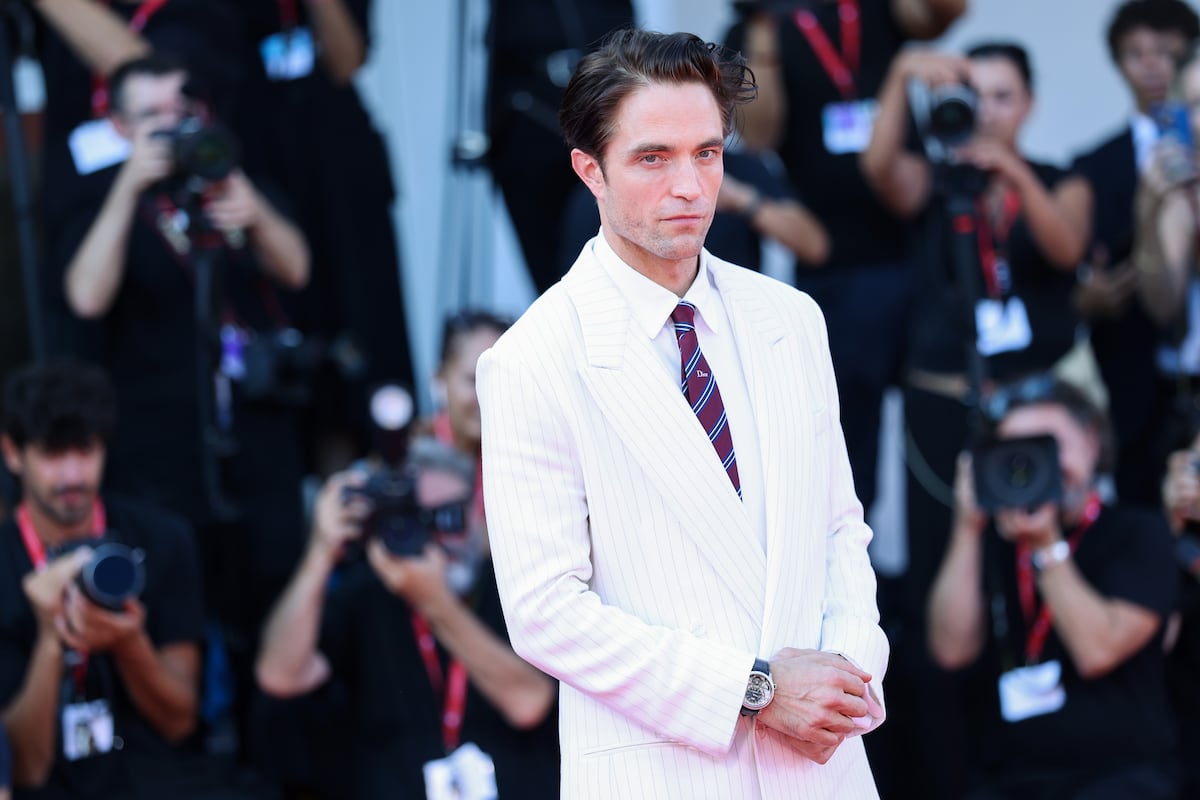
Robert Pattinson, 40, is the new James Bond. The announcement of the next actor to take on the role of the secret agent is always an event, the cinematic equivalent of white smoke after a conclave in the Vatican. This time the impact has been even greater because no actor had ever been as famous as Pattinson when he received 007’s license to kill. For many younger viewers, the Londoner — star of Twilight (2008) and The Batman (2022), with a strong independent-film career in between — may be a bigger draw than the franchise’s name. That is telling for a phase expected to bring more changes: for the first time since 1962, the new films will not be led by the Broccoli family, who ran the series up to No Time to Die (2021). Amazon MGM Studios now has creative control, and it remains to be seen how that will play out. For now, we only know three key names: Pattinson, director Denis Villeneuve (responsible for the Dune films) and screenwriter Steven Knight (creator of Peaky Blinders).Amazon has long been monetizing its new property. Besides exploiting the saga on Prime Video, in 2023 it put Succession star Brian Cox at the helm of the game show 007’s Road to a Million, where contestants had to overcome a series of obstacles and answer questions about the character to win a million pounds. Speculation about a cinematic universe or a series of spin-offs has also been constant, despite the producers’ family policy of not over-saturating the market for the character.Beyond entering a different corporate ecosystem, do the saga and its central archetype need rejuvenation work? It depends on who you ask — and probably on their age. Over the more than 60 years of the cinematic life of Ian Fleming’s agent, those in charge have made commendable efforts to keep him from appearing anachronistic, to survive or adapt to fashions and to remain relevant, sometimes more successfully than others. All of this has been done without alienating the most nostalgia-minded core fans, even though Bond’s portrayals have varied since the first actor change. “Somehow secret agent Bond, that preposterous dinner-jacketed imperial throwback, has persisted into 21st century popular culture as the exemplar of nonchalant alpha-maleness, evolving in such a way as to absorb and assimilate all the irony and objection that has been thrown his way,” reflected critic Peter Bradshaw in The Guardian on the anniversary of Dr. No (1962).Daniel Craig’s era, which began with the acclaimed Casino Royale (2006), introduced significant changes, although not as much as critics of so-called woke culture claimed. Some were outraged that in a scene in No Time to Die (2021) Craig’s Bond rode pillion on a motorcycle driven by a Black woman (Lashana Lynch). Before the film’s release, a rumor spread that Lynch would become the saga’s new lead (in reality, the agent she played temporarily inherited the number 007 during Bond’s retirement). Writer and academic Arturo Pérez-Reverte dismissed this Bond as “smitten and soft” and said Fleming “would leap out of his grave” if he saw it. Short of the late author rising to give his verdict, Ian Fleming Publications Ltd., which manages the rights to the Bond novels, published a revised edition in 2023 that replaced racist expressions with terms that are “more acceptable today.”During Craig’s years, Bond stopped being immortal — literally — showed more feelings and embraced his tragic dimension, previously only hinted at in the Timothy Dalton diptych or in oddities like On Her Majesty’s Secret Service (1969), the only film starring George Lazenby. That particular movie, the first in the series without Sean Connery, upended the audience’s notion of the character: he married and then watched his wife die in an anticlimactic way.The way women are treated, as is clear to most contemporary audiences, is one of the franchise’s major problems. Daniel Craig’s era, which coincided with the years of the #MeToo movement, addressed the challenge with gestures such as hiring Phoebe Waller-Bridge, creator of Fleabag (2016), as a co-writer. For audiences born long after the character’s golden age and lacking nostalgic attachment, changes still come in dribs and drabs. “I still see an infallible man who always gets the woman he wants, who is typically nearly 20 years younger than him, and whose job legitimizes him carrying out his life through violence,” documentary television producer Irene Gil, 32, tells EL PAÍS. “Most supposed progressive concessions arrive at the same slow pace we have seen since the saga’s beginnings: greater prominence for women, more racial sensitivity… The main shift is that Craig’s Bond responds to a much more individualistic trend — the breadwinner-man who protects his family.”Shaken, not stirredA few years ago Gil decided to marathon every 007 film and read some Fleming novels, and she admits she was struck by the light, humorous tone of the earliest entries. “No matter how many parodies and versions there are of its tropes, the outlandish plots and villains of the first films are almost unsurpassable,” she says. Illustrator José Andrés Valenzuela, 34, another 1990s-born observer who took on the challenge of watching the saga chronologically to share his thoughts on social media, expresses a similar view. “I thought what was lampooned in Austin Powers was an exaggeration, but no — Bond films are that ludicrous and I think that’s why they hooked me,” he tells EL PAÍS. “It’s hilarious how they almost structure themselves as sex, action, sex, action and a final sex scene on a speedboat. You’re always wondering what situation they’ll come up with to open the film with a hot woman or end it like that.”“What struck me, especially in the Connery era, was Bond’s relationship with women,” Irene Gil says. “I find it incredible that it’s gotten to the point where the guy is so horny that more than one villain can devise a plan that revolves almost exclusively around that,” referring to the frequency with which antagonists use sexual bait — with high success rates — against 007 throughout the series. “Most situations come across as a bit parodic, though there are specific cases that border on abuse, such as that of Solitaire [from Live and Let Die, 1973], whom Roger Moore tricks into having sex with him, to give one example,” the documentary filmmaker explains. “It’s such extreme sexism that it’s downright ridiculous,” Valenzuela adds. “It’s true that they’re rooted in a specific era, but it’s funny because it’s so unnecessary and uncomfortable to watch.” Beyond that, he admits he enjoyed the journey. “I imagined it as a very serious franchise, but they’re very entertaining movies, and all this stuff with the gadgets and the silly humor actually reminds me of classic adventures like Indiana Jones. I think that lack of pretension is what keeps them working.”Bond, James BondWhen, five years after fleeing an abusive husband, a woman was warned that her ex had been seen near her child’s school, she made a radical decision: they would move to another city and the child would from then on be named James Bond. Who would be able to track down, among hundreds of millions of Google results, someone called James Bond in the UK? This is one of the real stories collected in the documentary The Other Bond (2022), which explored the experiences of people worldwide who share the franchise protagonist’s name —whether their parents thought it was funny, due to family tradition, because they didn’t expect the saga to become so popular, or simply because they were born before the films when the name only meant something to readers of spy novels.“Starting to go out with women just because you’re called James Bond when you can’t even pull off a witty one-liner is wonderful,” computer programmer James Bond — one of the many subjects in the documentary — said delightedly. Several agreed that the name helped them flirt or at least socialize. For many others it was a burden. The ritual of introducing yourself, clarifying you really are called that and hearing jokes about a license to kill can become exhausting. “When I meet someone, I know a stupid little joke is on its way. It never surprises me; I see the sparkle in their eyes,” said James Bond, a gay theater director and critic of the saga: “I don’t have those watches, I can’t afford those cars and I don’t want to date those women!” Given his stage experience, he is often recruited for TV sketches or casino ads where the character’s name can’t legally be used but a real namesake can.Less amusing is having to identify yourself to a police officer without your ID. A young Black man recounted the abuse he suffered and how it led to 60 days in jail after a judge ruled that he was obstructing police work by stating his (actual) name. Some give up and go to the registry to change their documents. Others fight to keep the name, like Swedish man Gunnar Schäfer, who emulates the character in every facet of his life, always clad in a tuxedo amid a constant simulation of elegance, parties, martinis, and flings. His reason: he considers 007 a father figure because his father disappeared without a trace when he was a child. “I used the films and Fleming’s books as a guide for how to dress, behave, talk to women… Everything my father should have taught me,” he told the camera. It’s no accident the James Bond saga is the king of cinematic masculine power fantasies.In one of the closing scenes of The Other Bond, after several adults recount their bitterness about sharing 007’s name or their rejection of what the icon symbolizes, a small child is ecstatic to be called James Bond because it lets him wear the coveted number 7 on his soccer team. His future perception of the name will be shaped by the Bond he grows up with or the Bond present during his teenage years — or all the Bonds at once. “For the collective imagination, he is a character whose grays are perceived as virtues rather than part of an antihero (the alcoholism, his relationships with women, his arrogance…). James Bond stands for loyalty to your country, efficiency or chivalry, even though, looking at the filmography, we know he gives Tatiana Romanova a fairly gratuitous slap [in From Russia with Love, 1963],” Gil argues. “Precisely because none of these concepts are tied to a specific incarnation of the character, and because his career spans such a long time, we can think of them abstractly without attaching them to anyone in particular.”Perhaps, to the frustration of purists and the delight of those who inherit it, Bond has always been a blank page. “I’m pretty happy with the decision to pick Pattinson, because he’s so different, although I also thought Craig was a good Bond,” Valenzuela says. “It makes me very happy that he went from being the vampire Edward Cullen to being Batman and now James Bond. He’s making a good character arc.” Just like 007 himself, the former alpha male who will now have the face that graced the covers of many teenage girls’ notebooks 15 years ago.Sign up for our weekly newsletter to get more English-language news coverage from EL PAÍS USA Edition
Is James Bond past his prime? Robert Pattinson takes on the alpha male in the next 007 movie
Full Article
Original Source
Read the full article at English →KhanList aggregates and links to publicly available news content. We do not host full articles from third-party sources. Always verify important information with original sources.