
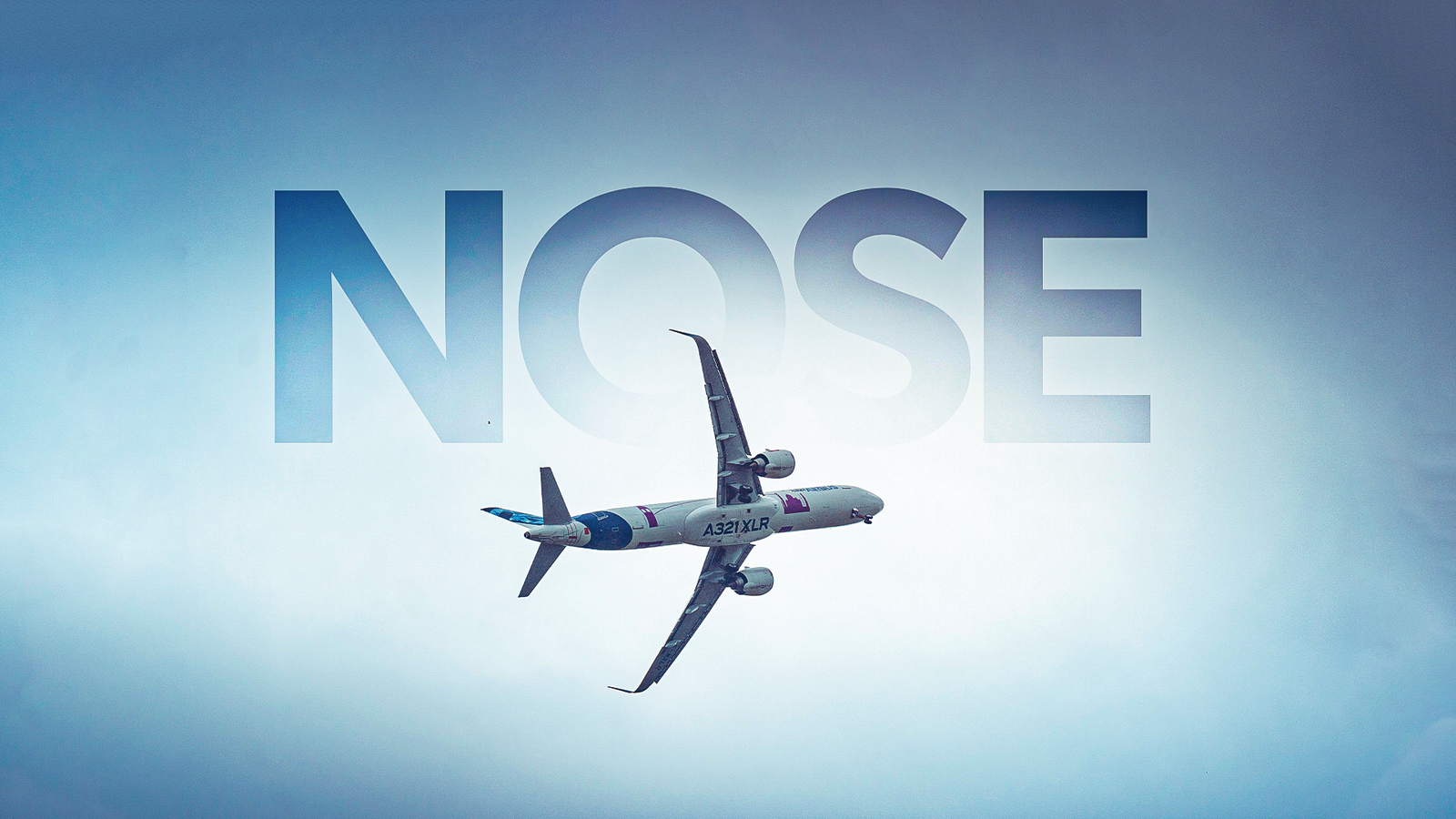
Published Nov 13, 2026, 6:00 PM EST Luke Diaz is a freelance military writer with experience with active duty experience in the US Navy as well as defense and industrial engineering. He is a former Naval Flight Officer who performed tactical air control on the carrier-based E-2 Hawkeye. Did you feel like your plane was a little nose-up on your last long flight? Well, you're not wrong. In fact, nearly every single commercial jetliner cruises with a noticeable nose-high pitch for most of the journey. The physics of flight dictate that an aircraft on a steady level cruise rarely maintains a perfectly parallel relationship with the horizon. It's especially remarkable on Airbus' newest long-haul narrowbody, the A321XLR. While a nose-up attitude is basic physics, a couple of factors make it highly noticeable on the A321XLR. An aircraft wing does not generate lift when aligned perfectly flat with the oncoming air mass. It requires a pitch of two to three degrees above the horizon to force the air under the wings and produce efficient lift. The A321 is a very long narrowbody aircraft, and its silhouette creates a clear visual profile compared to shorter aircraft like the A319. This is not an abnormality of the A321XLR design. It is the standard operating condition for the entire commercial fleet, ranging from the small Airbus A220 to the massive Boeing 777. As a flight progresses and the engines burn through fuel, the plane becomes lighter. When it needs less lift, the fly-by-wire system gradually lowers the nose. The cabin floor is rarely level, though the tilt is subtle enough that most passengers won't notice it while seated. The Mechanics Of Cruise Pitch: Weight And Flight Dynamics Credit: Airbus Despite carrying far more weight than other planes in its class, the XLR retains the Airbus A321's baseline wingspan of 117 feet (35.8 meters). Given the restricted wing area compared to a widebody jet that flies similar routes as the XLR, it must fly at a higher angle of attack than many commercial jets. Raising the nose one to two degrees above most other airliners allows the XLR to generate more lift at a similar altitude and airspeed. It must take off with a far greater payload than the standard A321neo, which is often configured with a higher seating capacity, because of the fuel it carries to make long journeys. That requires gradual step climbs with the XLR slowly raising and lowering its altitude relative to the fuel in its tanks as the route progresses. Pilots on simulator forums online cite pitch ranges between one and three degrees for cruise flight. These values fluctuate depending on the precise fuel load, passenger count, and chosen speed schedule. Weight is the primary driver of these fluctuations. For the Airbus A321XLR, this calculation is pushed to the absolute extreme of the single-aisle category. The jet stands out as the heaviest iteration of the A321 family, boasting a maximum takeoff weight reaching 223,000 pounds (101,100 kg). When heavily loaded with fuel at takeoff, the thin air at high altitudes cannot provide enough density to support an XLR efficiently. To avoid an unfavorable flight profile, the XLR is heavily reliant on step climbs. It will initially level off at a lower altitude where the air is denser. Even at this lower altitude, the engines must operate at high thrust to maintain cruise speed while holding a high nose pitch. Nose-Up Cruising: Passenger Perception and Safety Envelopes Credit: Airbus Walking toward the front of the A321XLR cabin on a transatlantic flight might make a passenger feel as though they are moving up a shallow ramp. While the plane behaves flawlessly from an engineering standpoint, its high nose-up posture changes how passengers experience the flight. That is most noticeable during the initial hours of a transcontinental mission when the aircraft is heaviest. In the early phase of such a trip, flight attendants must manage heavy galley carts on a tilted floor. Service typically starts from the front of the cabin and moves backward, allowing the crew to push the heavy carts downhill rather than fighting gravity to push them forward. To guarantee a pleasant ride for a full passenger payload, the aircraft relies on a highly optimized, non-emergency 'comfort envelope.' To prevent passengers from feeling any sudden jerks or wallowing motions, the autopilot performs continuous micro-trimming. The computers maintain a specific cruise speed, typically Mach 0.78, at an altitude where the air density allows the plane to ride smoothly. By keeping the XLR in the 'buffet margin' performance band, the system ensures a rock-solid, vibration-free ride for the customers in the back. Engineering Solutions And Automation At Airbus Credit: Airbus Inside the advanced cockpit of the A321XLR, a suite of flight computers handles most of the workload required to balance the jet's pitch. The flight computers eliminate the need for pilots to manually adjust the plane's controls as the trip progresses. These avionics let the flight crew spend more time focused on navigation rather than constantly correcting the aircraft's attitude. Flying at a nose-up angle naturally creates extra aerodynamic drag. To combat this, the computer systems linking the navigation data and the engine throttles work together seamlessly. The autopilot uses a continuous feedback loop that monitors how the aircraft is interacting with the thin air. As the plane burns off fuel and changes mass, the computer automatically commands the tail stabilizers to pivot by microdegrees. This smooth, automated adjustment gently lowers the nose to a flatter angle without requiring any input from the flight crew. The system calculates the exact engine thrust needed to glide efficiently at the ideal angle. It maintains a steady cruise speed without burning excess fuel, keeping the plane at the mathematically perfect intersection of pitch, speed, and fuel efficiency. Calculating Step Climbs And High-Altitude Safety Guards Credit: Airbus The A321XLR navigation computer removes all the guesswork from changing altitudes during long-haul flights. The plane cannot safely cruise at its final high altitude right after takeoff because the air is too thin to support it. The automation constantly runs real-time calculations to find the optimal moments to climb. Simultaneously, flying a long-range narrowbody like the XLR near its performance margins also requires strict safety boundaries. When the plane reaches an ideal state, the system notifies the crew, executes the climb smoothly, and automatically recalibrates the nose position for the new altitude. The flight control software also includes hard-coded safety protections that act as an invisible safety net. If severe turbulence or a sudden wind shift tries to force the nose into a dangerously high angle, the computer automatically intervenes. It overrides unsafe tendencies and stabilizes the plane well before it approaches an aerodynamic stall. Safety Of Flight For The Long-Haul Credit: Airbus The automation on the A321XLR acts as both an active stabilizer during rough weather and an immediate backup to the autopilot. The flight computers do not just wait for the plane to get bounced around. Instead, they use a real-time response system. The throttle computer continuously tracks wind shear to detect if a sudden draft causes a drop in speed. Then, the engines instantly spool up to add energy, and if a gust spikes the speed, the throttles dial back. Accelerometers and sensors throughout the fuselage detect sudden pockets of rising or sinking air instantly. By minutely deflecting these wing surfaces in direct opposition to the bumpy air, the plane counteracts the turbulent forces. Even if the autopilot is hand-flying or navigating severe weather, the computer software enforces strict performance limits. If an extreme event exceeds the autopilot's limits, the XLR will drop offline to hand control back to the pilots. Because an unexpected disconnection is highly critical, the cockpit is designed to make the handover impossible to miss. The plane will not allow the nose to point higher than 30 degrees up or lower than 15 degrees down, and the system limits the maximum roll angle to 67 degrees. If the autopilot projects that intervention is needed to stay within tolerances, red flashing warning lights illuminate directly in front of both pilots on the main dashboard panels. Sky High In The A321XLR: Transforming A Commuter Jet Into A Marathon Flyer Credit: Airbus Although the A321XLR looks identical to a standard variant of the family, the jet has some subtle differences inside and out to match the flight efficiency of its light, shorter-haul peers. Lighter, standard A321neo jets are optimized for high-capacity, short-haul routes where low-speed lift during frequent takeoffs and landings is a major priority. To achieve this, standard A321s have featured complex, heavy double-slotted inboard flaps. For the A321XLR, Airbus deleted the double-slotted configuration in favor of a single-slotted inboard flap. The simpler control surface slashes the wing's physical weight and provides an optimized profile that reduces drag in high-altitude cruise. During an 11-hour long-haul cruise, a double-slotted mechanism creates excessive, unnecessary weight and parasitic aerodynamic drag. To ensure the plane doesn't lose low-speed lift during takeoff at maximum weight, Airbus pairs this single-slotted flap with advanced software that introduces automated flap programming. Looking at the internal components, the XLR once again differs from older long-range models like the A321LR. On the legacy jets, extra fuel is carried in up to three separate additional center tanks which resemble large cargo containers bolted into the luggage hold. These add weight and eat up cargo space that would otherwise be used for bags and shipments. The XLR solves this by replacing separate cargo-bay tanks with a single, permanent rear center tank. Concentrating thousands of liters of fuel entirely behind the wings completely shifts the aircraft’s weight and balance. As the flight progresses and the aft tank drains, the center of gravity dynamically sweeps forward. The XLR's flight computers use automated fuel management to precisely monitor fuel burn across the outer wings, forward tanks, and rear tank, keeping the plane perfectly balanced in its optimal cruise pitch from takeoff to touchdown.
Is It True That The Airbus A321XLR Flies With Its Nose Pitched Up At Cruising Altitude?
Full Article
Original Source
Read the full article at Simpleflying →KhanList aggregates and links to publicly available news content. We do not host full articles from third-party sources. Always verify important information with original sources.